classical liberal
B. R. Shenoy
Bellikoth Raghunath Shenoy
1905–1978
Also known as: Bellikoth R. Shenoy
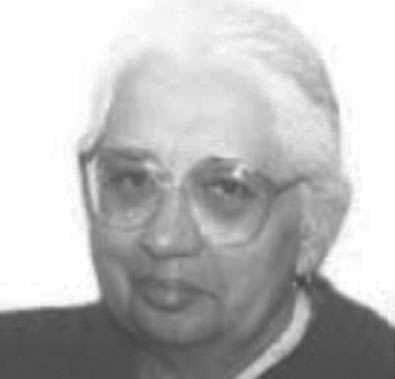
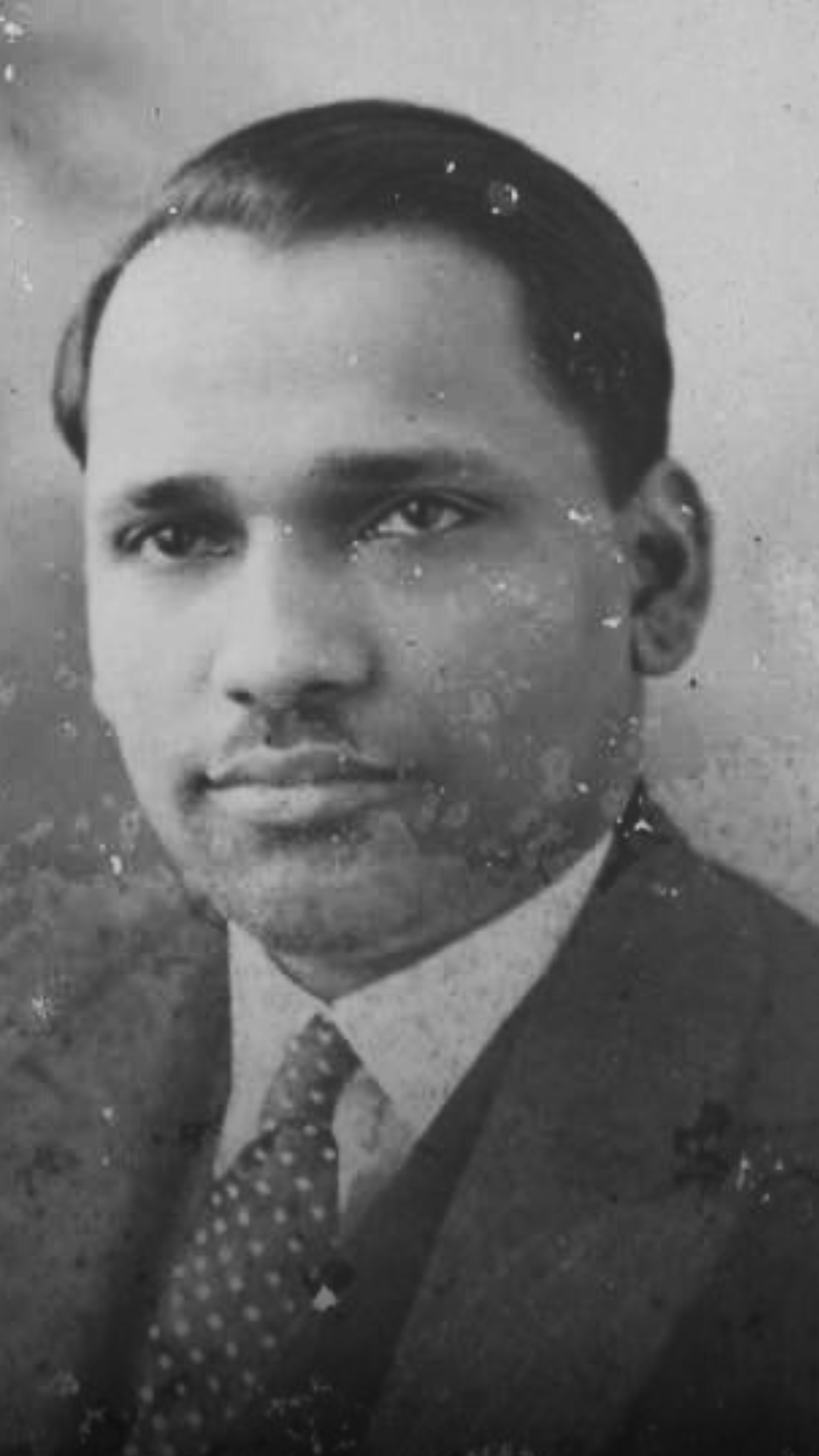
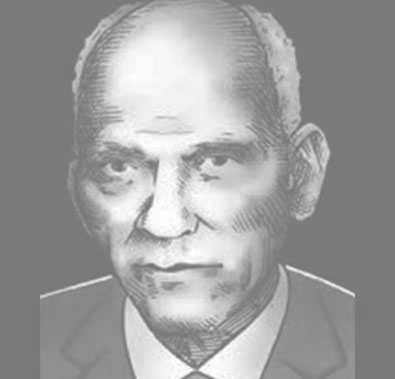
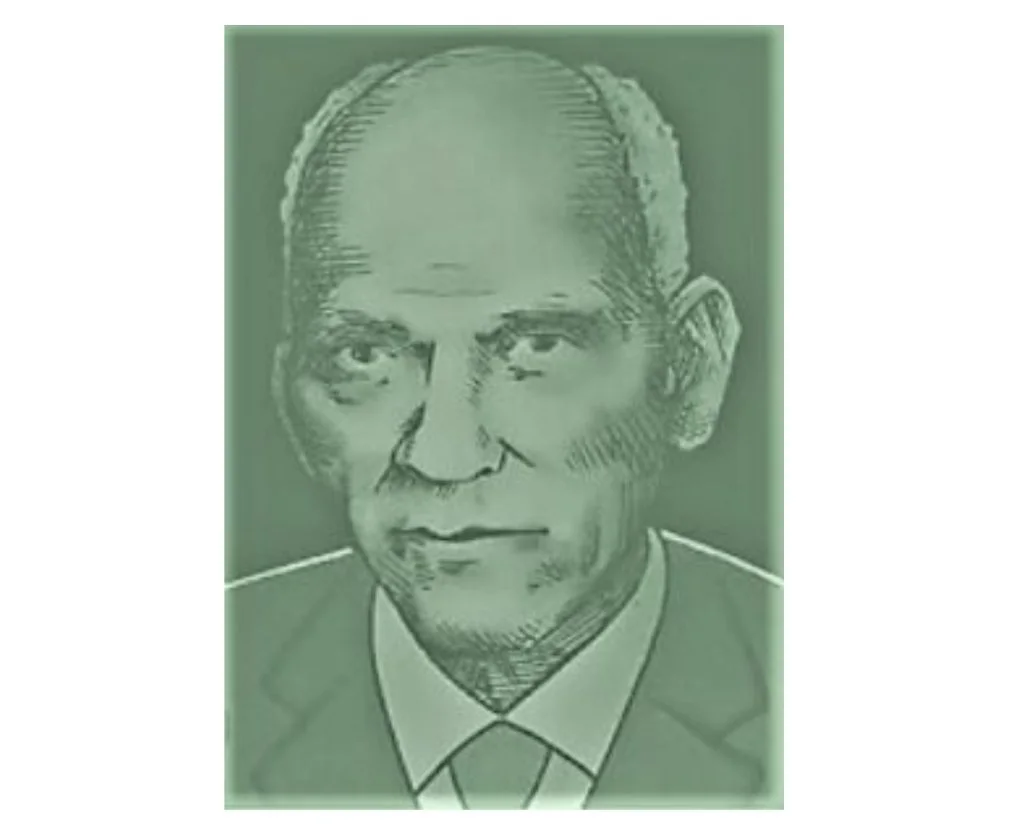
Professor Bellikoth Raghunath Shenoy (1905, 1978) was a classical liberal economist. Born on June 3, 1905, near Mangalore, Karnataka, he was educated at the Benares Hindu University (where he secured a first-class first at the MA Economics Exam in 1929) and later at the London School of Economics (LSE). As a student, he actively participated in the freedom struggle and was jailed at Nagpur. At LSE, he was inspired by the ideas of Professor Friedrich Hayek who later won the Nobel Prize in Economics.
During his LSE stint, two of his papers, “An Equation for the Price Level of New Investment Goods” (1931) and “Interdependence of Price Levels” (1933) appeared in the Quarterly Journal of Economics which established him as an upcoming monetary economist. He was perhaps the first Indian economist to have a paper published in a leading scholarly journal.
After returning to India, Shenoy taught at Wadia College (Pune), Gujarat College (Ahmedabad) and University of Ceylon. He was associated with various Government Bodies of Ceylon (now Sri Lanka) including the Commission on Currency and the Department of Commerce. In 1942 he was appointed the Principal of L D Arts College, Ahmedabad. He would join the Reserve Bank of India in 1945. During his RBI days, he was the Far Eastern Representative of the IMF (1948) and an Alternate Executive Director of IMF as well as of the World Bank (1951-53).
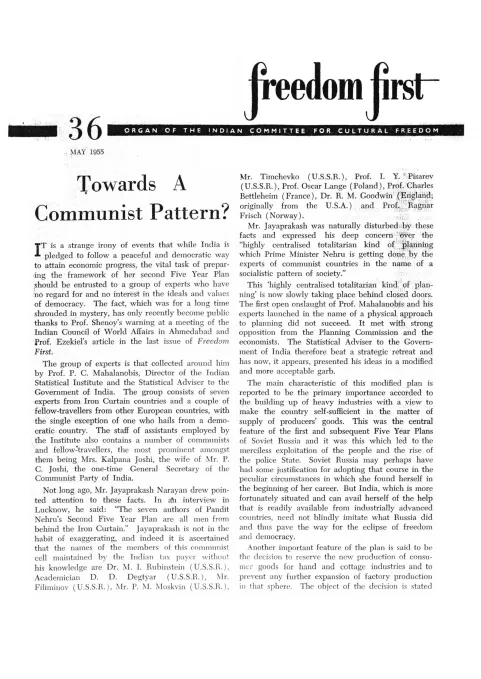
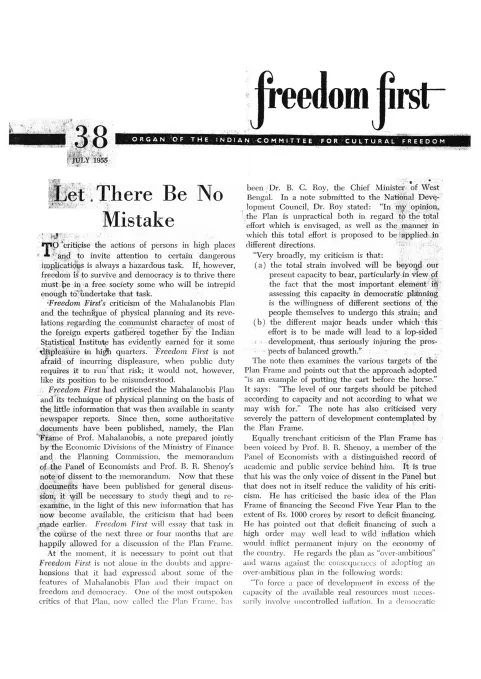
In 1954, Shenoy joined Gujarat University as the first Director of its School of Social Sciences, a position which he retained till 1968. During this period he made substantial contributions to Indian Economic Policy debates, most notably his “Note of Dissent to the Second Five Year Plan” and Madras University Lectures entitled “Problems of Indian Economic Development.”
His notable contributions to various policy issues like PL480 food imports, deficit financing, inflation, and economic development were marked by technical competence and analytical ability. After leaving Gujarat University in 1968, he founded the “Economic Research Centre” in Delhi and tirelessly espoused the cause of liberalism in India till he passed away on 8th February 1978.
He was President of the Indian Economic Association in 1957, Visiting Professor at his alma mater, LSE in 1966 and a member of the internationally prestigious Mont Pelerin Society.
His publications include “Ceylon Currency and Banking” (1941), “The Sterling Assets of the Reserve Bank of India” (1953), “Problems of Indian Economic Development” (1956), and “PL480 and India’s Food Problem” (1974) apart from various articles in scholarly journals, both Indian and international. A collection of his writings “Planned Progress or Planned Chaos” edited by Professors Mahesh Bhatt and S. B. Mehta was published in 1996.
PL480 and India’s Food Problem (1974).
Planned Progress or Planned Chaos? (East West Books, 1996).
The Post-War Depression: The Way Out (Kitabistan, 1944).
Ceylon Currency and Banking (Longman, Green and Company Limited, 1941).
The Sterling Assets of the Reserve Bank of India (Indian Council of World Affairs, 1946).
The Indian Economic Scene: Some Aspects (1957).
Indian Economic Crisis: A Program for Reform (Economics Research Centre, 1968).
Problems of Indian Economic Development (University of Madras Press, 1958).
Indian Planning and Economic Development (Asia Publishing House, 1963).
Fifteen Years of Indian Planning (1966)
Indian Economic Policy (Humanities Press, 1968).
Food Crisis in India: Causes and Cure (1974)
Economic Growth with Social Justice (Forum of Free Enterprise, 1980).
The Bombay Plan, A Review of Its Financial Provisions (Karnatak Pub House, 1944).
Indian Planning and The Common Man (Forum of Free Enterprise, 1962).
Report on the Economic Survey of Kurunegala District (Ceylon Government Press, 1940).
Economic Policy Resolution of AICC at Bangalore and Indian Economic and Social Progress (Economic Research Center).
PL480 and Indias Food Problem (1974)
Planned Progress or Planned Chaos? (East West Books, 1996)
The Post-War Depression: The Way Out (Kitabistan, 1944)
Ceylon, Currency and Banking (1941)
The Sterling Assets of the Reserve Bank of India (1953)
Problems of Indian Economic Development (1956)
The Indian Economic Scene: Some Aspects (1957)
Economic Prophecies
Other Writings
A Note of Dissent on the Memorandum of the Panel of Economists
Economic Situation and Trends in Ceylon, A Programme of Reform
Theoretical Vision, edited by R K Amin & Parth J Shah (Centre for Civil Society, 2004)
Liberalism and Less Developed Countries: Essay in Memory of Professor Bellikoth Raghunath Shenoy (Gujarat University, 1982)
Some Basic Economic Ideas of Prof. B R Shenoy (Economic Research Center, 1998)
An Equation for the Price Level of New Investment Goods (Quarterly Journal of Economics, 1931)
Interdependence of Price Levels (Quarterly Journal of Economics, 1933)
Correspondences
Shenoy-Hayek Correspondences (Set I, Hoover Institution Archives)
Shenoy-Hayek Correspondences (Set II, Hoover Institution Archives)
Published On
The Indian Libertarian Volume : 5 ;Issue: 15
1 October 1957
The Indian Libertarian Volume : 5 ; Issue: 18
1 December 1957
How B. R. Shenoy is discussed in this archive
Authored 38 works in the archive.
Subject of 1 profile piece , including B.R. Shenoy : India's First Neoliberal? .
Referenced in 10 other works , including BLACK MONEY MENACE IN INDIA , Efficient Planning in a Democratic Society , and Sunil Bhandare on Getting Disillusioned With Socialism and His Journey to Become A Liberal .
In Sunil Bhandare on Getting Disillusioned With Socialism and His Journey to Become A Liberal : Shenoy's writings on the public sector are credited as a decisive intellectual influence in Bhandare's conversion.
In BLACK MONEY MENACE IN INDIA : The booklet preface cites B.
In Deficit Financing, Inflation and Price Control : Jayaraman invokes B.
In Approach to the Fourth Five-Year Plan : Shenoy is cited alongside Shroff and Palkhivala as one of the Forum intellectuals whose earlier warnings against Soviet-style planning are presented as validated by fifteen years of planning failure.
In Efficient Planning in a Democratic Society : Mehta singles out Shenoy as the only eminent Indian economist consistently defending the price mechanism against the planning consensus, making him the sole domestic intellectual ally for Mehta's own liberal argument.
By B. R. Shenoy (38)
Showing 38 of 38
-
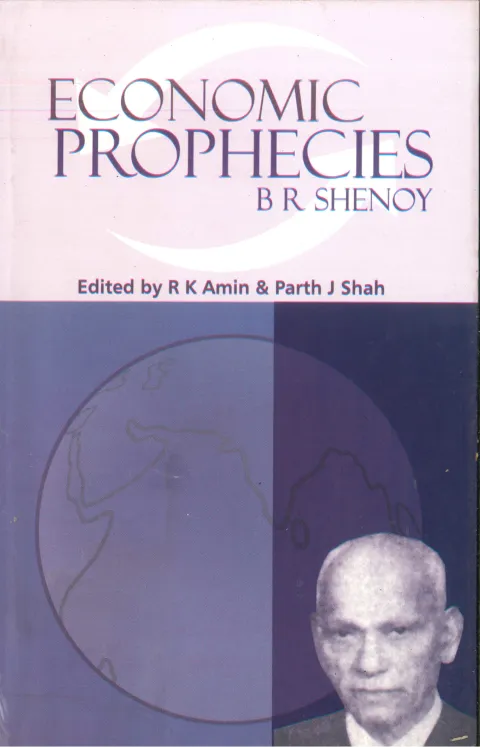
Economic Prophecies
2004 · book
-
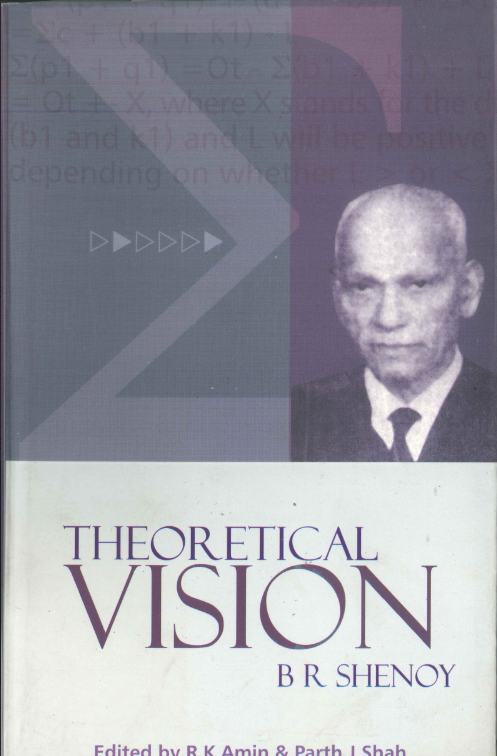
Theoretics Vision
2004 · book
-
Economic Growth with Social Justice
1980 · pamphlet
-
The Basic Truth About Inflation
1977 · edited volume
-
The Basic Truth About Inflation
1977 · edited volume
-
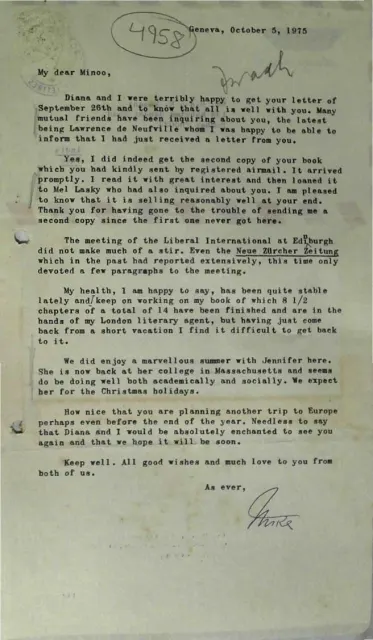
Letter to Mr Minoo Masani
1975 · letter
-
INDIA'S FOOD PROBLEM
1973 · speech
-
ON RISING PRICES AND BLACK MONEY
1971 · pamphlet
-
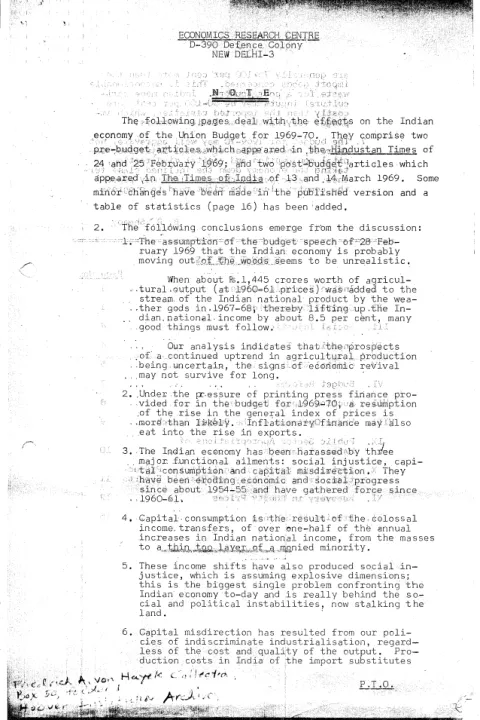
Shenoy-Hayek Correspondences, Set I
1969 · correspondence
-
INDIAN ECONOMIC CRISES
1968 · pamphlet
-
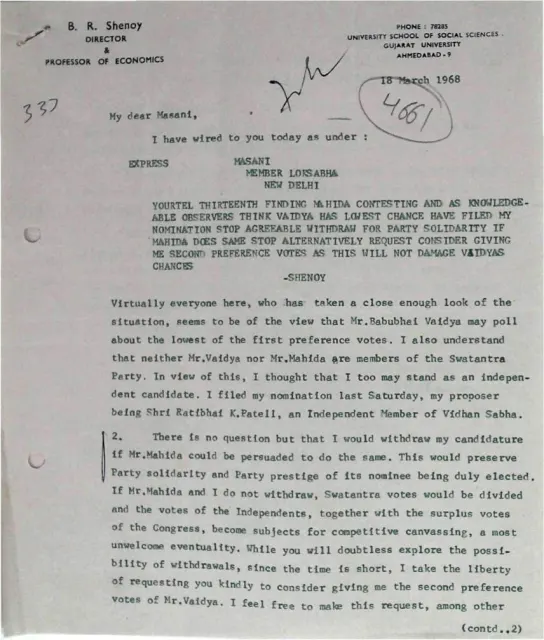
Letter to Mr Minoo Masani
1968 · letter
-

Letter to Mr Minoo Masani
1968 · letter
-
Economic Situation and Trends in Ceylon
1966 · occasional paper
-
FIFTEEN YEARS OF INDIAN PLANNING
1966 · speech
-
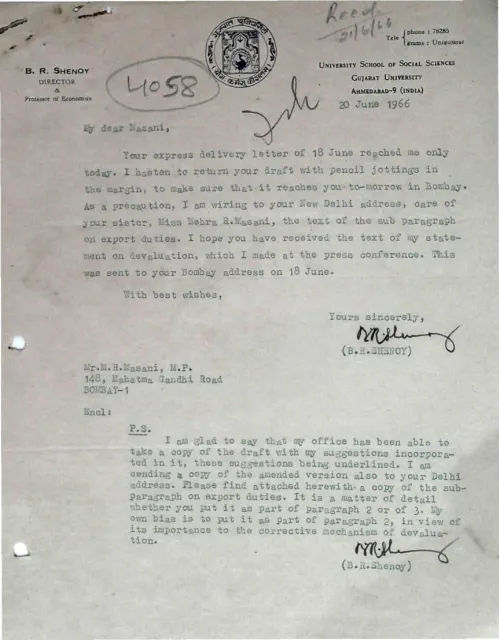
Letter to Mr Minoo Masani
1966 · letter
-
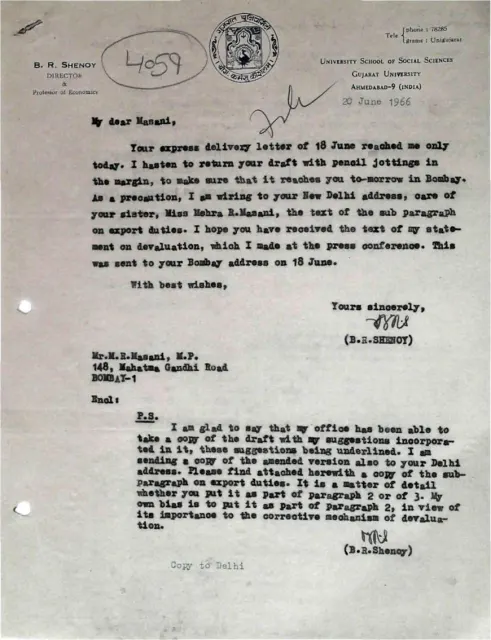
Letter to Mr Minoo Masani
1966 · letter
-
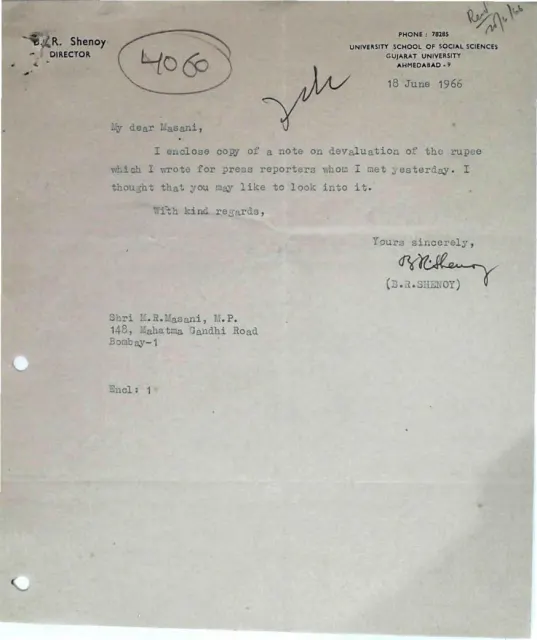
Letter to Mr Minoo Masani
1966 · letter
-
A Review of Current Economic Problems
1965 · edited volume
-
Quest
1964 · periodical issue
-
The Gold Problem in India
1963 · edited volume
-
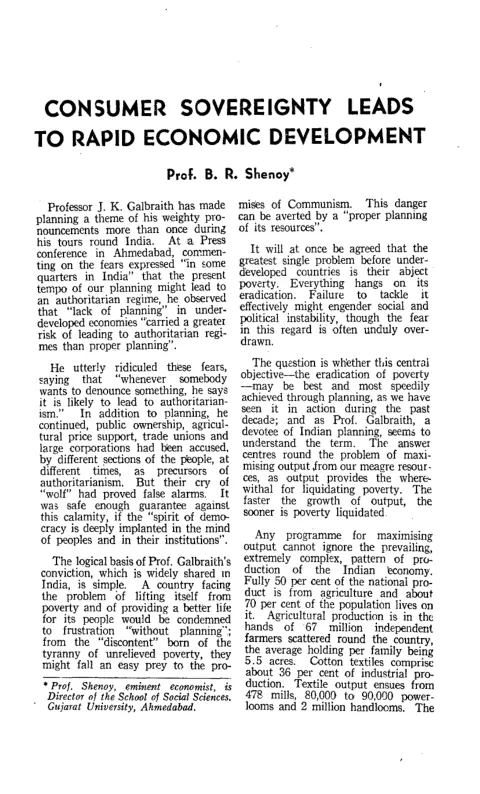
CONSUMER SOVEREIGNTY LEADS TO RAPID ECONOMIC DEVELOPMENT
1962 · pamphlet
-
Indian Planning and the Common Man
1962 · pamphlet
-
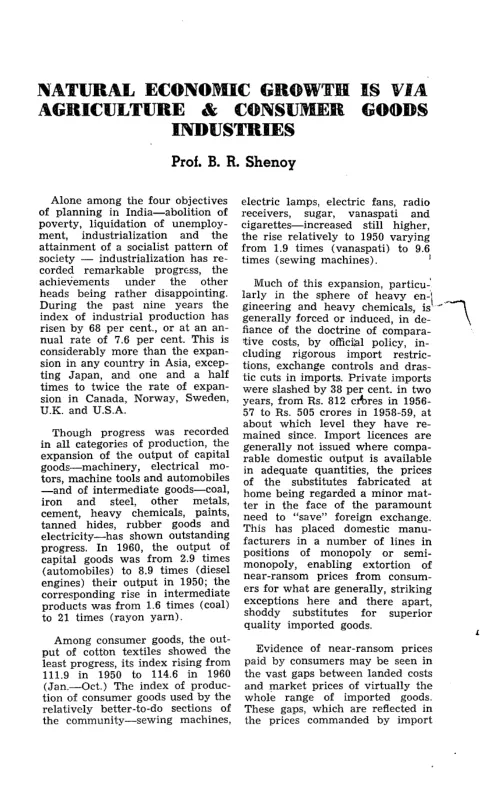
NATURAL ECONOMIC GROWTH IS VIA AGRICULTURE & CONSUMER GOODS INDUSTRIES
1961 · pamphlet
-
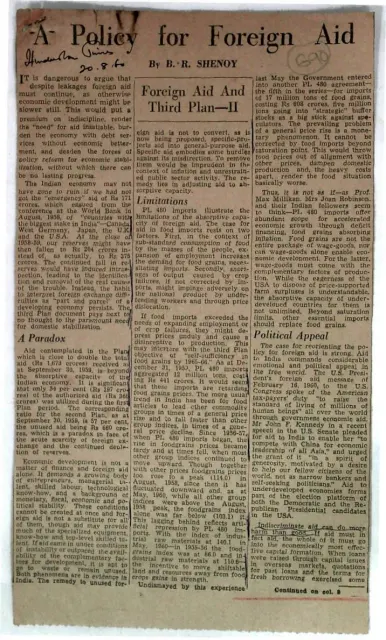
A Policy for Foreign Aid
1960 · essay
-
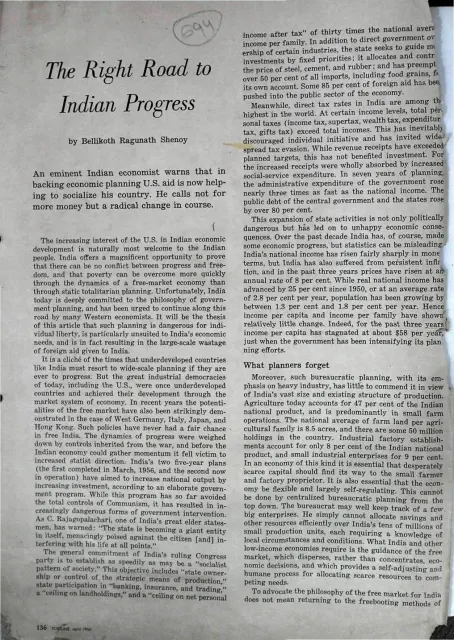
Freedom
1960 · periodical issue
-
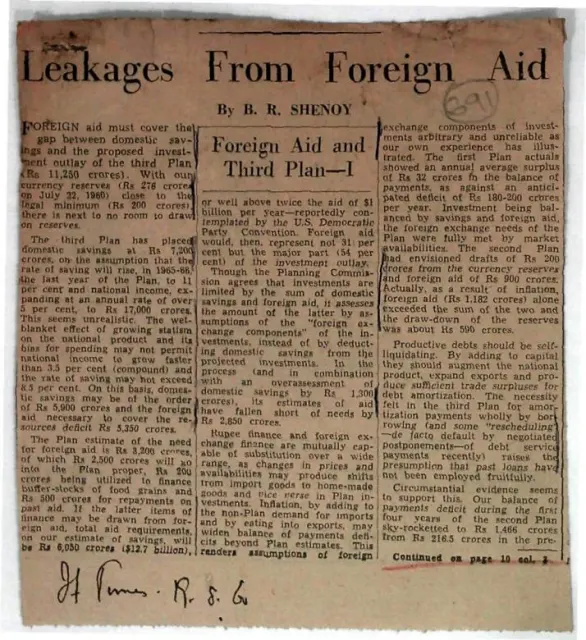
Leakages From Foreign Aid
1960 · essay
-
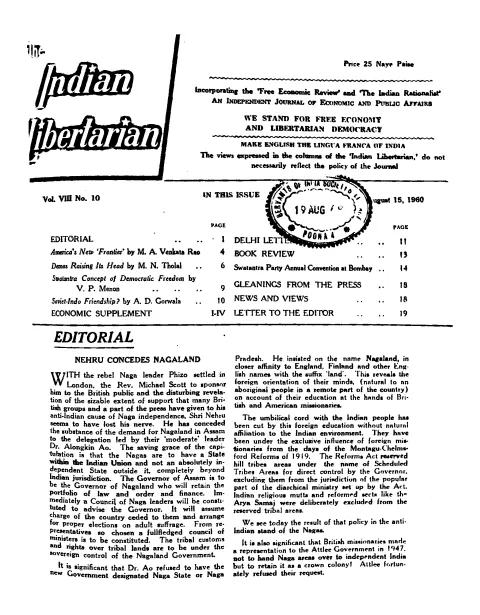
The Indian Libertarian
1960 · periodical issue
-
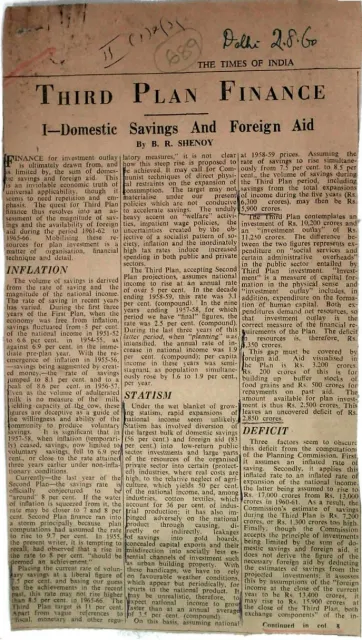
Third Plan Finance
1960 · essay
-
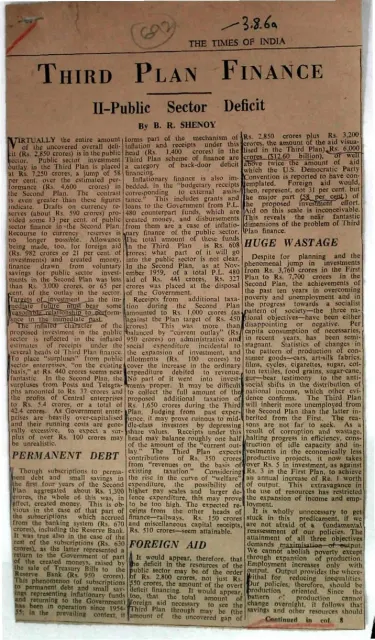
THIRD PLAN FINANCE
1960 · essay
-
Shenoy-Hayek Correspondences, Set II
1959 · correspondence
-
The Foreign Exchange Situation
1958 · speech
-
The Indian Libertarian
1958 · periodical issue
-
Prune the Plan
1957 · speech
-
The Indian Libertarian, Vol. V, No. 18
1957 · periodical issue
-
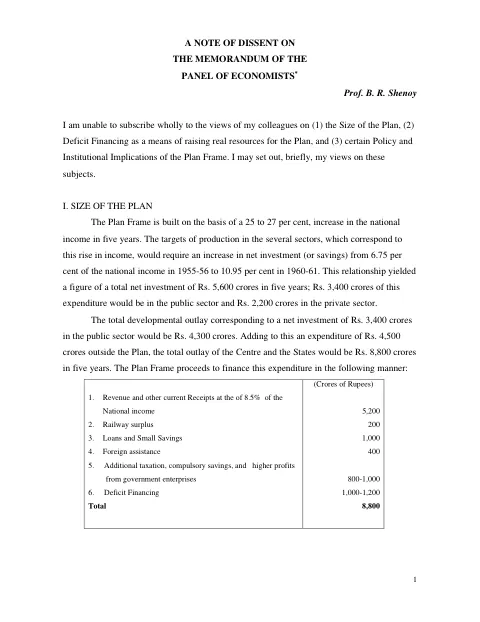
A Note of Dissent on the Memorandum of the Panel of Economists
1955 · essay
-
FOOD CRISIS IN INDIA — CAUSES & CURE
n.d. · edited volume
-
On Socialism and Bank Nationalisation
n.d. · edited volume
-
THE FOOD SITUATION AND THE COMMON MAN
n.d. · pamphlet
Nothing here matches. Clear the search or remove some filters.
Matches inside B. R. Shenoy's works and pages
Excerpts (4)
Short passages from the archive associated with B. R. Shenoy. An excerpt may be a quoted passage, a summary, or an editorial description, so these are kept separate from the works B. R. Shenoy authored.

About B. R. Shenoy (3)
Interviews (2)
Profile pieces (1)
-
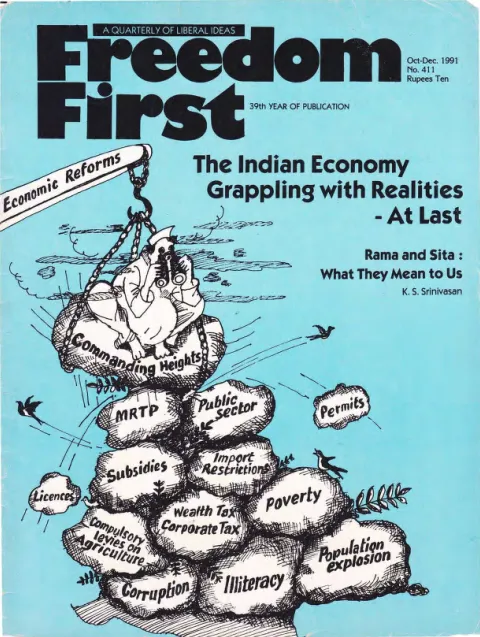
 B.R. Shenoy : India's First Neoliberal?
 - "Shunned by Indian planners and economists for his radical views on India's development trajectory, Shenoy found a home among the small and closely knit free-market advocacy group in India and the vigorous transnational network of neoliberal intellectuals active mostly in the West" · establishes his marginalisation at home and his integration into the global neoliberal network
- "It was at LSE that Shenoy came in contact with Friedrich Hayek who was there to deliver lectures in the wake of the Great Depression of 1929" · pinpoints the intellectual encounter that shaped his free-market orientation
Mentioned in (63)
Primary works (58)

Show all 58
- Sunil Bhandare on Getting Disillusioned With Socialism and His Journey to Become A Liberal · 2015
- "there there was a Professor B. R. Shenoy's wonderful speech and articles on the public sector vestige wherein he tried to sort of articulate how the public sector has not done the kind of things which were expected." · Identifying Shenoy as a formative liberal influence
- BLACK MONEY MENACE IN INDIA · 2009
- "citing earlier booklets by B. R. Shenoy, B. P. Adarkar, Vadilal Dagli, D. R. Pendse and H. P. Ranina" · preface situating Pai's address in the Forum's long tradition of writing on black money
- "closes with a 1962 warning from B. R. Shenoy that the only real remedy is to abandon the policies of statism" · closing of Pai's address; Shenoy's prescription is the normative conclusion of the whole argument
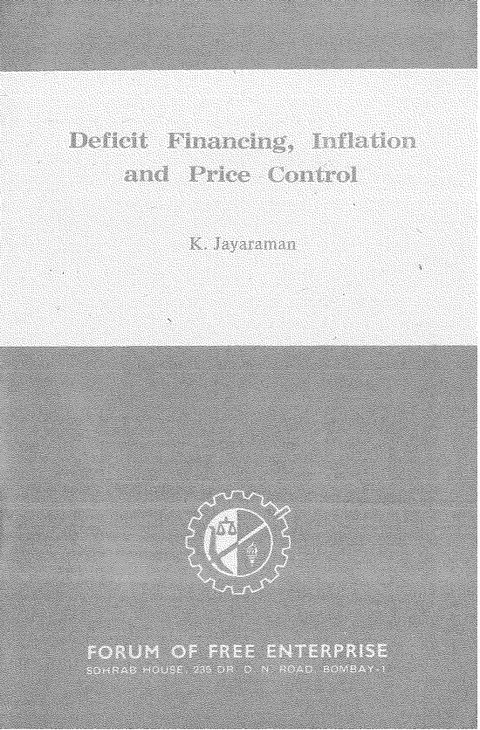
- Deficit Financing, Inflation and Price Control · 1973
- "The closing pages invoke Professor B. R. Shenoy's diagnosis of "perverse income shifts" and former RBI Governor L. K. Jha's warning that deficit financing must be a supplement to, not a substitute for, resources mobilisation" · Shenoy's diagnosis provides the theoretical framework for Jayaraman's anti-inflation argument
- Approach to the Fourth Five-Year Plan · 1968
- "warnings earlier issued by A. D. Shroff, Murarji J. Vaidya, N. A. Palkhivala, Prof. P. T. Bauer and Prof. B. R. Shenoy" · FFE introduction; Shenoy's forecasts are grouped with the other Forum economists whose dissent the current crisis vindicates
- Efficient Planning in a Democratic Society · 1965
- "he singles out Prof. B. R. Shenoy as the lone eminent Indian economist arguing this line, with most Indian planners and businessmen having capitulated to "the magic word" of Planning." · Shenoy named as the sole Indian economist dissenting from the planning orthodoxy Mehta critiques
- "including Prof. M. L. Dantwala's more equivocal acceptance." · Dantwala's contrast used to define the space where Shenoy's dissent stands alone
- FROM THE INDUSTRIAL AGE TO THE INFORMATION AGE · n.d.
- "the Economics Research Centre founded by the late Prof. B. R. Shenoy" · publication context linking Belt's regulatory critique of the SEC to Shenoy's legacy as the institutional patron of the Forum's Economics Research Centre
Opinion pieces (2)
- Minoo Masani : From Socialism to Liberal Swatantra Party
- "He also set up the Project for Economic Education in collaboration with the liberal economist B R Shenoy's Economic Research Centre to disseminate liberal economic ideas in public domain." · identifies Shenoy as Masani's key economic partner in liberal institution-building
- Swatantra Party : A Big Tent Challenge to Congress Hegemony
- "in the Indian context, he was close to the economist B R Shenoy and would receive his advice on economic matters." · identifies Shenoy as Masani's key economic adviser in the Swatantra era
Excerpts (2)
- The Gold Problem in India
- "Prof. B. R. Shenoy, Director of the School of Social Sciences, Gujarat University, an authority on the gold problem" · Shenoy is introduced as the academic voice among the booklet's four co-authors
- Rajaji- Man with a Mission
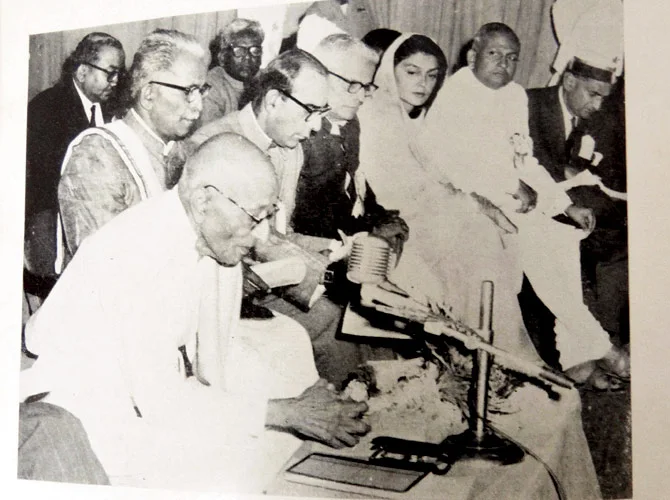
- "N G Ranga, B R Shenoy, Piloo Mody, Khasa Subba Rau and A D Shroff during the era of socialist command" · Shenoy named among the liberal dissenters profiled in the book