constitutional liberal
Vallabhbhai Patel
Vallabhbhai Jhaverbhai Patel
1875–1950
Also known as: Sardar Patel, Patel, सरदार पटेल, वल्लभभाई पटेल, सरदार वल्लभभाई पटेल
How Vallabhbhai Patel is discussed in this archive
Referenced in 8 other works , including INDIAN ADMINISTRATION , IS SOCIALISM THE RIGHT PATH? , and Minoo Masani : From Socialism to Liberal Swatantra Party .
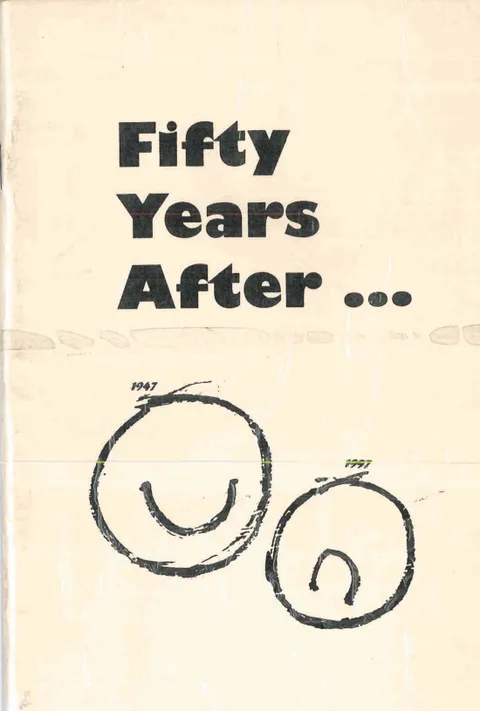
In Fifty Years After ... : Sardar Patel is cited alongside Nehru and Rajaji as a founding leader whose constitutional values E.
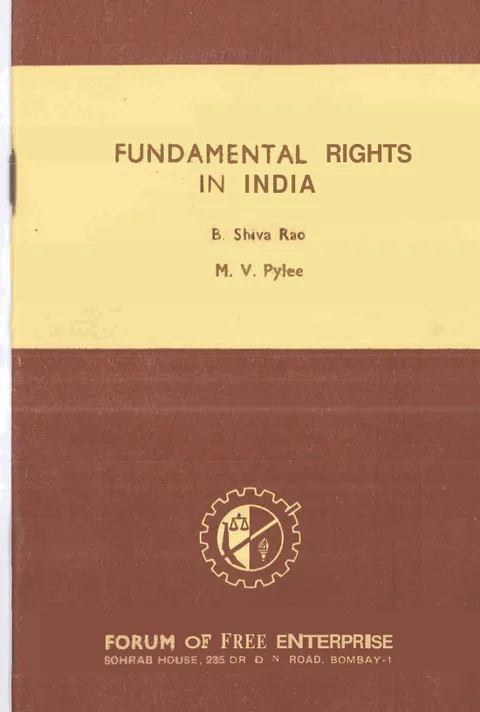
In Fundamental Rights in India : Sardar Patel chaired the rights sub-committee of the Constituent Assembly, and Shiva Rao's historical account credits him with the constitutional architecture that embedded fundamental rights with enforceable remedies.
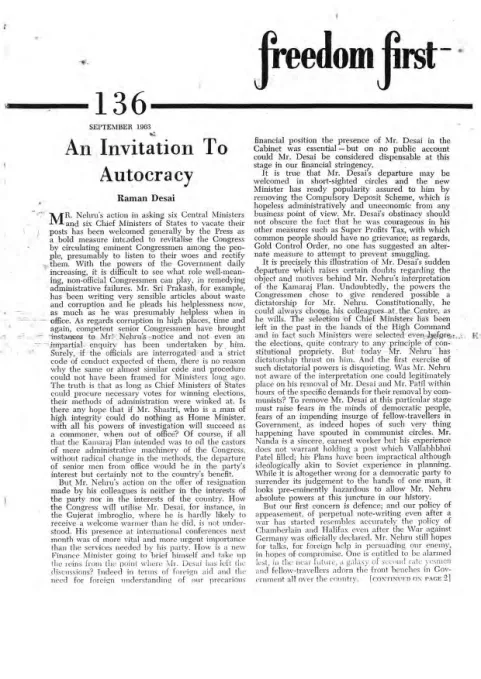
In INDIAN ADMINISTRATION : Menon's central contrast: Sardar Patel was the lone post-Independence minister who refused to interfere with the services, treated officers fairly and restored their esprit de corps; after his death the Centre filled the vacuum left by weak Chief Ministers and Congress autonomy 'became a dead letter'.
In IS SOCIALISM THE RIGHT PATH? : Batlivala marshals Sardar Vallabhbhai Patel's testimony — alongside ex-Finance Minister C.
In Freedom First's Resistance to Indira Gandhi's Emergency : Sardar Patel is cited alongside Nehru and Ambedkar as a constitutional founding father whose vision the Emergency regime betrayed, used by Masani to anchor his critique in nationalist legitimacy.
Mentioned in (35)
Primary works (31)
- Fifty Years After ... · 1997
- "He quotes B. K. Nehru on the divergence between the constitutional values of founders like Nehru, Patel, and Rajaji and the values of today's rulers (Laloo, Jayalalitha, Mulayam Singh)." · Patel named as a founding constitutional figure in D'Souza's invocation of the founding generation's values

Show all 31
- Fundamental Rights in India · 1969
- "chaired by Sardar Patel for the rights sub-committee" · establishes Patel's role as the Constituent Assembly chairman for the rights chapter that Nath Pai's Bill sought to amend
- INDIAN ADMINISTRATION · 1958
- "Menon contrasts this with the brief Patel era, when Sardar Vallabhbhai Patel — alone among the new ministers — refused to interfere with the services, treated officers fairly, and restored their esprit de corps." · Patel is held up as the single positive exception to Menon's catalogue of post-Independence administrative decay
- "Singles out Sardar Patel as the exception: he refused to interfere in the services, gave officers fair treatment, dispelled fears after Partition, and re-instilled esprit de corps; after his death the Cabinet became collectively responsible 'only in name' and the Prime Minister effectively ran government." · key-points restatement: Patel as the lost golden moment of clean civil-service handling
- IS SOCIALISM THE RIGHT PATH? · 1956
- "He marshals testimony from Sardar Vallabhbhai Patel and former Finance Minister C. D. Deshmukh to argue that the Indian civil service lacks the depth to run nationalised industries" · Patel's testimony underpins Batlivala's case against extending state control over industry
- "He cites Patel and ex-Finance Minister C. D. Deshmukh to show that the Indian civil service is too thin to run nationalised industries, of whom only fifteen per cent are good performers by Patel's own count." · key-points line restating Patel's authority on civil-service capacity

Opinion pieces (2)
- Freedom First's Resistance to Indira Gandhi's Emergency
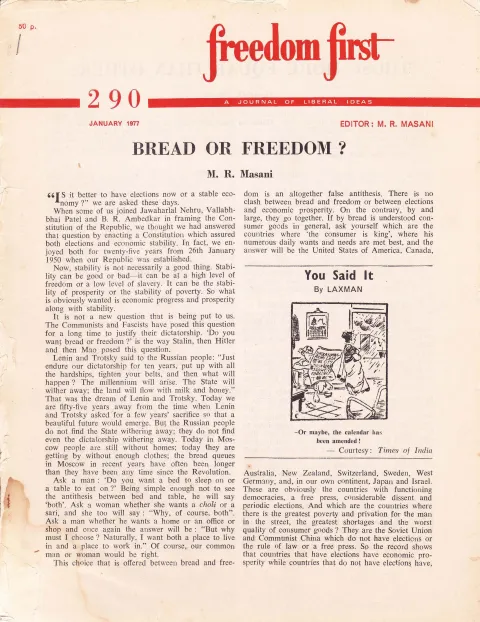
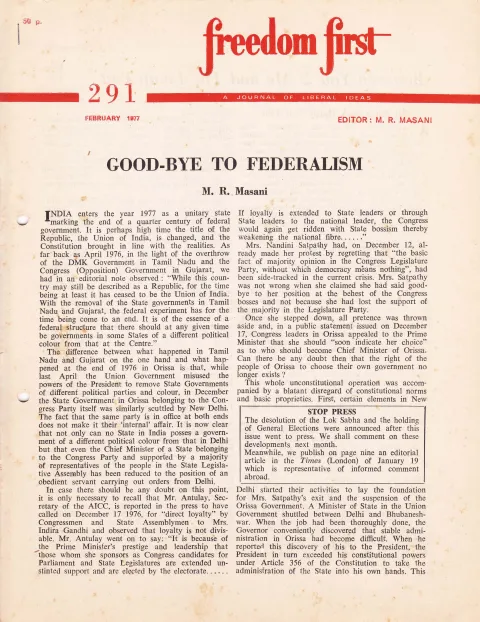
- "Indira Gandhi and her sycophants' bid to overturn constitutional provisions was a turn away from the vision of Jawaharlal Nehru, Bhimrao Ambedkar, and Sardar Patel" · Patel named as one of the constitutional founders whose legacy the Emergency undermined
- Minoo Masani : From Socialism to Liberal Swatantra Party
- "His active leadership of Congress Socialist Party (CSP) turned both Sardar Patel and C Rajagopalachari against him." · Patel's hostility to Masani's socialist phase
- "With the help of Patel in the form of office space in Bombay, a telephone connection and funding, Masani founded Democratic Research Service in November 1950." · Patel's later practical support for Masani's anti-communist work
Excerpts (2)
- Enduring Challenges in Indian Public Administration - V.P. Menon
- "Secretary to the Government of India in the Ministry of the States, under Sardar Patel." · Menon's service under Patel is cited in the editorial introduction to frame his authority on administrative challenges
- Minoo Masani on Citizenship
- "a radical one under Jawaharlal Nehru, a conservative one under Vallabhbhai Patel. Both sides rejected the advice because both wanted to be in office at the same time" · Patel as co-protagonist in the missed opportunity for healthy two-party democracy