speech
LESSONS OF WHEAT TRADE NATIONALISATION
FORUM OF FREE ENTERPRISE SOHRAB HOUSE, 235 DR. D. N. ROAD, BOMBAY-1 · Bombay · 1974
36 pages
Summary
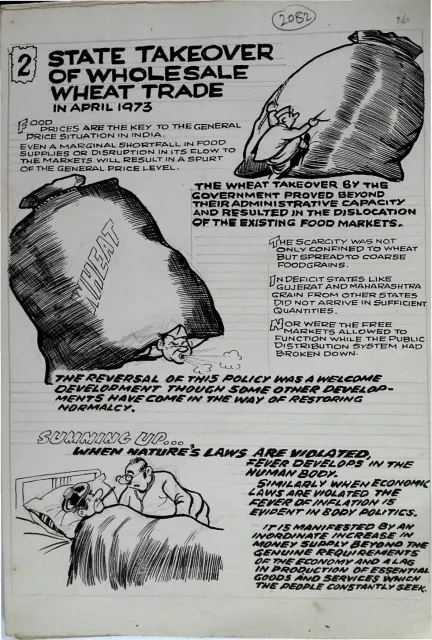
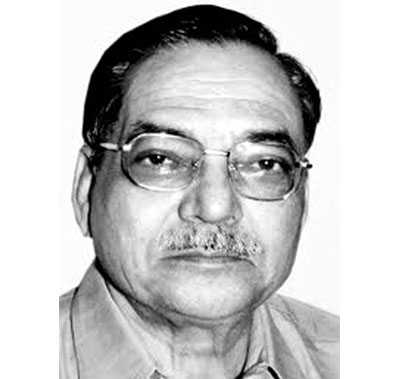
Lessons of Wheat Trade Nationalisation collects Dr. A. C. Chhatrapati’s April 1974 talk at a Forum of Free Enterprise symposium in Bombay together with a chronological dossier of news clippings from 1973 that document the unravelling of the Government of India’s monopoly procurement of wheat. Chhatrapati, then Secretary of the Vanaspati Manufacturers’ Association and a specialist in agricultural economics, treats the recent decision to abandon nationalised wholesale wheat trade as a vindication of market mechanisms and a rebuke to planners who had treated state takeover as a cure-all for food insecurity. Section I (“The Rationale of the New Food Policy”) reconstructs why the 1973 takeover failed: the procurement price of Rs. 76 per quintal had become unremunerative against rising input costs, farmers withheld marketable surplus, state zoning broke the national grain market, and the Centre — denied imports because Russia and China had absorbed world surpluses — could not feed deficit areas. The result was rationing as low as 5 kg a month in Bombay, food riots in Gujarat, and a Rs. 250-crore subsidy bill that fuelled inflation rather than relief.
Chhatrapati argues that the new policy, which licenses wholesalers to sell 50 per cent of purchases to government at Rs. 105 per quintal while letting the remainder move in the open market and across state lines, restores a national market while preserving a buffer-stock role for the State. He distinguishes regulated commodity markets from “laissez faire,” insists that bumper-crop procurement and limited public distribution in deficit urban areas are legitimate, and warns that the only durable remedy for high prices is to curb monetary and fiscal indiscipline and raise output — not to coerce producers. Section II reprints reports from The Times of India, Free Press Journal, Indian Express and UNI between April 1973 and June 1973 chronicling the takeover’s collapse: missed procurement targets, food riots, police firings at Sinnar and Bulsar, queues for sub-standard rice, bogus ration cards in Patna, the destitute scraping wheat from compost pits at Bombay’s Aarey Milk Colony, and Congress MLAs themselves sabotaging procurement by selling stocks to private traders at higher prices. The cumulative effect is documentary: the takeover did not raise the quantity procured, denied consumers reasonable supplies, widened price disparities between surplus and deficit zones, and forced citizens onto the black market.
The pamphlet’s argumentative centre is that democratic governments cannot indefinitely sustain coercive policies that punish both farmer and consumer, and that the wheat episode is a transferable lesson for other commodities — small farmers are no longer credulous, bureaucracies cannot manage scale, and state governments respond to political not administrative incentives. Chhatrapati treats the Centre’s reversal as the right reading of these realities and a return to the regulatory-plus-market policy followed before the 1973 misadventure.
Key points
-
Chhatrapati frames the end of wholesale wheat nationalisation as proper democratic responsiveness, not an ideological retreat — governments rule by consensus, not dogma.
-
The 1973 takeover failed on its own terms: against a target of 8.1 million tonnes only 4.3 million were procured, lower than the 5–5.1 million tonnes procured in earlier years when private wholesalers were also operating.
-
An unchanged procurement price of Rs. 76 per quintal had become unremunerative as input costs rose; many farmers found it cheaper to feed wheat to cattle than to sell to the State.
-
Inter-state and inter-district movement bans broke the national grain market, shifting onto the Centre the entire burden of feeding deficit States while imports were unavailable because Russia and China had swept world surpluses.
-
Public distribution shrank rather than expanded: Bombay rations fell to about 5 kg per month (roughly 40 per cent of normal needs); Gujarat’s distress drove riots that contributed to the fall of the State Government.
-
Chhatrapati endorses regulated markets — minimum support prices, buffer stocks, and limited public distribution in deficit urban areas — but rejects monopoly procurement as administratively unworkable in a vast country and politically corrosive in a federal democracy.
-
He argues that inflation, not private trade, is the real driver of high food prices, and that the remedy lies in monetary and fiscal discipline and higher production, not in takeovers.
-
Section II’s news compilation documents the human cost: police firings on bread mobs, sub-standard rationed rice, two million bogus ration cards in Patna, and Congress MLAs themselves selling wheat to private retailers at premium prices.
Metadata and summary are AI-extracted from the source PDF and reviewed for editorial accuracy. The original work is available via the Read PDF tab above (where present); paragraph-level citation inside the PDF is deferred to a future engagement.