pamphlet
An Integrated Approach to Pricing & Marketing of Agricultural Produce
FORUM OF FREE ENTERPRISE, PIRAMAL MANSION, 235 DR. D. N. ROAD, BOMBAY 400 001. · Bombay · 1981
24 pages
Summary
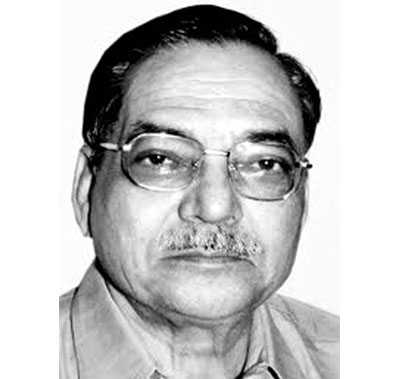
Bhanu Pratap Singh, a former Union Minister of State for Agriculture and Irrigation, argues that India’s foodgrain pricing and marketing regime — built in the 1960s scarcity years to shield urban consumers — has become structurally hostile to the producer in a country that is now sitting on a marginal surplus. Drawing on the National Demonstration Plots and the Punjab experience, he contends that India has the land, water, sunshine, technology and seed to be the world’s largest farm exporter, and that the gap between potential and performance is the product of a feudal-colonial mental inheritance under which agriculturists are the only producers who have no say in the price of their own produce.
The booklet then dissects the machinery of price suppression: heavy buffer stocks built on subsidised imports, transport and wagon shortages that trap grain in deficit pockets, export bans, and an Agricultural Prices Commission whose cost-of-production methodology ignores risk, assumes sub-optimal input use, and is selectively followed only when its recommendations suit the consumer. He documents the widening divergence between farm and non-farm wholesale price indices, the hidden losses and concessional credit lavished on the Food Corporation of India, the captive dumping of deteriorated stocks on roller flour mills, and the near-total neglect of coarse foodgrains consumed by adivasis and the rural poor — concluding that the present arrangement has pauperised the farming community while protecting only the urban consumer.
In the closing pages Singh sets out a ten-point alternative: treat the whole country as a single market, fix a ‘parity’ price tied to a base year, define a ‘support’–‘intervention’ band of 85–115 per cent, build co-operative warehouses at vikas kendras for prompt payment to small farmers, license only stocks above 100 quintals through a light register-and-return regime, free perishables for export, and build grading, processing and cold-chain infrastructure for horticulture. The case is buttressed by two appended tables — the widening farm/non-farm price divergence to 1980, and the collapse in the purchasing power of one quintal of wheat against fertilisers, insecticides, diesel, tractors and other key inputs.
Key points
-
Pricing and marketing policies framed in the scarcity decades remain in force even though India has shifted from import-dependence to marginal surplus, so the protected party should now be the producer rather than the consumer.
-
India has the land, irrigation, climate and technology to become the world’s largest farm exporter; National Demonstration Plots already yield three to four times the national average, and replicating Punjab’s performance on all irrigable land would transform the country’s external position.
-
Open-market farm prices are not natural but contrived — through buffer stocks built on subsidised imports, liberal import policy, export bans, and wagon and credit constraints that block private movement of grain.
-
The Agricultural Prices Commission’s cost-of-production method is methodologically broken: it ignores weather and pest risk, uses year-old input figures, assumes actual rather than optimum input use, and is followed selectively only when its findings keep procurement prices low.
-
Public distribution looks cheap but costs over Rs. 191 per quintal of wheat once subsidies and FCI losses are counted, while the rural poor (who exceed the urban population) receive less than one-fourth of distributed grain and coarse cereals are almost wholly ignored.
-
Modernising one hectare of farmland costs roughly Rs. 8,000; with 90 per cent of Indian farms still unmodernised, the required Rs. 1,024 billion cannot be raised so long as price manipulation prevents capital formation within the farm sector itself.
-
Singh proposes a ‘parity’ pricing system with a Government-announced 85–115 per cent support–intervention band, free internal movement of foodgrains, light-touch stock licensing above 100 quintals, co-operative warehouses at vikas kendras for distress-sale protection, and free export of perishables.
-
Two annexed tables show the farm/non-farm wholesale price divergence widening from 0.8 per cent in 1973 to 36.6 per cent in 1980, and the purchasing power of one quintal of wheat falling to 40–70 per cent of its 1970–71 level against fertilisers, diesel, tractors and other inputs.
Metadata and summary are AI-extracted from the source PDF and reviewed for editorial accuracy. The original work is available via the Read PDF tab above (where present); paragraph-level citation inside the PDF is deferred to a future engagement.