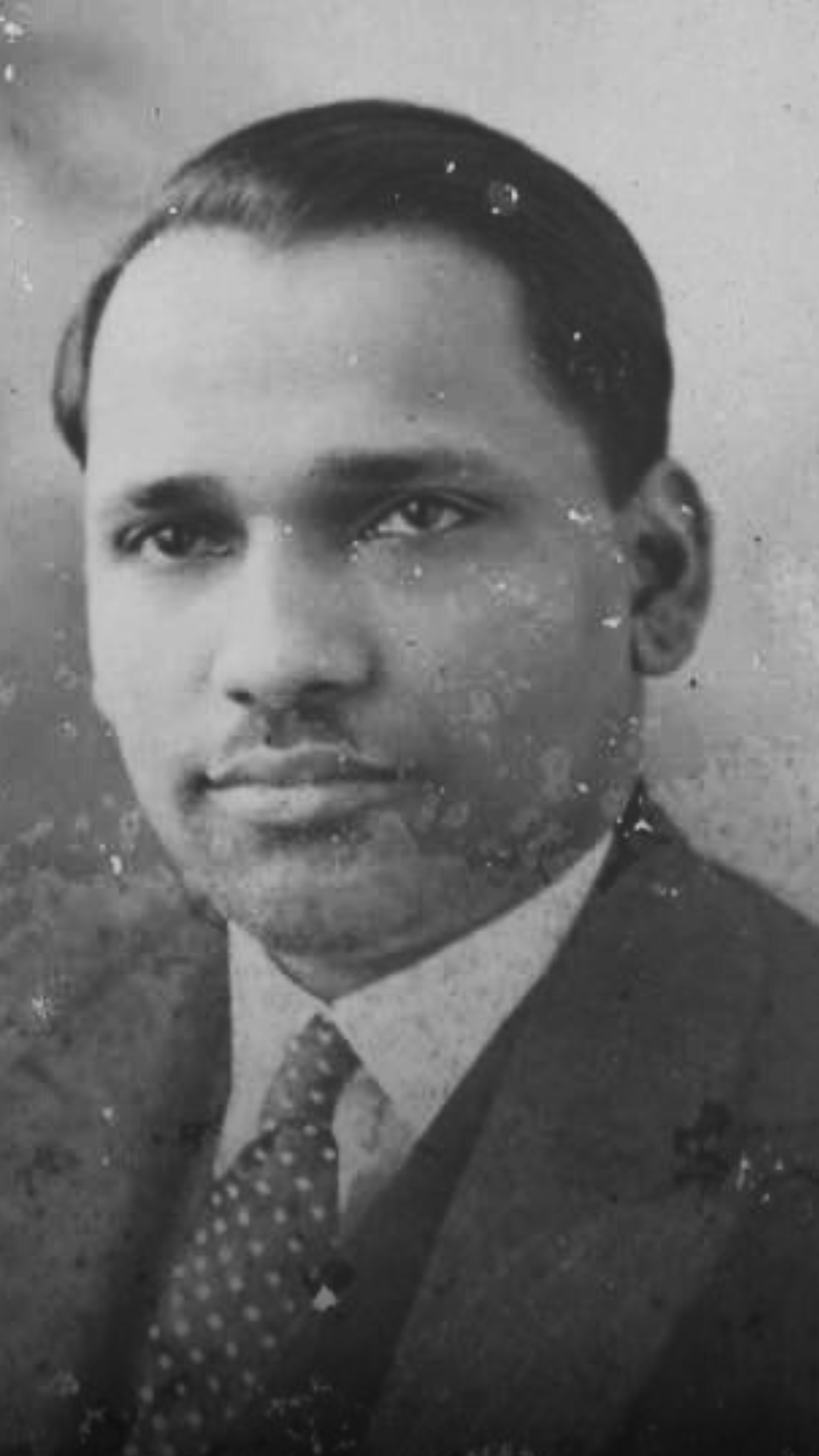
speech
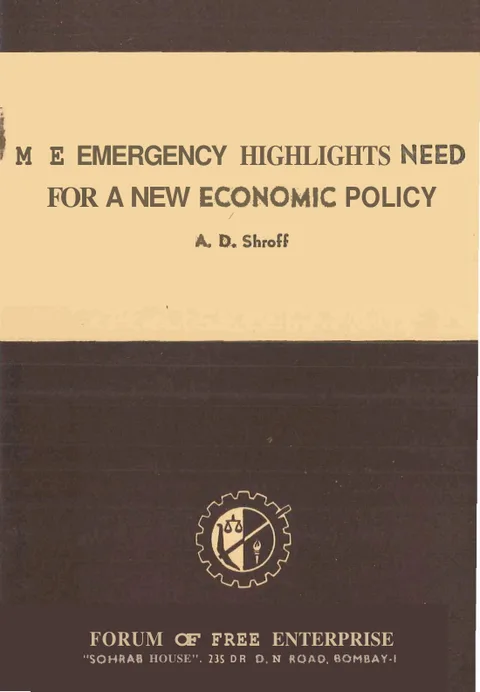
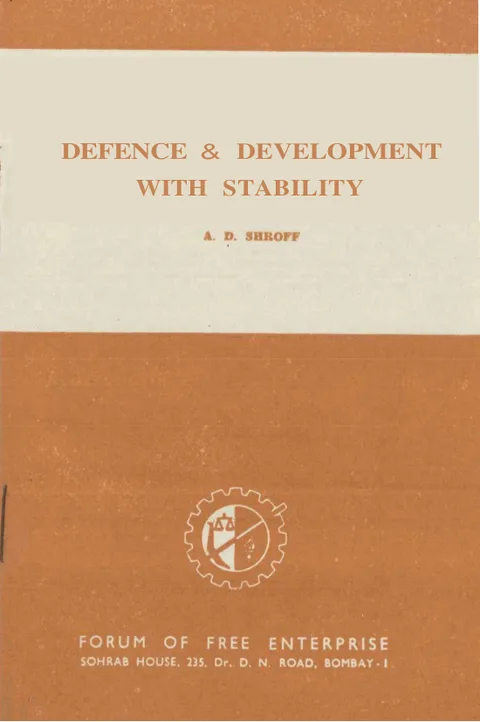
Defence & Development with Stability
By A. D. Shroff
Published by M. R. Pai for the Forum of Free Enterprise, 235, Dr. Dadabhai Naoroji Road, Bombay 1, and Printed by Michael Andrades at the Bombay Chronicle Press, Horniman Circle, Bombay-1. · Bombay · 1965
13 pages
Summary
Defence & Development with Stability is the text of A. D. Shroff’s presidential address at the eighth annual general meeting of the Forum of Free Enterprise, delivered in Bombay on 9 December 1964 and published as a Forum pamphlet in January 1965. Shroff frames India’s economic challenge along three axes: the rapid-development goal set by the 1948 First Industrial Policy Resolution, the dimension of defence forced on national consciousness by the Chinese aggression of 1962, and the new dimension of stability raised by the 1964 price upswing. Drawing on Adam Smith, Friedrich List, Hamilton, Jefferson, Clausewitz and the military commentator Edward Mead Earle, he argues that defence is the prior condition of liberty and prosperity, and that the political, psychological and economic foundations of defence are inseparable from the country’s productive base.
The bulk of the address is a sustained attack on the Second and Third Plans, which Shroff says were drawn up on ideological lines using Soviet ‘physical planning’ techniques. He marshals Reserve Bank of India data — a 14% rise in prices for the year to September 1964, food articles up 23.6%, retained company profits down sharply — and traces the price spiral to deficit financing (money supply up 55% from 1955-56 to November 1964) rather than to hoarding alone. He devotes long passages to losses and mismanagement in public sector undertakings (Ashoka Hotel, Praga Tools, Hindustan Aircraft, Hindustan Machine Tools, Mysore’s bicycle factory, the Slate Trading Corporation, Hindustan Steel and the Fertiliser Corporation of India), drawing on Comptroller and Auditor-General and Public Accounts Committee reports and on the criticism of trade-union leaders such as Satish Loomba of AITUC and George Fernandes.
The address then turns to recent reforms in the Soviet bloc — Pravda’s call for decentralisation in light industry, Walter Ulbricht’s ‘new economic policy’ in East Germany, the Vienna communist conference’s critique of Czechoslovakia, Khrushchev’s reorganisation of Soviet agriculture, and writings by Lev Leontyev and Tiapeznikov — to argue that communists themselves are repudiating centralised planning. Shroff endorses Lal Bahadur Shastri’s ‘economic commonsense’, cites M. C. Chagla’s disclosure of bureaucratic delay over an International Students’ Hostel, and concludes that the Planning Commission should be remodelled on French advisory lines and India should move from ‘imperative planning’ of the Soviet type to ‘indicative planning’ of the French type. The pamphlet closes with Shroff’s signature line that free enterprise was born with man and shall survive as long as man survives.
Key points
-
Frames India’s economic challenge as a three-fold problem of defence (post-1962 Chinese aggression), development, and stability (1964 price upswing).
-
Invokes Adam Smith, Friedrich List, Hamilton and Jefferson to argue that defence is the precondition of liberty, property and prosperity.
-
Uses Reserve Bank of India data on the 14% price rise (food articles +23.6%, manufactures +4.7%) to attribute inflation to deficit financing, not hoarding alone.
-
Catalogues losses, overstaffing and mismanagement in public sector undertakings via Comptroller and Auditor-General, Estimates Committee and Public Accounts Committee reports.
-
Quotes trade-union leaders Satish Loomba (AITUC, ‘New Age’) and George Fernandes as witnesses that public sector enterprises are ‘the biggest’ but also ‘the rotten-est’ employer.
-
Reviews Soviet, East German, Czechoslovak and Chinese reforms — citing Pravda, Walter Ulbricht, Khrushchev, Lev Leontyev and Tiapeznikov — as evidence that communists themselves are abandoning centralised planning.
-
Endorses Lal Bahadur Shastri’s call for a shift back to agriculture and consumer-goods industries and his rejection of runaway inflation.
-
Concludes by demanding that the Planning Commission be remodelled on French lines as a purely advisory body, replacing ‘imperative planning’ of the Soviet type with ‘indicative planning’ of the French type.
Metadata and summary are AI-extracted from the source PDF and reviewed for editorial accuracy. The original work is available via the Read PDF tab above (where present); paragraph-level citation inside the PDF is deferred to a future engagement.