pamphlet
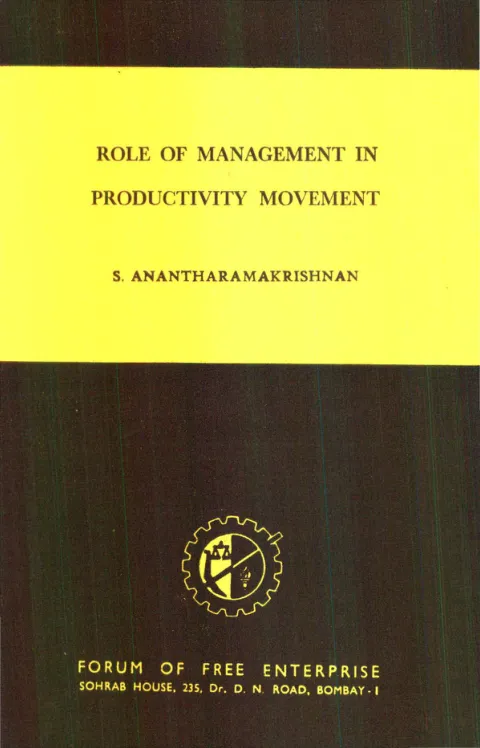
EFFICIENCY "NOT POSSIBLE" IN PUBLIC UNDERTAKING
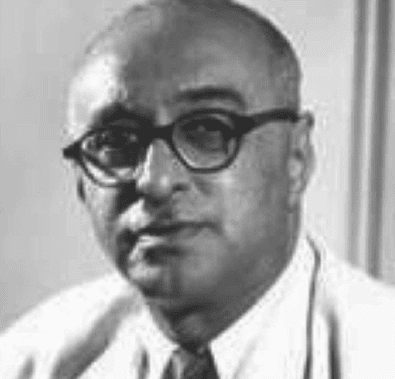
By M. R. Anantharamakrishnan, C. P. Ramaswamy Ayyar
THE FORUM OF FREE ENTERPRISE, "Sohrab House", 235, Dr. Dadabhai Naoroji Road, BOMBAY 1. · Bombay · 1956
3 pages
Summary
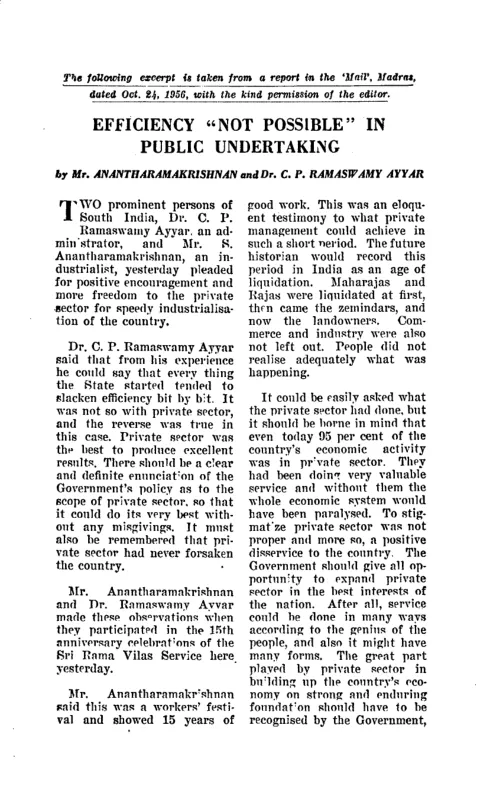
This three-page Forum of Free Enterprise pamphlet reprints an October 24, 1956 report from the ‘Mail’, Madras, of two speeches delivered at the 15th anniversary of the Sri Rama Vilas Service. The industrialist S. Anantharamakrishnan and the administrator-jurist Dr. C. P. Ramaswamy Ayyar mount a paired defence of the private sector at a moment when the Second Five-Year Plan and a wave of nationalisations were tilting the Indian economy toward state ownership. Their joint thesis is that efficiency is structurally impossible in a public undertaking and that the private sector has been doing the country’s real economic work without acknowledgement.
Ramaswamy Ayyar argues from administrative experience that everything the State has touched has slackened in efficiency ‘bit by bit’, whereas the private sector has consistently produced ‘excellent results’; he calls for a clean enunciation of the Government’s policy so that private enterprise can function without misgivings, and notes that even after the recent nationalisations 95 per cent of the country’s economic activity still rests in private hands. Anantharamakrishnan adds that public-sector inefficiency is a ‘notorious fact’ from any standard of judgement, criticises the lightning pace of legislation that even lawyers cannot keep up with, and rebuts the moral case for nationalisation by pointing out that ‘black sheep’ exist in every organisation — including the Congress party — without the whole being dissolved.
The pamphlet’s policy proposals are concrete and bounded: give nationalisation ‘rest for 2 years’; allow the private sector a well-defined sphere within the Second Plan, including transport (currently a bottleneck where the gap between resources needed and resources available is large); enlist foreign capital; and treat the question of railway efficiency as an open empirical comparison with railways abroad rather than a settled article of faith. The closing image — ‘Let them do things well for those already undertaken’ — frames state expansion as imprudent until the State has proved itself on what it has already nationalised.
Key points
-
Joint speech by industrialist S. Anantharamakrishnan and administrator C. P. Ramaswamy Ayyar at the 15th anniversary of the Sri Rama Vilas Service, reprinted by the Forum of Free Enterprise from the ‘Mail’, Madras.
-
Central claim: efficiency ‘tended to slacken bit by bit’ wherever the State entered, while the private sector produced ‘excellent results’ — making state efficiency structurally impossible.
-
Empirical counterweight to nationalisation rhetoric: even after liquidating maharajas, rajas, and zamindars, 95 per cent of India’s economic activity still ran on the private sector.
-
Anantharamakrishnan attacks the moral case for nationalisation by analogy — ‘black sheep’ exist in every organisation, including the Congress party, but no one demands the party be dissolved on that ground.
-
Concrete policy ask: a two-year moratorium on nationalisation, a clean Government enunciation of the private sector’s scope, and enlisting foreign capital alongside domestic enterprise.
-
Transport is singled out as a sphere where the Second Plan’s resource gap is unbridgeable without private participation; the speakers question whether nationalised Indian railways are in fact as efficient as foreign railways.
-
Critique of legislative process: the speed of new laws outruns even lawyers’ ability to grasp the essentials, leaving private enterprise to operate in legal fog.
-
Tone is conciliatory rather than confrontational — the speakers ask only that private enterprise be ‘allowed to play its part’ within a well-defined sphere, framing this as a falsifiable experiment rather than ideology.
Metadata and summary are AI-extracted from the source PDF and reviewed for editorial accuracy. The original work is available via the Read PDF tab above (where present); paragraph-level citation inside the PDF is deferred to a future engagement.