Summary
D. R. Pendse argues that Indian entrepreneurship is world-class but has been systematically curbed by decades of governmental control, licensing, and restrictions. He contends that when policy denies legitimate avenues to make money through industry, it perversely incentivizes rent-seeking behavior — entrepreneurs grab licenses and sit on them rather than building productive enterprises. Profit-making, in his view, is mutually beneficial: the entrepreneur takes the risk, and if they succeed, society gains; if they fail, they bear the cost.
To crystallize his argument, Pendse invokes Alfred Marshall's 1924 observation that 'a score of Tatas might do more for India than any government, British or indigenous, can accomplish.' He distinguishes JRD Tata's law-abiding approach from those entrepreneurs who flouted bad laws because they believed their work served the country — sympathizing with both. He closes by framing two messages for a think tank like CCS: India's past was open and therefore prosperous, so make it open again; and give Indian entrepreneurship the position it deserves rather than curbing it. He stresses that establishing these ideas requires sustained research output — fifty books, fifty papers — characterizing think tank work as a continuous 'ideas industry.'
Key points
- Indian entrepreneurs are 'tops' — among the best in the world — but policy has curbed rather than promoted them
- Controlling entrepreneurship pushes entrepreneurs toward license-grabbing and rent-seeking instead of productive enterprise
- Profit-making by industrialists benefits both entrepreneur and society; failure is borne privately, success rewarded by markets
- Alfred Marshall's 1924 remark that 'a score of Tatas' could do more for India than any government — British or indigenous — captures the core insight
- Pendse shares JRD Tata's law-abiding approach but understands entrepreneurs who broke unjust laws to serve the country
- Two messages for think tanks: re-establish India's historical openness, and restore entrepreneurship to its rightful place
- Think tank work is a continuous 'ideas industry' requiring sustained output — 50 books, 50 papers — to establish each principle
Transcript
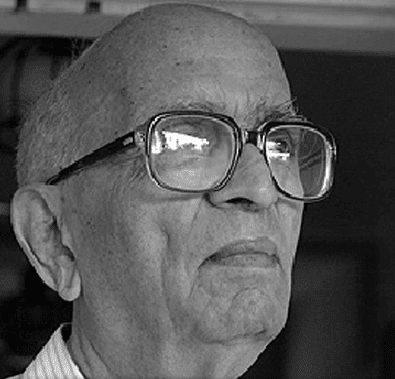
D R Pendse on Liberating India’s Entrepreneurs
Source: https://www.youtube.com/watch?v=VJtw5aOk1Pw Duration: 421.1s
D. R. Pendse (00:10): Indian entrepreneurs are tops, tops, tops. Entrepreneurs — that was the, that important idea is entrepreneur. Entrepreneurship was, instead of entrepreneurship being given full scope, we try to control entrepreneurship. So then what when we try to control entrepreneurship and they say, no. Don’t take that industrial and don’t do that. The people, the entrepreneurs said, oh, we we want to make money. The entrepreneurs want to make money. What is wrong in it? Everybody, you want to work salary, so they want to make money. So if they want to make money and you don’t allow them to make money by starting industry and you want, you say that you can make money by grabbing a license and sitting on it, we will do that. But we want to make money. Naturally, that is the business. They want to make money, you wanna allow them to make money. What is wrong in it? The whole world is making money. So why should you stop them from making money regularly so that and induce them to make money in the wrong way. That is the Indian entrepreneurship is, therefore, I’m saying, is absolutely tops. And therefore, I’m now concluding by quoting Alfred Marshall. Alfred Marshall was one of the best known, by one, the best known economist of the twentieth century. He was from Kenya. He had a picture of a poor man in his study, and he used, he said, a score of Tatas might do more for India than any government, British or indigenous, can accomplish. It is not the government where the country needs. It is a score, 20 Tatas, will do more for this country than any number of, whether it is British government or Indian government. They, we don’t need them. They’re contented there. The score of Tata, Tatas been good. Remember, he didn’t say score of entrepreneurs or score of industrialists, score of Tatas. Tatas are very well known, honest, good, integrity industrialists. So score of 20 industrialists like Tata can do better, more for the Indian, India, than any government, whether it is British government or Indian, and he said it in 1924 when we were in the British rule, under the British rule. He said that. Now that is important. So he also realized that Indian entrepreneurship is superb. Nobody can bear go ahead of that. So but we are curbing Indian, that is the whole thing. Our whole tragedy has been there. Whatever is good, we curb that instead of promoting that. The Indian, we’re curbing that. I told you that if if somebody wants to make a property, you don’t allow him to make a property. And he said, then they grab industrialized and make a profit. They don’t realize that making profit is helping both of us. That benefit both of us. No. But why not? What is what is wrong? You see, if you, you are earning a salary, you want the promotion? Promotion, want more income? If you want more income, somebody in the industry, he wants more income. Why not? If he fails, he will fail. He will, he will go out. He will go to gutters. Nobody will remember him. Doesn’t matter. He’s not asking you for any favor. He taking the risk. But if he fails, if he succeeds, if he succeeds in the industry, we should be rewarded. And he’s not coming to the government for that. He’s succeeding. People are paying him. What is wrong about all this? Now others will compete with him. They will drive him out. Others will not be able to compete with him. They will make still more money. What is wrong about all this? That is what I’m saying. The whole idea is score of Tatas can do more for India than any government, indigenous or British, can ever accomplish. So it is not the government with the government India needs for India growth. It is the Tatas, the good entrepreneurs, with the Indian, Indian needs. And we have the entrepreneurs, but the government is curbing them. Twenty, thirty, forty years, we curbed that, as I told you right in the beginning. It was absurd to the extent, maximum. That is why people like me felt that why our entrepreneurs are being, that is why they told you some industries that if it is good for the country, I don’t care whether it is in the law or not. I will do it. I can understand their feeling. I don’t share that. I, I shared JRD’s approach, but I can understand them. If they feel that something is good for the country, who cares for the law? You should change your law in your own time. If you don’t want to change, I’m going to do that. I’m convinced that it is in the industry of the country. That is entrepreneurship. And Indian entrepreneurs are absolutely on top. So that is my second message, message — the last message is two. One is to have two, two points established. One is India’s past was, India was always open and therefore prosperous. So let us make it open to make it prosper, one. And second, give Indian entrepreneurship the position which it deserves and don’t curb it. So if that is, this is the role for a think tank. Both these are to be done by a proper think tank, massive think tank industry is required to establish these things. And that is why CCS is just a small part. Use, use scope. As I told you, these are ideas industry. There are so many, so many ideas. This is just a one point, which, but this point, to be established, require 50 points. One after one, after another. So 50 books, 50 research papers, 50. Easy. It never ends. There’s a continuous thing. It is a very big idea industry. So that is a role of a think tank. And I feel that it didn’t necessarily, I, I really feel that India is absolute. We don’t see our, our own problem is ourselves. We ourselves are our own enemies. There’s all these things. Anyway.
Notable passages
"Whatever is good, we curb that instead of promoting that."
"India's past was, India was always open and therefore prosperous. So let us make it open to make it prosper"
"I shared JRD's approach, but I can understand them. If they feel that something is good for the country, who cares for the law?"
"a score of Tatas might do more for India than any government, British or indigenous, can accomplish."
Metadata and summary are AI-extracted from the source PDF and reviewed for editorial accuracy. The original work is available via the Read PDF tab above (where present); paragraph-level citation inside the PDF is deferred to a future engagement.