Summary
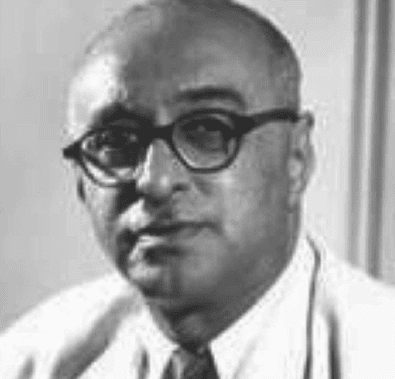
D. R. Pendse, who retired in 1991 alongside JRD Tata, recounts what it was like to operate inside India's controlled economy, particularly from 1969 onwards when controls intensified. He catalogs the apparatus of the License Raj: industrial licensing under the Dutt Committee recommendations, the MRTP Act of 1969 and its 'Concentration of Economic Power' chapter, waves of nationalization (banks, life insurance, general insurance, coal), FERA's micromanagement of foreign exchange, the Planning Commission's gap-based licensing, and even a gold control order limiting Indian women to 14-carat jewelry.
Pendse contrasts two industrialist responses to this regime. Most firms gamed it — grabbing licenses in industries where they had no expertise, then sitting on them to manufacture scarcity, inflated prices, and untaxed black money. JRD Tata refused that path, insisting that a bad law must still be obeyed while one worked publicly to change it. As a result, Tata Power could not get clearance for a 500 MW project, and TELCO was denied expansion in commercial vehicles on 'concentration of economic power' grounds, while less scrupulous competitors thrived.
Pendse frames the 1991 reforms, delivered through Manmohan Singh's first budget, as vindication of JRD's stance: the very provisions Tata had fought were repealed, and the group could finally grow — though by then both he and JRD had retired.
Key points
- Pendse's working experience was entirely within the pre-reform controlled economy, with controls worst from 1969 onwards.
- The License Raj toolkit included industrial licensing (post-Dutt Committee), the MRTP Act 1969, FERA, and Planning Commission gap-fixing.
- The MRTP Act's 'Concentration of Economic Power' chapter dropped the constitutional qualifier 'to the common detriment,' treating all bigness as bad.
- Indira Gandhi's government nationalized banks, life insurance, general insurance, and coal mines in rapid succession.
- Many industrialists exploited the system by hoarding unused licenses to create scarcity, raise prices, and generate untaxed black money.
- JRD Tata insisted on obeying bad laws while campaigning to change them — costing the Tatas a 500 MW power project and TELCO's truck expansion.
- Manmohan Singh's 1991 budget repealed the control-era provisions, retrospectively vindicating JRD's position.
Transcript
D. R. Pendse on Doing Business in India before 1991 Reforms
Source: https://www.youtube.com/watch?v=vbdFNzbM1P8 Duration: 645.8s
D. R. Pendse (00:09): I myself retired in 1991. JRD himself retired in 1991. So my experience is with pre-reform. Post-reform, we both had retired. So I don’t think he can say much about it or I can say much about it. But you have to observe, observe the the economy, what is happening. Yes, but my main experience and direct contact was in connection with pre-reform or the controlled economy. And the controls were at the worst from 1969 onwards. And that was the time when I was there. And JRD also was very much perturbed about that. So our experiences were about controls which were becoming worse and worse almost every day. And I will give you several examples of that. First, they had started what you call the industrial licensing system, which was not there. There was a Dutt Committee report on industrial licensing, whereby all major or big companies required a license to start any industry in any commodity. There was the MRTP Act, that is the Monopolies and Restrictive Trade Practices Act 1969. The worst part of that was a chapter called Concentration of Economic Power. That chapter was derived from a part in a constitution apparently saying that concentration of economic power to the common detriment should be curbed. But that word to the common detriment was conveniently forgotten, that any concentration of economic power was considered bad and they decided to curb it, which was absurd. Any large entity cannot be bad for the country. If it is working to the common detriment, it is bad. But that is MRTP Act, concentration of economic power. Then they started nationalizing at the drop of the hat, as I said. They nationalized banks, they nationalized life insurance, they nationalized general insurance, they nationalized coal mines and all sorts of things. One after another they started nationalization, which was again very wrong thing to do. But as I said, they are parts of the controlled Raj. Then they had what you call the Foreign Exchange and Regulation Act, FERA. So every small transaction in foreign exchange had to be controlled, regulated and approval of the government of of babus had to be taken. So if you have to go abroad, I had to take six, seven different approvals to get my daily allowance in foreign exchange. So that was a Foreign Exchange Regulation Act. Then there were the Planning Commission, which was the one of the worst. It became a fifth wheel, I would say, or super cabinet because every project of any size had to be approved also by the Planning Commission. Their approach was they they looked at how much was being produced in the country. Then they decided how much we needed at the end of the five year plan. Then they worked out the gap. That means if 5,000 were produced and they required 8,000, I mean, the 3,000 is the gap. So they will allow people to start industries to produce up to 3,000. That was the gap. Now who will produce it? The public sector was given the first chance. If the public sector does not want to produce it, then the small scale industry would be. Then they also don’t want to produce, then it will be open to the private sector. So that whole thing was absurd to the maximum extent. So that was the way I am putting it very crudely, but that is exactly how it works. That was a Planning Commission. Then so the Planning Commission and then the various controls. Planning Commission, instead of becoming a help, became a control or control part. Then there was a gold, gold policy also decided that Indian ladies should not use more than 14 carat of gold. One day, then she decided, and anything more than 14 carat became illegal. You can’t do that. One suddenly one. Hundreds and thousands of years, Indian ladies have been using 22 carat gold jewelry. Now everybody who was using 22 carat became became a unlawful, became a law breaker for doing nothing. So that is a sort of way the way things, now, of course, after twenty years, his successor, he withdrew all that. But after twenty years, when enough damage was done, and was gracious enough to say it was glad that his successor removed it, though it was not working. But he introduced it in the first place. So I am giving you all these examples how the controls were at the maximum and where comes your throttle of the industry. So that is the area, that is the time when we were functioning or we could not function effectively. Now JRD’s approach or response to this area of there are two approaches. One approach many industries took the approach. So what do they want? They want to know what is the gap and they want to give you license for if there’s a gap. So even if you are capable, supposing you are not capable, you are you are you are in one industry, say, commercial vehicles, and you have nothing to do with some other industries like wagons. But there’s a gap in wagon, and they are allowing giving licenses to wagon. Apply for wagons. You have no no expertise, nothing at all. So you got a license. So ask for license wherever licenses are available. Not worried about what you are capable of. Then take the license, then sit over it. Then don’t start producing. Don’t start producing. Well, if you produce, then the production will increase, prices will come down. So they don’t get the license and then give them excuses why you cannot produce, some trouble, this thing, that thing, and give them excuses for not producing it. So get a license, sit over it, and then make, so if you sit over the license and the production does not increase, the scarcity is increased. And then your scarcity is increased, then you make black money on the existing production. So that was the approach of many industrialists. That in this in this wonderful economy, best thing is to just get a license, whatever you can get, and then not don’t act on it. And you make magnificent money for the next three generations. Because you make scarcity profits, then don’t pay tax on it. So that is also black money. So nothing, everything was fine. But was not like that. Felt this is very wrong. Approach was different. Approach was that law, you see, it is famously said that law is an ass, but we must respect it as long as it exists. That is I think William Peter or somebody said that. Believed in that. Say law is a law may be bad. So you are having this law. The MRTP, bad law. Gold, bad law. Industrial licensing, bad law, but government has made it. So you can’t break it. That was his approach. If you have if you have made the law, you must try to change the law. So create public opinion, explain to the public, create public sentiment that the laws are bad and not in the interest of the country and get the law changed. But as long as the law remains, you must abide by it. That was JRD’s approach. Now that approach, because of that most of the companies of JRD Tata Group, they could not expand because of all these controls. They found it extremely difficult to put. Now Tata giving two example, Tata Power, they wanted to have a 500 megawatt project. For five years, they went down from here to there, there to here, no license given. And Tata Motors, TELCO, at that time, it was called TELCO. They wanted a expansion of producing producing truck, commercial vehicles. No way. Well, they said that will increase the concentration of economic power. You are already a large company. You will become larger and your economic power will be more concentrated, so we don’t want it. So all that, that is a sort of thing they were having. So we had big problems in all that. So we are trying to get a license for becoming a problem. And others were doing it enjoying that Licensing Raj. But we could not do that. That was the JRD’s effort. But he remember, ultimately, he won. His team, from 1960 to 1991, the whole whole philosophy was changed. Everybody agreed that whatever was done was wrong, and all the laws were repealed by Manmohan Singh first budget 1991. Reforms, we call it. The first budget that was a reform, a repeal of all these provisions. Now that is a great compliment to JRD’s thinking that all these things were bad. So they were repealed and then JRD’s company and Tata company started growing. But by that time he retired, I had also retired. But after seeing that we got what we wanted, that is what I am saying. So that was the added department. Other industries again were telling, so so many people used to tell me in industries, Mister Pendse, why are you worried of changing all these structure? Wonderful. If we did want the license, you get a license, but we are making a profit. So while trying to get the change and competition and market, who wants all that? Without doing anything, sitting at home, we are making good money. So that was it. That is the Control Raj, as I told you. First first question, I think that is what I wanted to say.
Notable passages
"my main experience and direct contact was in connection with pre-reform or the controlled economy. And the controls were at the worst from 1969 onwards."
"That is the Control Raj, as I told you."
"Approach was that law, you see, it is famously said that law is an ass, but we must respect it as long as it exists... If you have if you have made the law, you must try to change the law. So create public opinion, explain to the public, create public sentiment that the laws are bad and not in the interest of the country and get the law changed. But as long as the law remains, you must abide by it. That was JRD's approach."
"They wanted a expansion of producing producing truck, commercial vehicles. No way. Well, they said that will increase the concentration of economic power."
"The first budget that was a reform, a repeal of all these provisions."
"Hundreds and thousands of years, Indian ladies have been using 22 carat gold jewelry. Now everybody who was using 22 carat became became a unlawful, became a law breaker for doing nothing."
Metadata and summary are AI-extracted from the source PDF and reviewed for editorial accuracy. The original work is available via the Read PDF tab above (where present); paragraph-level citation inside the PDF is deferred to a future engagement.