Summary
D. R. Pendse reflects on the 1991 economic crisis and the subsequent reforms, arguing that India's two decades of socialist policies drove the country to the humiliation of physically shipping gold to Geneva to secure foreign exchange. He credits the IMF as the only institution willing to extend a loan, conditioned on a package of economic reforms that aligned with what he and a few other liberal economists had been advocating for years. Pendse contends that Manmohan Singh, whom he respects as a personal friend and patriot, was ideologically left-of-centre and not genuinely a reformer by conviction — he accepted the IMF package because there was no alternative, then implemented it with such passion that India repaid the loan a year early, an unprecedented feat in IMF history.
Pendse also recounts his own role: writing articles, advising the Tata management under JRD Tata's strong support, and famously declaring that "the shortest route from Bombay to Delhi is via Washington" — meaning he chose to persuade the IMF directly, knowing Delhi would eventually be forced to accept whatever the IMF imposed. He notes that IMF delegations visited Bombay House three times in two years to discuss economic policy with him.
Key points
- India's wrong socialist economic policies drove the country to physically ship gold from Bombay to Geneva to secure foreign exchange in 1991 — a profound national humiliation.
- The IMF was the only party willing to lend to India, and tied its loan to a package of economic reforms.
- Pendse argues Manmohan Singh was not ideologically a reformer but a left-of-centre patriot who accepted the IMF package out of necessity and implemented it with great passion.
- India repaid the IMF loan in three years instead of four — the first prepaid loan in IMF history.
- Pendse and a small group of like-minded economists had been advocating for years exactly the reforms the IMF demanded.
- Pendse coined the phrase: "The shortest route from Bombay to Delhi is via Washington" — he lobbied IMF directly because Delhi would not listen.
- IMF delegations came to Bombay House three times in two years to consult Pendse on economic policy, with JRD Tata's strong support for his work.
Transcript
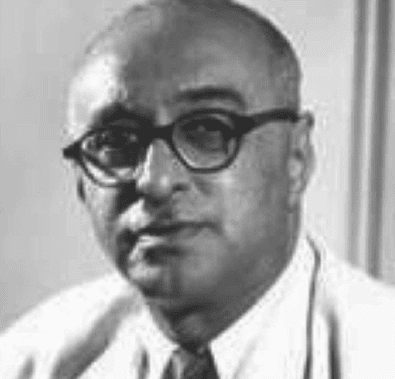
D R Pendse on the 1991 Crisis
Source: https://www.youtube.com/watch?v=gXe-SwtuHww Duration: 607.7s
D. R. Pendse (00:09): India ultimately got the whole thing changed, as I told you. All the — the laws were — most of the laws were repealed in 1991 budget and the reforms of Doctor — which Doctor announced in 1991. Most of the things were repealed, and the very fact that the government, whatever they had done over the last twenty years were repealed, that showed that they were wrong. But they repealed it. So anyway, they repealed it and then they got — and we benefited by that. We see the benefits of the reform we — we could see immediately. So that is — but who is responsible for that? You see, normally, the people say — I mean, have great respect for Doctor Manmohan Singh. He is a personal — he used to be a personal friend of mine. He used to be even now, but I have not met him for last ten years. But he was also from Cambridge University as I was, and I used to meet him many times in the past. So and I have great respect for him. I have very great even now. I think we did not deserve the man of that height anyway. So what he — he was not, in my opinion, he was not a reformer. He was ideologically. He was left of centre. He did not honestly believe in the sort of reforms that we ultimately accepted. The reforms were accepted, to use a very strong word, at the point of gun from the IMF. And at the point of gun in the sense — because our socialist, all these things which we are practicing made our situation so bad that we had to — we had to move our gold actually from India, actually physically move gold to Geneva to deposit it to get foreign exchange. It was so bad. It has never happened. It is a very great humiliation for a sovereign country that the people don’t believe in your word. They actually want to possess gold. So we had to despatch the gold from Bombay to Geneva, give — hand over the gold, and then we could get foreign exchange. It was so bad. And because it was so bad, it was very humiliating indeed for us. I mean, there’s no doubt at all about it. But we — we led ourselves to that situation. Our all these wrong policies drove us to that situation. We were ourselves responsible for it. So we can’t blame anybody else for that. Anyway, since that happened, the IMF was the only party in the world which were able to give us a loan which will cover temporarily, help us — call it. Nobody else. At the — at that time, the private loans — as now their private loans are huge — private loans are available. IMF handed over that package to him on that if you accept that package, then you will get our loan. And that loan was absolutely necessary if you wanted to get our gold back and if we wanted to come out of the complete value of this. So we had to accept the IMF package because there was nobody else giving — willing to give us a loan at all in the whole world. We had such a bad — bad name. Nobody else. So we went to the IMF because they were the only people who were willing. And IMF is a lender. They want to make sure that what they’ll give us a loan must come back. So they said if we will give you a loan, but we will give you a loan if you accept certain changes in economic policy. Because they felt that unless the changes in economic policy are made, your situation will not improve. That is exactly what we were feeling. Because the whole situation was dragged to that because of the wrong economic policy. So we had to change the economic policy and the economic — how they had to be changed, I — I have been — I and maybe one or two others, we have been writing all along last twenty — those twenty years, I have been doing exactly that. Every time I used to write, do this, do this, not do this, do this. Every now and then, every — on every aspect of economic and industrial policy, I’ve been writing articles, giving speeches that do this and do that. So and that was exactly what the IMF also wanted. So it’s all that. So, ultimately, you see, you must remember that ultimately — well, IMF — lucky that IMF wanted something which we also wanted. We — we mean they are Pendse and some other few others like — like me — want — wanted. So IMF gave you a package, gave one more thing — a package that accept this economic policy package. Say that we will introduce these policies, then we will give you the loan. Now you see, that is also humiliating for independent country, sovereign country, for somebody else to tell you that do this economic policy. Even if the policies are right, for a foreigner to tell you that adopt these policies, otherwise, I will not give the money. It is — it is humiliating. Yes. I know. So it was — it was humiliating, but had to accept it because the whole country was driven to that debt. So he accepted that. But as — a humiliation was so great and he was such a patriot that he decided that if I am expected to return the money in four years, I will do it before that. And he introduced the reforms in such a great passion that we repaid the loan one year earlier. Our loan was to be repaid in four years. We actually repaid in three years. And in IMF history, this is the first loan which was prepaid. First loan. Now see Greece at present. For months and months, it is going on. Nothing is happening. And IMF is not giving, and Greece is going down and down and down. But we did that. But, anyway — so we — so we said that, you know, this humiliation is no good. So I will do reforms so passionately that this thing will improve. Not because he was impressed by the — he knew that this was the package which was necessary, and if the package is accepted, the economic situation will improve. He — he knew that. And he had to accept it because there was no other way. So he accepted it not because he was convinced, because he, in my opinion, was not a man who was intellectually or emotionally convinced about those. He accepted it because the IMF asked him to do that. And he was a patriot. He wanted to get the loan and get the loan repaid quickly. And there was no alternative except to accept it. Now coming to personally, I’m — I told you that I have been writing articles and given speeches on all aspects of economic policy. Well, and JRD knew it very much, he strongly supported me. And that was my whole function in Tata. First, to inform the — inform or guide the Tata management as to what the government policies are, how they are bad, how they impact — and then suggest changes. Suggest changes to the public, suggest changes to the government, and tell the Tata management how the policy will affect different industries. So that was my work, and that is what I was doing. Now I will tell you, and it is a fact that it is on record. There was one big news — newspaper, whole eight columns. I gave an interview, and they published that interview with the title, “The shortest route from Bombay to Delhi is via Washington,” says — . Now what is this shortest route from Bombay? Bombay means economists like me from Bombay. And we wanted to convince the Delhi — Delhi central government to do this, do that, do that. They never accepted it. So I said in my mind, if you don’t accept it, then I think — that is absolutely necessary we must do it. And I know that one day you will have to go to IMF with a begging bowl. You can’t do anything. You have to do it because you will go down and down. And then they will tell you, and you will accept whatever they tell you. So best thing is that I go to IMF myself. Tell them what is necessary for the country. And if they accept what — what I think, I’m — one day, they will tell you and do that. Exactly. Tell you whatever. So shortest route — if I want to convince the Delhi government to do something, I must go to Washington. I will go to IMF, convince them that these are the economic policy packages necessary. Then they are convinced that they will impose the packages, and then our government will accept. But if I tell you that accept these packages, they will not accept. That was unfortunate. And that is exactly what happened. Now mind you, it is on record. Our Bombay House — there are three IMF delegations, three times in two years, came to Bombay and had three hour discussions with me and my one or two of my officers in Bombay House about the — what should be done about economic policy. And it is — it is on record. In Bombay, they — they came to see me, the IMF delegation. It is a fact. So they didn’t come to discuss — whether they came because they — they realized that I was writing something which is exactly what they wanted.
Notable passages
"First, to inform the — inform or guide the Tata management as to what the government policies are, how they are bad, how they impact — and then suggest changes."
"There are three IMF delegations, three times in two years, came to Bombay and had three hour discussions with me and my one or two of my officers in Bombay House about the — what should be done about economic policy."
"The reforms were accepted, to use a very strong word, at the point of gun from the IMF."
"And in IMF history, this is the first loan which was prepaid."
"JRD knew it very much, he strongly supported me. And that was my whole function in Tata."
Metadata and summary are AI-extracted from the source PDF and reviewed for editorial accuracy. The original work is available via the Read PDF tab above (where present); paragraph-level citation inside the PDF is deferred to a future engagement.