edited volume · proceedings
A Package Plan to Fight Inflation
FORUM OF FREE ENTERPRISE, SOHRAB HOUSE, 235 DR D N ROAD BOMBAY-1 · Bombay · 1974
24 pages
Summary
A Package Plan to Fight Inflation gathers four public lectures delivered in July 1974 under the auspices of the Forum of Free Enterprise — by Dr. R. C. Cooper (Bangalore Centre, 11 July), Dhirajlal Maganlal (Bombay, 11 July), Minoo R. Shroff (Bombay, 10 July), and Prof. Gangadhar Gadgil (Bombay, 10 July). Speaking against a backdrop of devaluation, a 54.1% rise in the Wholesale Price Index between May 1972 and May 1974, and the spectre of mass unrest already manifest in Gujarat and Bihar, the four contributors converge on a common diagnosis: India’s inflation is not an imported accident but the cumulative product of deficit financing, heavy-industry-biased planning, licensing-permit raj, hoarding, and the suffocation of agriculture and consumer-goods output.
Key points
-
Four Forum of Free Enterprise lectures, delivered in July 1974 by R. C. Cooper, Dhirajlal Maganlal, Minoo R. Shroff, and Gangadhar Gadgil, converge on inflation as the cumulative product of deficit financing, heavy-industry planning bias, and licensing controls rather than an imported accident.
-
Dr. R. C. Cooper calls for scrapping the licence-permit-quota system outright and narrowing the Monopolies and Restrictive Trade Practices Act so it targets actual consumer exploitation rather than penalising industrial scale.
-
Cooper proposes a rural-roads programme of at least Rs. 500 crores a year as a make-work and growth multiplier, alongside Free Trade Zones to attract labour-intensive West German, Japanese, and American industry.
-
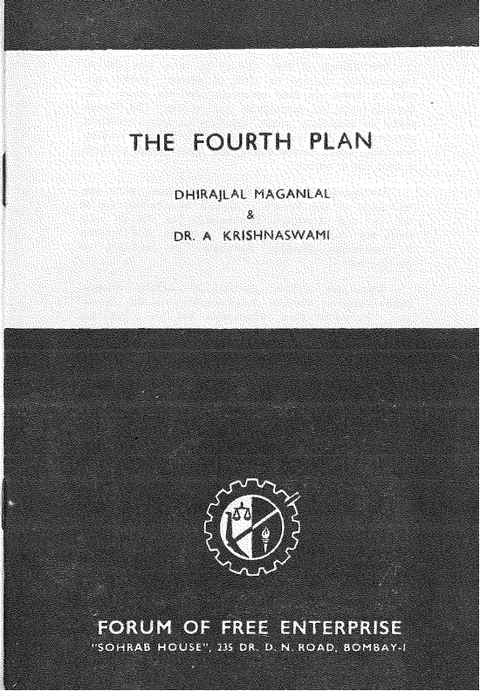
Dhirajlal Maganlal traces the roots of the inflation to the Second Five-Year Plan’s heavy-industry bias and neglect of agriculture, citing an 80 per cent price rise across the Second and Third Plans and a 57 per cent devaluation in 1966.
-
Maganlal reports that prices rose 29 per cent and money supply 17 per cent in 1973-74 alone, while the rupee’s purchasing power fell 19 per cent, and calls inflation “the worst form of taxation on weaker sections.”
-
Maganlal demands an end to deficit financing, citing unauthorised overdrafts on the Reserve Bank of Rs. 1,200 crores in 1973-74, and recommends demonetising high-denomination notes through schemes such as SEMIBOMBLA.
-
Minoo R. Shroff rejects the claim that India’s inflation is merely part of a benign global trend, noting Wholesale Price Index inflation rose 54.1 per cent between May 1972 and May 1974 against under 2.5 per cent compound growth through the 1950s.
-
Shroff attributes the acceleration to falling per-capita foodgrain availability, stagnant industrial production, and missed Fourth Plan targets in cloth, fertilisers, cement, steel, and aluminium that fell short by 15 to 60 per cent.
Essays
I. Some Practical Measures
By DR. R. C. COOPER
Dr. R. C. Cooper opens the volume with a programme of ‘some practical measures’ to attack the basic causes of inflation. He argues that committees and notifications cannot help — only a fundamental change of attitude can — and lists what such a change would mean in operation: scrapping the licence-permit-quota system rather than tinkering with it, narrowing the Monopolies and Restrictive Trade Practices Act so it targets actual consumer exploitation rather than penalising scale, freeing the larger industrial houses to organise mass production of essentials, and rejecting fashionable hoarding ‘solutions’ (high interest rates, ECA/MISA enforcement, freezing of deposits or demonetisation) as either unworkable or destructive of public confidence in banking. In their place he proposes selective dumping of imported commodities to break hoarding rings, an attack on the parallel black-money economy via political-funding reform and tax-rate cuts, a massive integrated rural-roads programme as a make-work and growth multiplier (at least Rs. 500 crores a year), peaceful underground and external nuclear explosions for mining and water-works, recycling of scarce resources including municipal garbage, and Free Trade Zones to attract West German, Japanese and American labour-intensive industry. The Tata Chemicals Fertiliser Project is held up as the emblematic instance of ideological delay damaging the real economy.
- Frames inflation as solvable only by attacking basic causes — production, employment, population growth — not by committees or controls.
- Calls for wholesale scrapping of the licensing-permit-quota system; argues the ‘Subramaniam Formula’ failed because bureaucrats resent loss of patronage.
- Reads the MRTP Act as a brake on the very industrial houses best able to organise mass production of essentials; the ‘fear of dominance’ is ‘a myth.’
- Proposes a Rs. 500-crore-a-year rural roads programme as the principal plank — integrating rural and urban economies and easing congestion.
- Argues for peaceful underground/external nuclear explosions in mining, dams and irrigation; recycling of scarce materials; and Free Trade Zones to import capital and technology at no cost.
II. Planning Policies are Defective
By DHIRAJLAL MAGANLAL
Dhirajlal Maganlal — a past President of the Bombay Stock Exchange writing as a businessman who watched the warnings ignored — locates the seeds of present inflation in the Second Five-Year Plan’s heavy-industry bias and the consequent neglect of agriculture. He marshals the figures: 80 per cent price rise across the Second and Third Plans; 57 per cent rupee devaluation in 1966; a 60 per cent rise in the general price level over 1969–1974; food prices up 62 per cent, paper money up 70 per cent, while real output of necessities rose only 12 per cent; in 1973–74 alone, prices up 29 per cent, money supply up 17 per cent and the rupee’s purchasing power down 19 per cent. The disastrous effects, he writes, run from labour unrest and mass upsurges in Gujarat and Bihar to a corruption of moral standards that ‘may even devour democracy.’ His package: positive incentives for production via excise relief and lower taxes, an end to deficit financing, replacement of price controls by dual pricing, liquidation of inventories under industrial pressure, and mopping up of high-denomination black money through schemes like SEMIBOMBLA.
- Diagnoses Second Plan heavy-industry bias and agricultural neglect as the structural origin of India’s inflationary pressures.
- Cites cumulative price rises of 80 per cent over the Second and Third Plans, a 57 per cent devaluation in 1966, and a 29 per cent price rise in 1973–74 alone.
- Reads inflation as the ‘worst form of taxation on weaker sections’ and the engine of mass upsurges in Gujarat and Bihar.
- Demands stoppage of deficit financing and unauthorised overdrafts on the Reserve Bank (Rs. 1,200 crores in 1973–74).
- Recommends replacing price controls with dual pricing for sugar and steel and demonetising high-denomination notes via SEMIBOMBLA-type schemes.
III. Increase Production to Curb Inflation
By MINOO R. SHROFF
Minoo R. Shroff rebuts the consoling claim that, because inflation is now a global phenomenon, its Indian incidence need not cause anxiety. The test, he writes, must be a country’s own growth record; on that test India is failing. Wholesale Price Index inflation, under 2.5 per cent compound through the 1950s and 6.5 per cent through the 1960s, rose 54.1 per cent between May 1972 and May 1974. Money supply has grown at 15 per cent annually in the last two years — twice the rate of WPI rise in the preceding decade — driven by lower per-capita foodgrain availability, stagnant industrial production, the psychology of scarcity, and government incapacity. Compound growth rates of rice, pulses, oilseeds and cotton actually fell between the 1950s and 1960s; Fourth Plan industrial targets in cloth, fertilisers, cement, steel and aluminium were missed by 15–60 per cent; power shortages run 15–60 per cent across the country. Shroff insists that monetary instruments, despite their limitations, have a ‘vital role’ at the present juncture, and that the most enduring solution is to raise productivity across all sectors with active cooperation from trade, industry, labour, administration and consumers.
- Rejects the argument that worldwide inflation makes Indian inflation tolerable — each country must be judged by its own growth record.
- Reports WPI rising 54.1 per cent between May 1972 and May 1974, with money supply growth of 15 per cent per annum, twice WPI growth in the previous decade.
- Documents falling compound growth rates between the 1950s and 1960s for rice, pulses, oilseeds and cotton, and Fourth Plan shortfalls of 15–60 per cent in cloth, fertilisers, cement, steel and aluminium.
- Warns of a ‘virtual breakdown’ of infrastructure — power, coal at 79 million tonnes growing only 5 per cent in a decade, rail and wagon shortages.
- Argues monetary measures plus a national push on productivity, not theatrical anti-hoarding raids, are the path out of inflation.
IV. Measures to Control Inflation
By PROF. GANGADHAR GADGIL
In the rendered pages of his lecture, Prof. Gangadhar Gadgil — Economic Adviser to the Apte group of industries — places India’s situation on a spectrum: inflation below 10 per cent is a ‘worry but not serious worry’; 10–15 per cent is serious; above 15 per cent is cause for alarm; India’s prices have risen over 28 per cent in the past year, so ‘all the alarm bells should be ringing.’ Unchecked, he warns, the economy will collapse and the social and political structure will disintegrate. He attributes the inflation to six factors — 14.2 per cent money-supply growth in 1973–74, stagnation in industry and agriculture, an inefficient distribution system, hoarding and speculation in the parallel economy, imported inflation, and the oil-cum-PL480 shock. With production unlikely to rise in the near term, he argues, monetary measures must do the heavy lifting; the rendered pages survey demonetisation (likely to lower prices and wages mechanically without eliminating scarcity psychology), the SEMIBOMBLA variant (more effective in the organised sector and on black money but a ‘surgical operation’ with disturbing effects on contracts), and compulsory savings (an equitable, predictable squeeze of purchasing power) — the discussion is cut off at page 18.
- Treats inflation above 15 per cent as a regime-level alarm; cites India’s last-year rise of over 28 per cent.
- Lists six contributory factors: rapid money-supply growth (14.2% in 1973–74), industrial-cum-agricultural stagnation, inefficient distribution, hoarding, world-market inflation, and the oil-and-PL480 import shock.
- Argues monetary measures must lead the response because production cannot rise quickly enough.
- Surveys demonetisation, SEMIBOMBLA and compulsory savings; weighs their efficacy on prices, wages, black money and the ‘scarcity psychology.’
- Reads SEMIBOMBLA as more potent than demonetisation but a ‘surgical operation’ that disturbs contracts and inflicts undeserved losses on buyers.
Metadata and summary are AI-extracted from the source PDF and reviewed for editorial accuracy. The original work is available via the Read PDF tab above (where present); paragraph-level citation inside the PDF is deferred to a future engagement.