classical liberal
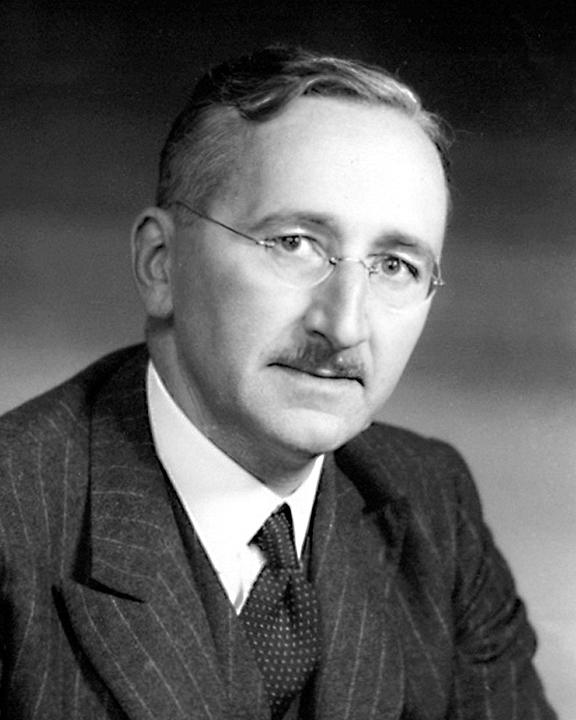
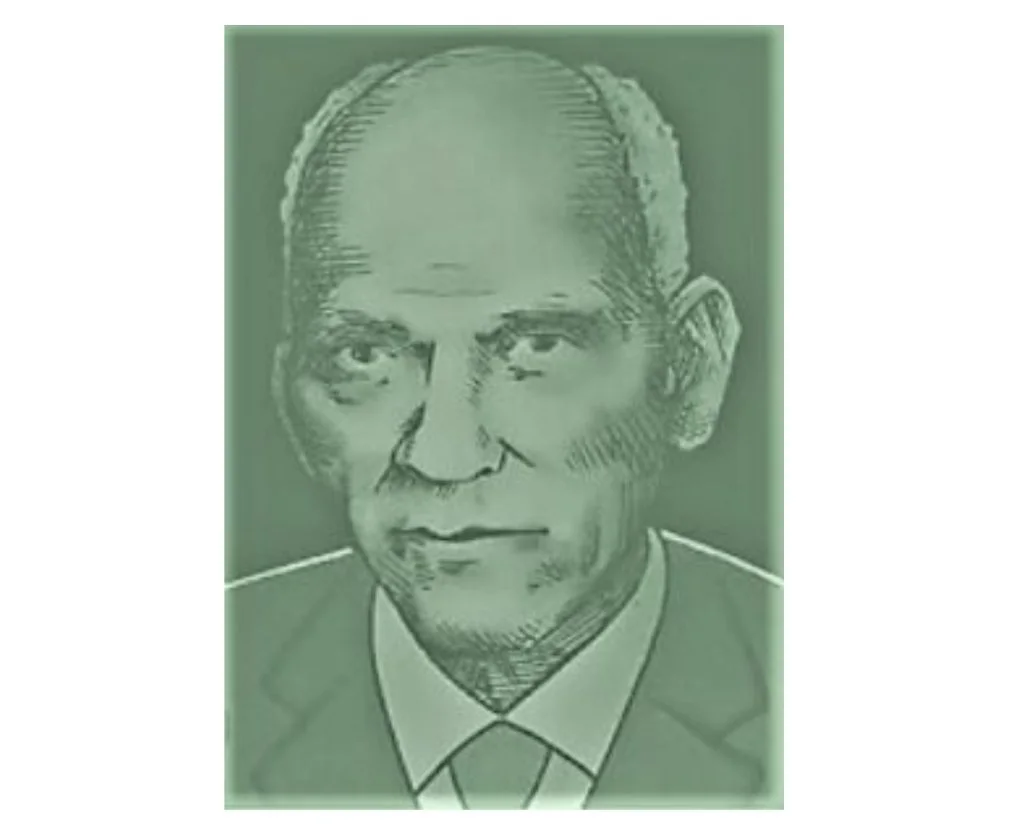
Friedrich Hayek
Friedrich August von Hayek
1899–1992
How Friedrich Hayek is discussed in this archive
Authored 2 works in the archive.
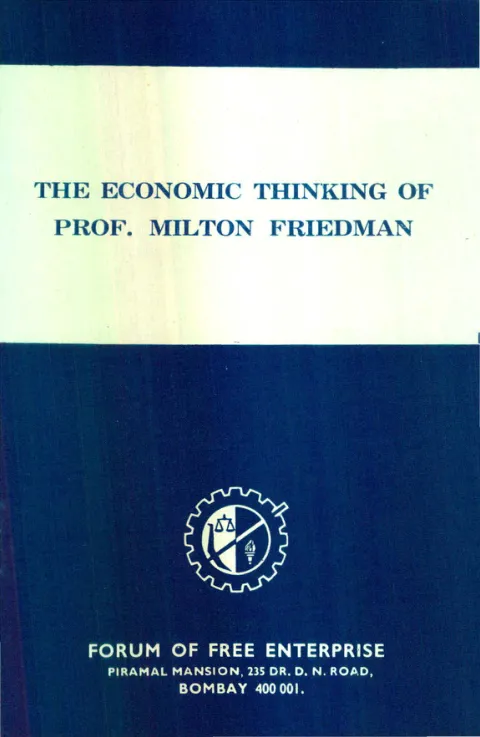
Referenced in 16 other works , including The Hayek-Keynes Debate, 1931-1971 | by Sudha R. Shenoy , An Auxiliary for Historians: The Contribution of Older Austrians , and The Economic Thinking of Prof. Milton Friedman .
In The Hayek-Keynes Debate, 1931-1971 | by Sudha R. Shenoy : Hayek is the central protagonist of the debate Shenoy reconstructs; she summarizes his critique of Keynes, his Prices and Production lectures, and his analysis of the relative price structure.
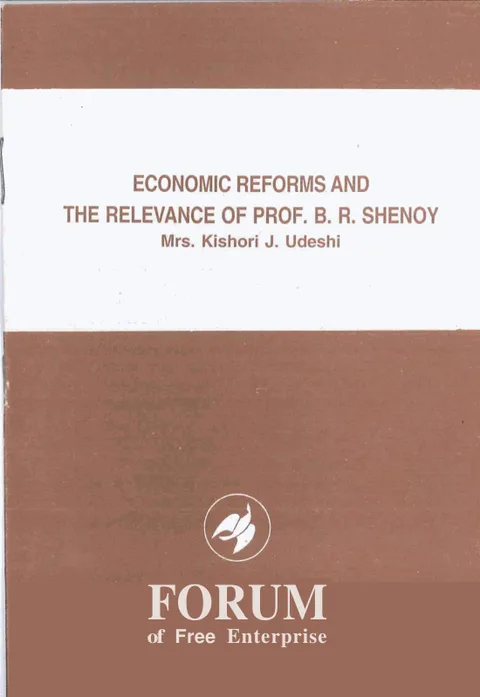
In Economic Reforms and the Relevance of Prof. B. R. Shenoy : Hayek is invoked as Shenoy's closest intellectual parallel — both ostracised from policy corridors, but only Hayek belatedly honoured — making the comparison a pointed indictment of India's failure to acknowledge its own heterodox economists.
In Report : Karnik invokes Hayek's 'Fatal Conceit' as the canonical statement of planning hubris — using it to frame his rejection of the State-versus-market dichotomy in favour of institutional complementarity.
In An Auxiliary for Historians: The Contribution of Older Austrians : Named as the culmination of the older Austrian tradition and credited with the concept of the catalaxy and the Hayekian triangle.
In The Economic Thinking of Prof. Milton Friedman : Brahmananda contrasts Friedman with Hayek, citing Hayek's uncompromising anti-inflation stance as the stricter standard against which Friedman's accommodation to Keynesianism falls short, aligning himself with the Austrian position.
By Friedrich Hayek (2)
-
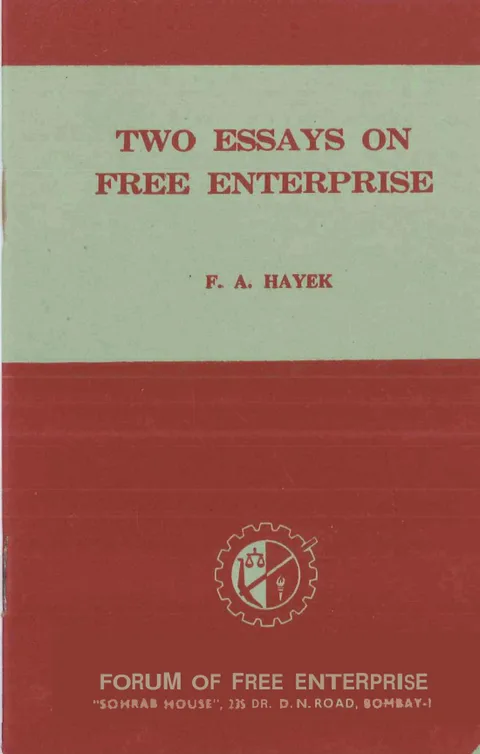
Two Essays on Free Enterprise
1962 · pamphlet
-
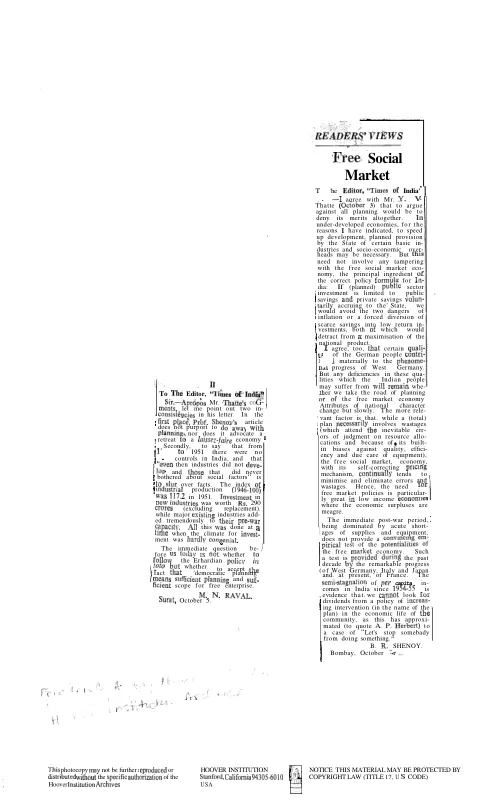
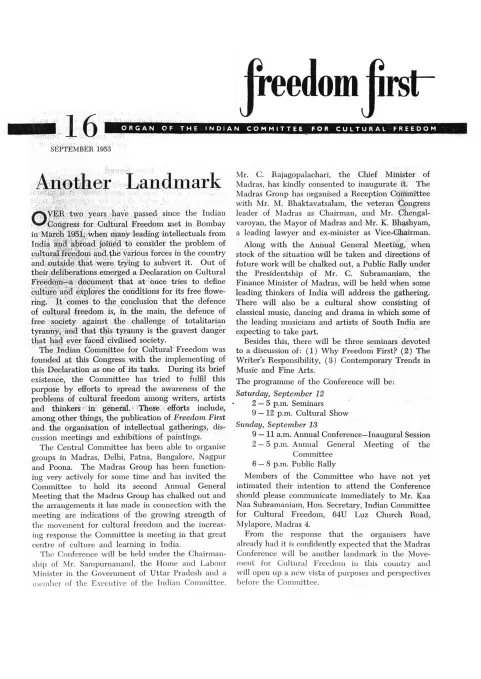
Shenoy-Hayek Correspondences, Set II
1959 · correspondence
Nothing here matches. Clear the search or remove some filters.
Matches inside Friedrich Hayek's works and pages
Mentioned in (42)
Primary works (37)
- The Hayek-Keynes Debate, 1931-1971 | by Sudha R. Shenoy · 2009
- "The doctrines generally accepted among English economists contemporaneous with Keynes were challenged in fundamental respects by an alternative analysis developed on the continent and propounded in Britain by Professor Hayek." · Framing of Hayek's role
- "In his first English work, the four lectures published as Prices and Production, Hayek questioned the concept of price level" · Hayek's challenge to aggregative concepts
- Economic Reforms and the Relevance of Prof. B. R. Shenoy · 2007
- "She closes by likening Shenoy to Hayek—both 'hounded out of the corridors where economic counsel was sought,' but only Hayek belatedly honoured" · closing comparison that frames the lecture's lament about Shenoy's lack of recognition
Show all 37
- Report · 2005
- "Karnik articulates the liberal position as rejecting any false State-versus-market dichotomy in favour of complementarity, invoking Hayek's "Fatal Conceit" as the danger of planning hubris." · Karnik deploys Hayek's title-concept against planning ambition in his liberal economic argument
- An Auxiliary for Historians: The Contribution of Older Austrians · 2003
- "standard Hayekian triangle or what you want to call it." · Describing her diagram of the stages of production
- "finally Hayek, culmination, you might say, who gives the name the catalaxy." · Placing Hayek at the end of the intellectual lineage
- The Economic Thinking of Prof. Milton Friedman · 1977
- "Hayek, the Austrians, Gurley and Shaw — arguing that Friedman's genuine originality lies less in the propositions themselves than in synthesising them and subjecting them to systematic empirical test." · Hayek named among the thinkers whose individual contributions Brahmananda credits, disputing Friedman's originality
- "Contrasts Hayek's uncompromising anti-inflation stance with Friedman's accommodation, aligning the author with classical economists like Ricardo, Hume, J. S. Mill and Marshall who preferred a falling-price-level path on grounds of social justice." · key-points summary of Brahmananda's positioning of Hayek against Friedman
- A PHILOSOPHY OF BUSINESS · 1972
- "He cites Hayek's Road to Serfdom and Mahatma Gandhi on the dangers of state aggrandisement" · Hayek's warning about the slide from planning to tyranny is invoked to ground the essay's defence of private enterprise
- Essays by Foreign Economists · 1971
- "the table of contents lists pieces by Milton Friedman, B. A. Tarlton, F. A. Hayek, G. Carl Wiegand, W. H. Hutt, Colin Clark (two essays), P. T. Bauer (three essays), Dudley Dillard, and Eugene Black" · Hayek listed as a contributor alongside Friedman and Bauer in the Forum's flagship compilation
- Fundamental Right to Property · 1971
- "The booklet is rounded out with framing quotations from Eugene Black, F. A. Hayek's The Road to Serfdom, Max Eastman on Marx, and A. D. Shroff." · Hayek cited as an authority in the booklet's closing anthology of liberal voices
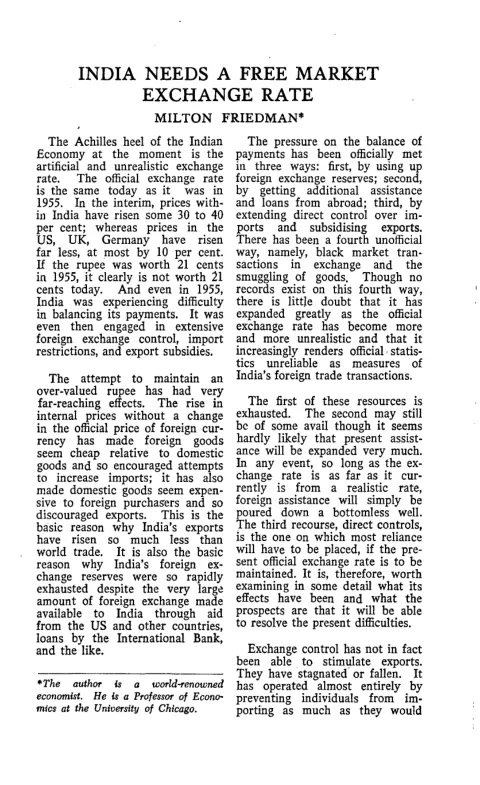
- INDIA NEEDS A FREE MARKET EXCHANGE RATE · 1963
- "Friedman closes with a Hayekian appeal to dispersed knowledge" · summary frame: Friedman invokes Hayek's epistemic argument to ground his free-market case for the rupee
- "A market rate would harness the dispersed specialised knowledge of millions of Indians — a Hayekian argument that planners, however able, cannot collectively match the aggregate knowledge of the population." · key-points restatement that names the Hayekian framework as the load-bearing epistemic premise
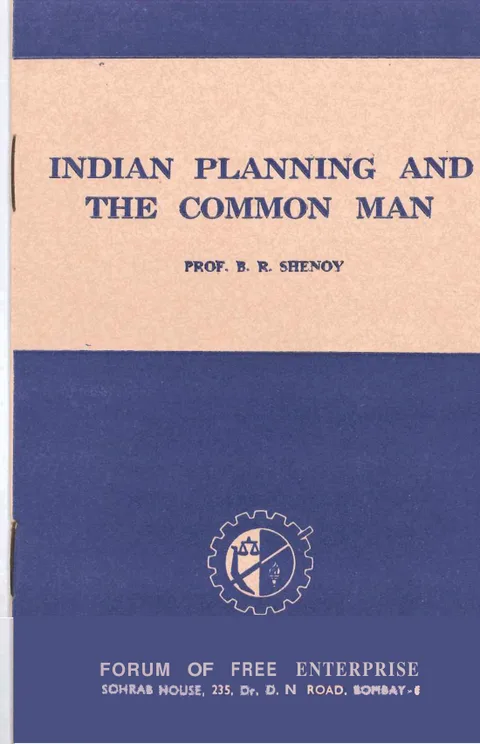
- Indian Planning and the Common Man · 1962
- "The pamphlet closes with an appendix listing twenty-one recommended works — Hayek, Mises, Robbins, Roepke, Erhard, Bauer, Hazlitt and others — that constitute Shenoy's classical-liberal canon." · Hayek heads Shenoy's recommended reading list, signalling intellectual lineage
- "The appendix's 21-item reading list — Hayek (multiple), Mises, Robbins, Roepke, Erhard, Colin Clark, P. T. Bauer, Henry Hazlitt — anchors the polemic in the Mont Pelerin/classical-liberal tradition." · key-points restatement of the Hayek-led reading list
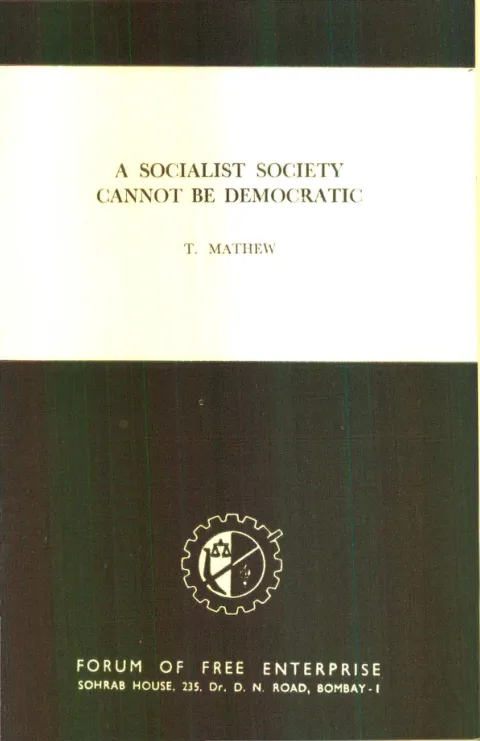
- A Socialist Society Cannot Be Democratic · 1960
- "drawing on Dicey, Hayek and Tocqueville, Mathew contends that planning's necessary discretion is constitutive of arbitrary government" · rule-of-law section; Hayek is invoked as authority for the incompatibility of discretionary planning with constitutional freedom
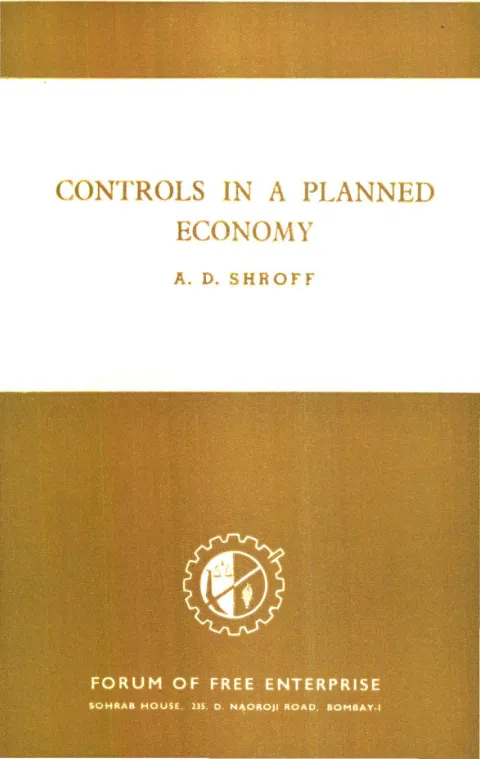
- CONTROLS IN A PLANNED ECONOMY · 1960
- "Shroff invokes Hayek's warning that economic control is the control of the means for all our ends" · Hayek's formula is deployed as the foundational theoretical frame for the critique of India's Second Plan controls
- "He cites Hayek's Road to Serfdom to frame economic control as control of the means for all human ends, not merely one sector" · Hayek's Road to Serfdom is the intellectual anchor of Shroff's anti-planning argument
- CRISIS OF CONTROLS · 1960
- "The essay draws on Hayek ("economic control is the control of the means for all our ends") and Hilaire Belloc to argue that economic controls inevitably compound, demoralise citizenry, and corrode liberty." · theoretical grounding for Vaidya's central thesis that controls are not merely inefficient but incompatible with a free society
Opinion pieces (2)
- B.R. Shenoy : India's First Neoliberal?
- "It was at LSE that Shenoy came in contact with Friedrich Hayek who was there to deliver lectures in the wake of the Great Depression of 1929" · the formative encounter shaping Shenoy's neoliberal orientation
- "effusive praise from the likes of Milton Friedman, Friedrich Hayek, Peter Bauer, Henry Hazlitt" · the constellation of Western neoliberal luminaries who endorsed Shenoy's work
- Swatantra Party : A Big Tent Challenge to Congress Hegemony
- "He would cite the likes of Milton Friedman and Friedrich Hayek in his writings." · identifies Hayek as one of Masani's cited intellectual sources for market liberalism
Excerpts (1)
- Freedom and Economic Freedom - Bibek Debroy, 2008
- "Friedrich Hayek** wrote a very influential book titled "[The Road to Serfdom](https://en.wikipedia.org/wiki/The_Road_to_Serfdom)." This book not only represents the essence of what is now called economic freedom, it also makes the important distinction between negative human rights (the core) and positive human rights (the undesirable and the noncore)." · Hayek's 1944 book is the theoretical anchor for Debroy's entire argument about freedom and economic freedom