classical liberal
Alexis de Tocqueville
1805–1859
Also known as: Tocqueville
How Alexis de Tocqueville is discussed in this archive
Referenced in 4 other works , including Liberalism in South Asia , A Socialist Society Cannot Be Democratic , and Forty-Three Years of Independence .
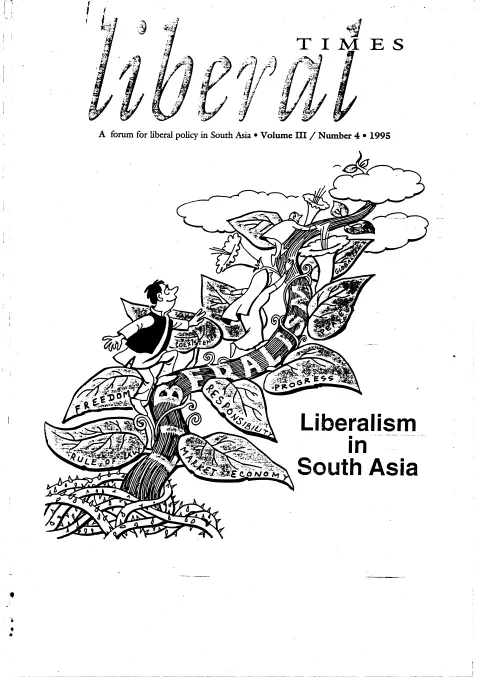
In Liberalism in South Asia : Tocqueville is named alongside Mill, Bastiat, and Spencer in Doering's closing reference as one of the nineteenth-century liberal theorists in the canonical liberal genealogy.
In A Socialist Society Cannot Be Democratic : Tocqueville is cited alongside Hayek and Dicey in the rule-of-law section, and his distinction between democracy-as-equality-in-liberty and socialism-as-equality-in-servitude closes the essay's argument.
In Forty-Three Years of Independence : Palkhivala cites Tocqueville's observation that liberty must be paired with a companion virtue — morality, law, justice — as the philosophical framework for his critique of India's unchecked licence masquerading as freedom.
In The Secular State : Rajaji cites Tocqueville's observation that Americans regard religion as indispensable to republican institutions, using it to argue the Indian secular state aligns with the American rather than the European conception of secularism.
Mentioned in (15)
Primary works (12)
- Liberalism in South Asia · 1995
- "The essay breaks off on page 20 with a reference to 19th-century liberal theorists including John Stuart Mill, Alexis de Tocqueville, Frédéric Bastiat, and Herbert Spencer." · Tocqueville is listed in Doering's nineteenth-century liberal canon
Show all 12
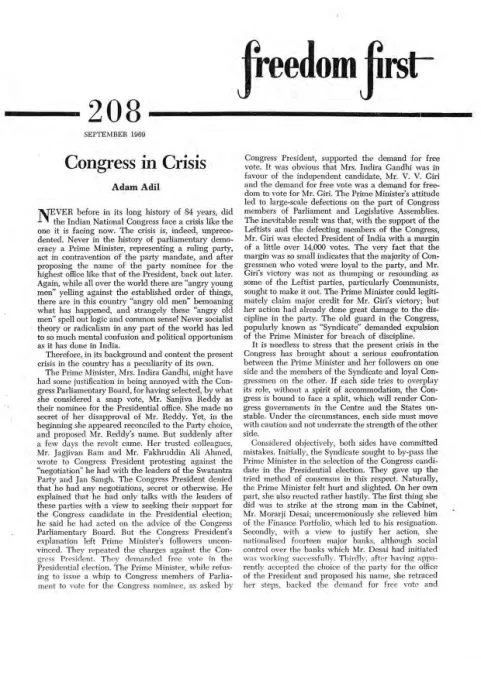
- A Socialist Society Cannot Be Democratic · 1960
- "drawing on Dicey, Hayek and Tocqueville, Mathew contends that planning's necessary discretion is constitutive of arbitrary government" · rule-of-law section; Tocqueville's maxim on liberty versus servitude provides the essay's closing rhetorical flourish
Excerpts (2)
- Forty-Three Years of Independence
- "De Tocqueville made the profound observation that liberty cannot stand alone but must be paired with a companion virtue: liberty and morality; liberty and law; liberty and justice; liberty and the common good; liberty and civic responsibility." · Tocqueville's pairing of liberty with virtue is the lecture's normative standard for evaluating India's democratic health
- The Secular State
- "The American people hold religion to be indispensable to the maintenance of republican institutions (Tocqueville)." · Rajaji invokes Tocqueville to demonstrate the pro-religion underpinning of American secularism