speech
OUR ECONOMIC FUTURE
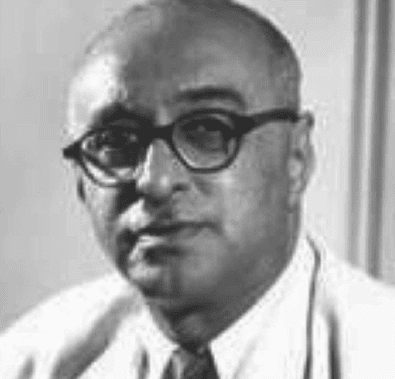
By A. D. Shroff
FORUM OF FREE ENTERPRISE, SOHRAB HOUSE, 235, D. NAOROJI ROAD, BOMBAY-1 · Bombay · 1958
12 pages
OUR ECONOMIC FUTURE
By A. D. Shroff
Summary
Delivered as a talk under the auspices of the Forum of Free Enterprise in Bangalore on 17 January 1958 and reprinted as a Forum pamphlet, A. D. Shroff’s “Our Economic Future” is a sharply argued indictment of the policy regime built around the Second Five-Year Plan. Shroff opens by chiding the country for letting regional quarrels over language and States’ reorganisation distract it from an unusually difficult economic situation. He then walks the lay reader through the principal symptoms: a recurring food shortage that has forced Government to import grain at heavy cost in foreign exchange; sterling balances that fell by Rs. 330 crores in a single week of January 1958; an outstanding gap of Rs. 700 crores against the Plan’s remaining requirements; and a Capital Market “practically dead” because confiscatory direct taxation has destroyed the incentive to save and invest.
The diagnosis is unsparing. Shroff blames the “thoughtless and indiscriminate issue of import licences in 1956”, the Planning Commission’s under-estimate of foreign-exchange needs, the lack of coordination between the Commerce and Finance Ministries, and a structurally over-ambitious Public Sector outlay that survives only because of “prestige”. He argues that periodic Five-Year Plans are not suited to Indian conditions, that economic development must be “a continuous process” under flexible planning, and that the State has crowded out both the new-issues market and the small saver. Anti-corruption is treated as a structural reform: Shroff renews the Forum’s suggestion that the Home Ministry compile and publish a list of Ministers’ commercial relations and connections, a proposal the Home Minister had dismissed as “not practicable”.
The closing pages frame the alternative. Shroff calls for a “radical change in our economic policies”, the pooling of expertise across party lines, voluntary consumers’ associations to discipline hoarders and profiteers, and a tax regime that invites both domestic savings and foreign capital. The pamphlet ends on his characteristic warning that the attempt to destroy the acquisitive society is producing an “authoritarian State” — a line that, together with the Eugene Black epigraph (“People must come to accept private enterprise not as a necessary evil, but as an affirmative good”) and Shroff’s own back-cover credo (“Free Enterprise was born with man and shall survive as long as man survives”), supplies the pamphlet’s polemical bookends.
Key points
-
Frames India’s economic crisis (food shortage, foreign-exchange depletion, dead Capital Market) as a consequence of the Second Five-Year Plan and bad licensing policy, not of monsoons or fate.
-
Documents specific figures: sterling balances down Rs. 330 crores in the week ending 3 January 1958, Rs. 95 crores temporary IMF loan, Rs. 198 crores reserves vs. Rs. 700 crores outstanding gap on Plan requirements.
-
Public Sector outlay under the Second Plan now reset to Rs. 4,800 crores, with Rs. 1,500 crores spent in two years and Rs. 3,300 crores still to be spent in three — a pace Shroff calls inflationary and unfundable.
-
Attributes the foreign-exchange crisis to the “thoughtless and indiscriminate issue of import licences in 1956” and to the lack of coordination between the Commerce and Finance Ministries.
-
Rejects rigid periodic Plans, calling for continuous, flexible development planning suited to Indian conditions; treats the “core of the Plan” retreat as a tacit admission of error.
-
Argues that confiscatory direct taxation has both reduced the capacity to save and dissuaded investors, leaving under-writers stuck with 90–95% of new equity issues.
-
Treats corruption as a structural threat: renews the Forum’s call for the Home Ministry to publish a list of Ministers’ commercial connections, and cites the State Trading Corporation’s cement monopoly profits as evidence that Government itself profiteers.
-
Closes by warning that ever-expanding State powers are turning India into an “authoritarian State” and pleads for the pooling of all citizens’ expertise irrespective of party.
Generated by the v1.5 extraction pipeline. Awaiting editorial review.
Metadata and summary are AI-extracted from the source PDF and reviewed for editorial accuracy. The original work is available via the Read PDF tab above (where present); paragraph-level citation inside the PDF is deferred to a future engagement.