speech
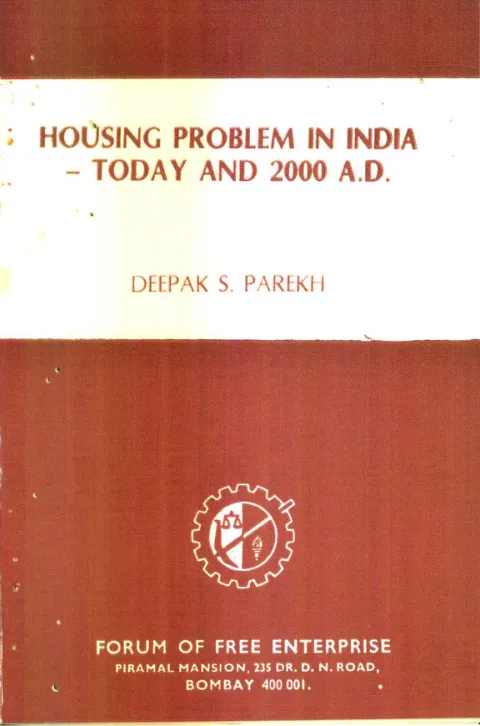
Housing Problem in India — Today and 2000 A.D.
Published by M. R. PAI for the Forum of Free Enterprise. 235, Dr. Dadabhai Naoroji Road, Bombay-400 001, and Printed by S. V. Limaye at India Printing Works, 9, Nagindas Master Road Ext. 1, Fort, Bombay-400 023. · Bombay · 1988
20 pages
Housing Problem in India — Today and 2000 A.D.
By DEEPAK S. PAREKH
Summary
Deepak S. Parekh, then Managing Director of HDFC, uses a Forum of Free Enterprise lecture (delivered 1 June 1988) to lay out the scale, causes and likely trajectory of India’s housing shortage as the country approaches the year 2000. He concedes that the early post-independence neglect of housing was understandable while food, irrigation and heavy industry took priority, but argues that with food production no longer an overriding crisis, housing and education are now the country’s two paramount basic-needs problems. Using NBO data he charts a shortage rising from 9 million units in 1951 to a projected 39.1 million by 2001, with about 30 million urban Indians already living in slums and one-fifth of the population effectively houseless or sub-standardly housed.
Parekh traces the worsening situation to five reinforcing factors: a population explosion projected to cross one billion by 2000, accelerating rural-to-urban migration (urban growth at ~4% versus general 2–2.5%), the historically low priority accorded to housing in the Five-Year Plans (investment falling from 34% in the First Plan to ~10% in the Seventh, public housing investment from 16% to 1.6%), restrictive laws and regulations, and the runaway cost of land and materials. He singles out the Urban Land (Ceiling and Regulation) Act 1976, the Rent Control Act, restrictive municipal building bye-laws and density norms, and Maharashtra’s withdrawal of stamp-duty exemption on residential units as policies that, however well-intentioned, have shrunk supply, encouraged ‘pugree’ deposits, hoarded vacant flats and pushed conforming construction out of reach of the poor.
The second half of the talk reads as a programme for a market-friendly housing-finance architecture. Parekh notes that only about 25% of housing investment in 1982–83 came from formal sources (LIC, GIC, HUDCO, banks, HDFC and the co-operative sector), with the bulk supplied by households and employers, and welcomes the Seventh Plan’s frank admission that the major responsibility for house construction must be left to the private sector. He endorses the new National Housing Policy and the formation of the National Housing Bank, calls for lowered construction norms, mortgage-insurance legislation, an ‘approved housing lender’ regime, and recognition of housing as an industry so that fiscal incentives can channel savings into the sector. He casts the Government primarily as facilitator and promoter — with direct provision reserved for amenities (water, sanitation) and subsidised shelter for the weaker sections — and closes with the warning that without a satellite-township strategy, mass-transit investment and re-balancing of employment toward rural and semi-urban areas, urban centres will face ‘unbearable pressure’ in the next decade.
Key points
-
Housing shortage projected to rise from 9 million units in 1951 to 39.1 million by 2001, with rural shortage growing faster than urban due to population and income gaps.
-
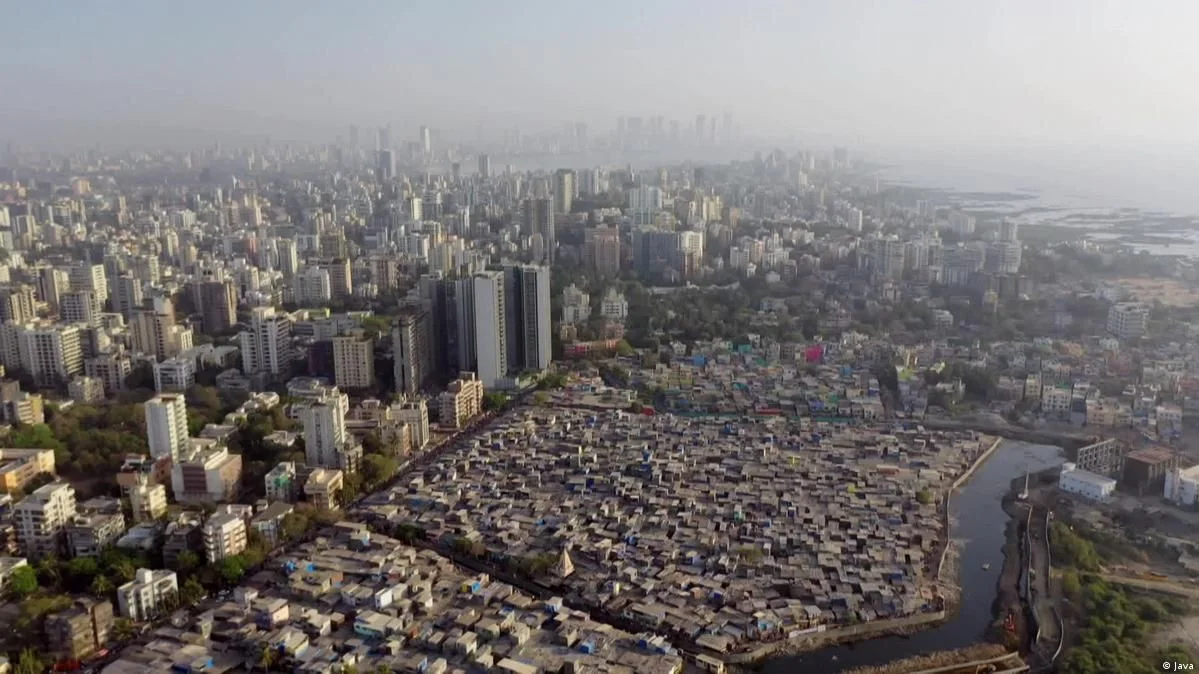
Around 30 million urban Indians — roughly one-fifth of the urban population, and ~30% in metro cities — live in slums; 40% live in single-room dwellings.
-
Housing’s share of total plan investment fell from 34% in the First Plan to ~10% in the Seventh; public-sector share collapsed from 16% to 1.6%.
-
The Urban Land (Ceiling and Regulation) Act 1976 is portrayed as having pushed up land prices by creating artificial scarcity, the inverse of its stated aim.
-
The Rent Control Act is faulted for protecting rich and corporate tenants alongside the poor, encouraging ‘pugree’ deposits, vacant flats and a collapse in rental supply.
-
About 75% of housing investment in 1982–83 came from informal sources; the formal system (LIC, GIC, HUDCO, HDFC, co-operatives) reached only the remaining 25%.
-
Parekh endorses the National Housing Policy, the new National Housing Bank, lowered construction norms, mortgage-insurance legislation and recognition of housing as an industry, casting the State as facilitator rather than builder.
-
Closes with a call for satellite townships, mass-transit, de-urbanization through rural job creation and indigenous low-cost construction materials to avoid urban decay in the next decade.
Generated by the v1.5 extraction pipeline. Awaiting editorial review.
Metadata and summary are AI-extracted from the source PDF and reviewed for editorial accuracy. The original work is available via the Read PDF tab above (where present); paragraph-level citation inside the PDF is deferred to a future engagement.