pamphlet
The Forum of Free Enterprise
Forum of Free Enterprise
26 pages
Summary
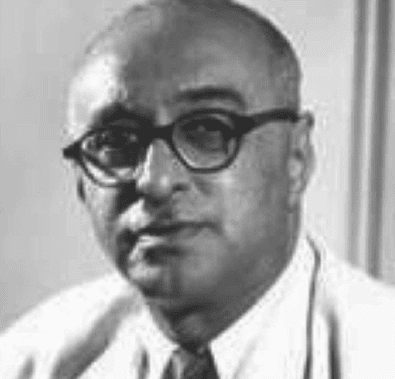
This Forum of Free Enterprise pamphlet reproduces a long extract from Sucheta Dalal’s biography ‘A.D. Shroff — Titan of Finance Free Enterprise’ (Viking/Penguin India, 2000), retelling the institutional origin story of the Forum against the backdrop of the high noon of Nehruvian socialism. The text opens in 1956, with the Congress’s 1954 Avadi Resolution committing the country to a ‘socialistic pattern of society’, Marxist rhetoric becoming the lingua franca of public life, the second wave of nationalisations (transport, then life insurance) advancing, and the income-tax department running an intimidation campaign against the Tatas, Birlas and Sarabhais. Shroff — chairman of New India Assurance, signatory to the 1944 Bombay Plan, and member of Nehru’s own National Planning Council — is portrayed not as an opponent of planning but as the one industrialist unwilling to be silenced by it.
The narrative then traces the Forum’s actual founding on 18 July 1956 and its early character: the manifesto that drew over a thousand letters from villages and small towns, the refusal of FICCI and many big houses to be publicly associated with it, the FICCI counter-circular discouraging support, and the whisper campaign that the Forum was foreign-financed (Shroff calls the charge ‘as fantastic as expecting to receive remittances from the man on the moon’). The biographer dwells on the institutional design choices Shroff insisted upon — apolitical posture, unregistered ad-hoc body, no permanent corpus, funds raised only yearly and only as needed, J. R. D. Tata’s offer of a lakh of rupees turned down for a Rs. 10,000 collection — and on the founding Council of Management he assembled (Anantharamakrishnan, S. K. Sen, M. A. Sreenivasan, Sardar Mohan Singh, Narayan Dandekar, M. R. Masani, S. N. Haji, Col. Leslie Sawhny, F. S. Mulla, T. M. Desai, K. C. Cooper, Chimanlal B. Parikh, F. P. Mehta, M. A. Master, C. M. Srinivasan, K. G. Khosla).
The pamphlet ends the rendered section with two set-pieces of Shroff’s polemical method. First, the ‘Code of Conduct’ he drafted for free enterprise — a four-decade-old precursor, the biographer argues, to the late-1990s corporate governance code — pledging high standards of integrity towards shareholders, consumers, labour and community, condemning hoarding, black-marketing and tax evasion, and accepting fair wages, working conditions, trade unions and a ‘fair return’ for risk capital as constitutive of the system. Second, ‘The Impact of the Forum’ opens with Shroff’s response to T. T. Krishnamachari’s post-Union-Budget claim of a ‘capitalist strike’: Shroff calls a press conference, ridicules TTK (‘in the extreme it might mean that all industrialists would decide to close down their industries’), and pushes back against the minister’s insinuation that Indians distrust Indian enterprise more than foreigners do. The rendered chunk breaks off mid-argument as Shroff catalogues earlier achievements of Indian capital (the ‘Tata twos’ debenture in 1930s London, the World Bank’s $75 million loan to TISCO).
Key points
-
Frames the Forum’s birth (18 July 1956) as a direct response to the 1954 Avadi Resolution, the nationalisation of insurance, and a propaganda climate in which Nehru declared ‘private enterprise and democracy are incompatible’.
-
Stresses that Shroff was not anti-planning — he was one of the eight Bombay Plan signatories and a member of Nehru’s National Planning Council — but opposed planning that stifled private initiative.
-
Documents the Shroff–TTK ‘admirer-adversary equation’, including TTK’s claim that ‘private enterprise had failed me’ and Shroff’s Shakespearean ‘most unkindest cut of all’ rejoinder.
-
Records the design principles Shroff imposed on the Forum: apolitical, unregistered, no permanent corpus, yearly funding only, educative rather than partisan, refusing J. R. D. Tata’s offer of one lakh in favour of Rs. 10,000.
-
Names the founding Council of Management (Anantharamakrishnan, S. K. Sen, M. A. Sreenivasan, Sardar Mohan Singh, Narayan Dandekar, M. R. Masani, S. N. Haji, Col. Leslie Sawhny, F. S. Mulla, T. M. Desai, K. C. Cooper, Chimanlal B. Parikh, F. P. Mehta, M. A. Master, C. M. Srinivasan, K. G. Khosla) and notes that FICCI under government pressure circulated a counter-letter discouraging support.
-
Reproduces the Forum’s ‘Code of Conduct’ as a four-decade-old precursor to the corporate-governance code of the late 1990s — pledging integrity to shareholders, consumers, labour and the community, recognising trade unions, and condemning hoarding, black-marketing and tax evasion.
-
Shows Shroff using the Forum platform to puncture TTK’s ‘capitalist strike’ charge, defending the historical record of Indian enterprise (Jamshedji Tata’s steel gamble, Scindia Steamships, the ‘Tata twos’ London debenture, World Bank lending to TISCO).
-
Treats the whisper campaign that the Forum was American-financed as the recurring slur against an Indian classical-liberal institution, and Shroff’s claim that it is ‘as swadeshi in its genesis and operations as any other national organization, not excluding the Congress’.
Metadata and summary are AI-extracted from the source PDF and reviewed for editorial accuracy. The original work is available via the Read PDF tab above (where present); paragraph-level citation inside the PDF is deferred to a future engagement.