speech
EDUCATION, LEADERSHIP AND VISION OF A FREE INDIA
Published by M.R. Pai for the Forum of Free Enterprise, "Piramal Mansion", 235, Dr. D.N. Road, Mumbai 400 001, and Printed at TATA DONNELLEY Ltd., 414, Veer Savarkar Marg, Prabhadevi, Mumbai 400 025. · Mumbai · 1998
12 pages
Summary
This slim Forum of Free Enterprise booklet collects two of Nani A. Palkhivala’s late-1990s addresses. The first is his acceptance speech for the 1997 Dadabhai Naoroji Award, delivered on 12 August 1997; the second is his response at the University of Mumbai’s Special Convocation on 19 January 1998, where Governor P. C. Alexander conferred an honorary Doctor of Laws on him. Both texts are framed around the conviction that India’s freedom required, above all, an enlightened and well-educated citizenry.
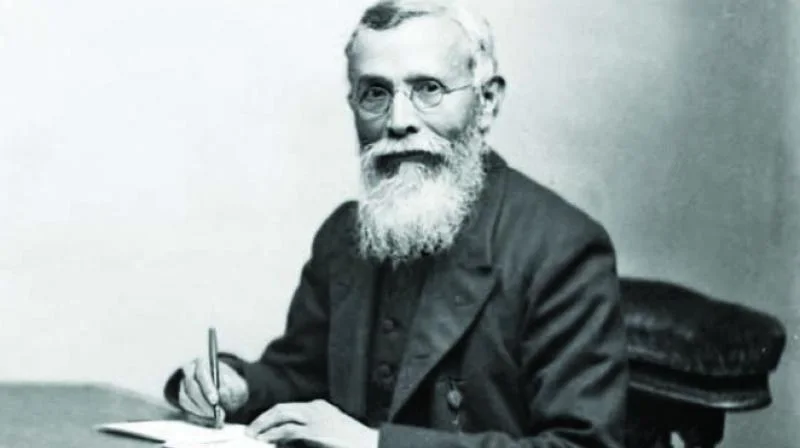
In the Naoroji tribute, Palkhivala portrays the Grand Old Man as a pioneer of free and female education who personally went door-to-door persuading families to let girls learn the three Rs. He argues that Naoroji’s vision combined the British virtues of justice and fairness with a settled commitment to a secular Constitution in which all religions and linguistic minorities would enjoy equal reverence and the right to run their own institutions. Palkhivala laments that fifty years after independence India has slid to the “lowest level of degradation” in its 5,000-year history, far below what Naoroji could have imagined in his “wildest nightmare.”
The convocation address turns this concern outward into a meditation on moral leadership. Education, Palkhivala insists, is not training: it requires personal participation and inward transformation. Drawing on ancient India — King Janaka journeying to Yajnavalkya, Sankaracharya walking from Kerala to Kashmir — and on Thomas Jefferson’s warning that no nation can be ignorant and free, he argues that leaders first build institutions and institutions in turn build later leaders. India’s ministry of education has been treated as a minor cabinet post, value-based education has collapsed, and the country that should have led the world in “life-nurturing ideas” is led instead by others’ “crass materialism.” He closes by paying tribute to Bombay University’s galaxy of alumni — Dadabhai Naoroji, Pherozeshah Mehta, Ranade, Tilak, Gokhale — and concluding that contemporary India deserves neither its Constitution, nor a Gandhi, nor that earlier generation of nation-builders.
Key points
-
The booklet pairs Palkhivala’s 1997 Dadabhai Naoroji Award acceptance speech with his 1998 University of Mumbai LL.D. convocation response.
-
He reads Naoroji’s vision of a free India as fundamentally educational — an enlightened, secular society with equal opportunity, including female education.
-
Palkhivala invokes Naoroji’s biographer Sir R. P. Masani to dramatise the social resistance early female-education reformers faced.
-
He contends that had Naoroji helped frame the Constitution, he would have embodied the same secular fundamental rights and protections for religious and linguistic minorities.
-
Both addresses argue that post-independence India has reached the lowest moral and civic ebb of its 5,000-year history.
-
The convocation address sharply distinguishes training (which animals can receive) from education (which demands personal transformation).
-
Citing Jefferson and ancient Indian precedent, Palkhivala argues leaders build the institutions that later build leaders, and India’s nation-building institutions have been allowed to decay.
-
He calls for moral leadership in education, grounded in courage, intellectual integrity, and a sense of values, and salutes the Bombay University tradition of Naoroji, Mehta, Ranade, Tilak, and Gokhale.
Metadata and summary are AI-extracted from the source PDF and reviewed for editorial accuracy. The original work is available via the Read PDF tab above (where present); paragraph-level citation inside the PDF is deferred to a future engagement.