constitutional liberal
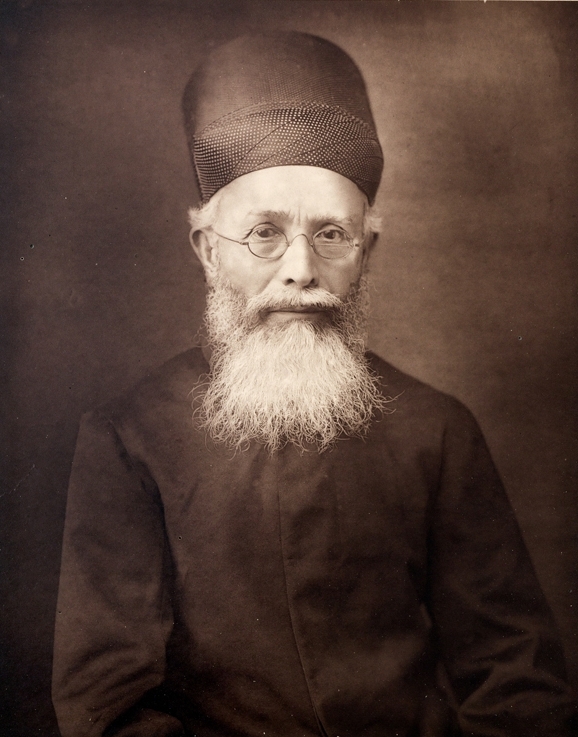
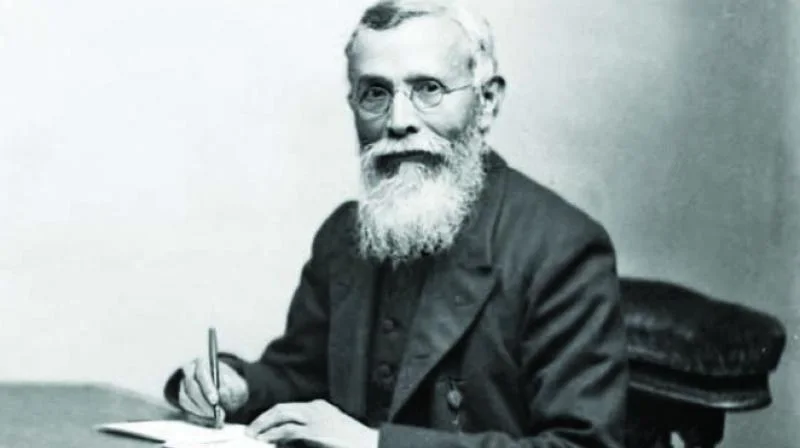
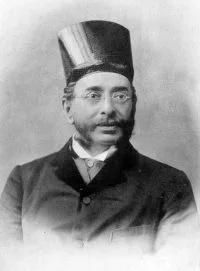
Dadabhai Naoroji
1825–1917
How Dadabhai Naoroji is discussed in this archive
Referenced in 12 other works , including Nani Palkhivala: Education, Leadership, and Vision of Free India , EDUCATION, LEADERSHIP AND VISION OF A FREE INDIA , and The Moderate Liberalism of “Ferocious Mehta” .
In EDUCATION, LEADERSHIP AND VISION OF A FREE INDIA : Dadabhai Naoroji is the central subject of the Naoroji Award acceptance speech, portrayed as a pioneer of free and female education whose secular vision of independent India Palkhivala invokes as the standard against which post-independence reality is measured.
In GG Agarkar : Modern Indian Liberal and Reformer : Dadabhai Naoroji is named as one of the moderate figures of the Maharashtra liberal tradition that contextualises Agarkar's emergence.
In G.G. Agarkar : Revisiting a Misunderstood Legacy : Dadabhai Naoroji is cited alongside Justice Ranade as one of the Indian thinkers who devised ways of stimulating Indian industries without violating economic laws, whose voices fell on deaf ears of the British.
In Homi Mody’s Liberalism: From Pro-Business to Pro-Market : Dadabhai Naoroji is cited as a liberal predecessor who propounded the drain of wealth theory, illustrating the colonial-era liberal tradition of economic nationalism that Homi Mody's generation inherited.
In Karsandas Mulji, The Forgotten ‘Indian Luther’ : Dadabhai Naoroji is cited as a contemporary of Mulji and a fellow member of the Elphinstone milieu that shaped Bombay's 19th-century reform intelligentsia.
Mentioned in (21)
Primary works (8)
- EDUCATION, LEADERSHIP AND VISION OF A FREE INDIA · 1998
- "In the Naoroji tribute, Palkhivala portrays the Grand Old Man as a pioneer of free and female education who personally went door-to-door persuading families to let girls learn the three Rs." · Naoroji depicted as active educational reformer and the inspiration for the award Palkhivala accepts
- "He calls for moral leadership in education, grounded in courage, intellectual integrity, and a sense of values, and salutes the Bombay University tradition of Naoroji, Mehta, Ranade, Tilak, and Gokhale." · Naoroji positioned as founding figure of a distinguished Bombay liberal intellectual tradition
Opinion pieces (8)
- GG Agarkar : Modern Indian Liberal and Reformer
- "moderate S N Banerjee, Dadabhai Naoroji and Gopal Krishna Gokhale" · listing Naoroji among the moderate figures who form the backdrop to Agarkar's more radical liberalism
- G.G. Agarkar : Revisiting a Misunderstood Legacy
- "Indian thinkers like Justice Telang, Justice Ranade and Dadabhai Naoroji had devised ways of stimulating Indian industries, commerce and agriculture without violating the laws of economics" · Agarkar's citation of Naoroji as a fellow traveller whose practical economic proposals were ignored by colonial authorities
- Homi Mody’s Liberalism: From Pro-Business to Pro-Market
- "Dadabhai Naoroji propounded the drain of wealth theory" · listing Naoroji alongside Gokhale and Ranade as the colonial liberal tradition of economic nationalism that contextualises Mody's pro-tariff stance
- Karsandas Mulji, The Forgotten ‘Indian Luther’
- "Karsandas Mulji, a contemporary of Dadabhai Naoroji, was one of the pioneer Indian social reformers working for the cause of women emancipation." · establishes Naoroji as the peer reference point for Mulji's historical placement
- Lokmanya Tilak : A Conservative Liberal?
- "The ‘moderate’ leadership in the late 19th century included Gopal Krishna Gokhale, M.G Ranade, Dadabhai Naoroji, Pherozeshah Mehta" · situates Naoroji within the constellation of moderate liberals against whom Tilak's distinctiveness is measured
- The Moderate Liberalism of “Ferocious Mehta”
- "While Dadabhai Naoroji was the patron saint of the liberal nationalism, the Bombay-based, lawyer-dominated liberal intelligentsia comprised of a remarkable set of politicians." · establishes Naoroji as the senior figure of liberal nationalism against whom Mehta's circle is defined
- "Naoroji's place in London was the hub of Indian liberal activists and it is here that Mehta made valuable connections." · identifies Naoroji's London presence as the network node that shaped Mehta's liberal formation
- V S Srinivasa Sastri: Diplomat, Politician, Liberal
- "what name can be placed beside his, save only that of Dadabhai [Naoroji]?" · Naoroji invoked as the supreme exemplar of Indian liberal patriotism alongside Gokhale
Excerpts (4)
- Minoo Masani: Old Liberalism & New Liberalism
- "Its leaders were Dadabhai Naoroji, Ranade, Gokhale, Ram Mohan Roy, Surendra Nath Bannerjee" · Masani names Naoroji as the preeminent leader of old Indian liberalism
- "I remember as a boy playing around the feet of Dadabhai Naoroji at Versova where he was a neighbour of ours." · personal memory establishing Masani's direct connection to the old liberal tradition Naoroji embodied
- Nani Palkhivala’s Publications to Serve Public Education | M.R. Pai
- "Dadabhai Naoroji to political subjects like dismissal of a Governor, to budgets and musings on life." · Naoroji cited as one of the historical figures Palkhivala reflected on in his collected articles
- Sharad Joshi on Liberalism in India
- "In their writings, they trace the beginnings of liberalism to J.S. Mill and Adam Smith and of Indian liberalism to Dadabhai Naoroji, Gokhale, Raja Rammohan Roy, Narmad, Phule, Agarkar, et al." · Joshi names Naoroji as part of the canonical roster of Indian liberal precursors
- Nani Palkhivala: Education, Leadership, and Vision of Free India
- "Dadabhai Naoroji's vision of a free India was the vision of an enlightened and well-educated society" · opening of Palkhivala's Naoroji Award acceptance speech; Naoroji's educational liberalism as the frame
- "Dadabhai was a great pioneer in the promotion of female education" · Palkhivala's tribute to Naoroji's gender-equality agenda