social reformer
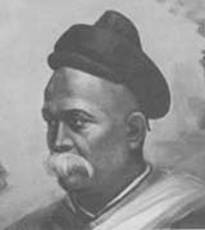
Mahadev Govind Ranade
1842–1901
How Mahadev Govind Ranade is discussed in this archive
Subject of 2 profile pieces , including M.G. Ranade on Revival and Reform , and M. G. Ranade on Wealth Creation .
Referenced in 10 other works , including B.R. Ambedkar on Justice Ranade, Social Reform and Failure of Indian Liberalism , Dadabhai Naoroji: Social Reforms, Transnational Connections and Statistical Liberalism , and G.G. Agarkar : Revisiting a Misunderstood Legacy .
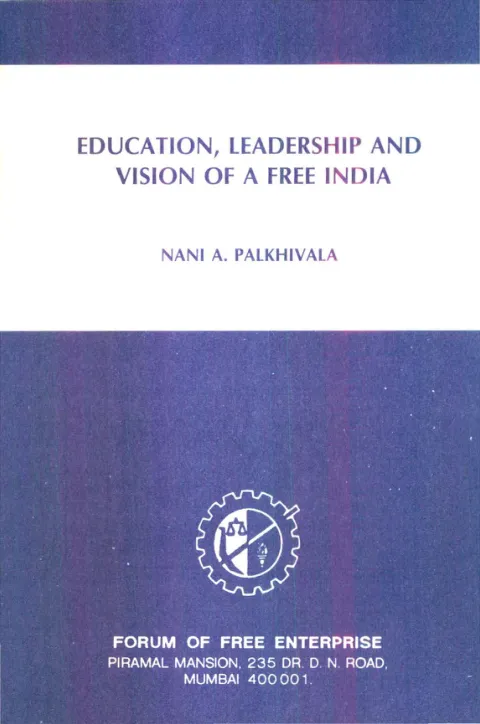
In EDUCATION, LEADERSHIP AND VISION OF A FREE INDIA : Ranade is listed among the Bombay University alumni in Palkhivala's closing tribute to the university's liberal intellectual tradition, positioning him as one of the nation-builders contemporary India has failed to honour.
In B.R. Ambedkar on Justice Ranade, Social Reform and Failure of Indian Liberalism : Ranade is the focal liberal figure in Ambedkar's speech, whose social reform legacy, founding of the Social Conference, and collegial network Ambedkar evaluates in detail as the positive model for liberal gradualism.
In Dadabhai Naoroji: Social Reforms, Transnational Connections and Statistical Liberalism : Ranade is named as the founder of the Deccan Sabha and as one of the Indian liberal practitioners of statistical liberalism alongside Naoroji.
In GG Agarkar : Modern Indian Liberal and Reformer : Ranade is listed among the prominent figures of the modern liberal tradition in Maharashtra that provides the intellectual context for Agarkar's emergence.
In G.G. Agarkar : Revisiting a Misunderstood Legacy : Ranade is cited as one of the Indian public intellectuals alongside Naoroji who demanded a temporary and transitional role for the state to facilitate free trade, the 'Practical Economics' position Agarkar endorsed.
About Mahadev Govind Ranade (2)
Profile pieces (2)
-
 M.G. Ranade on Revival and Reform
 - "every genuine Liberal, be he a professional researcher or journalist, in Maharashtra, nurtures a deep desire to interpret in his way the mission and message of Mahadeo Govind Ranade, progenitor of many reform movements in Western India" · establishes Ranade's canonical importance for Maharashtrian liberalism
- "a distinguished university student, eminent judge, brilliant 'nationalist' historian and economist, educative journalist, enlightened religious and social reformer, exemplary moral preacher, builder of institutions, maker of great men, friend, philosopher and guide of the young generation of his time" · Tikekar's enumeration of Ranade's multifaceted contributions
-
 M. G. Ranade on Wealth Creation
 - "Rao Bahadur M.G. Ranade was invited to discuss the implications of the political condition and the economic policy of the British Indian government. He delivered two speeches in the meeting" · situates Ranade as the central intellectual voice at the 1872 economic meeting
- "Mahadeo Govind Ranade belonged to the latter category. He likened this situation to wasting disease." · demonstrates Ranade's distinctive analytical approach to India's economic stagnation
Mentioned in (17)
Primary works (8)
- EDUCATION, LEADERSHIP AND VISION OF A FREE INDIA · 1998
- "He calls for moral leadership in education, grounded in courage, intellectual integrity, and a sense of values, and salutes the Bombay University tradition of Naoroji, Mehta, Ranade, Tilak, and Gokhale." · Ranade cited as a pillar of the Bombay liberal tradition
Opinion pieces (8)
- B.R. Ambedkar on Justice Ranade, Social Reform and Failure of Indian Liberalism
- "Delivered in 1943 at the invitation of the Deccan Sabha to commemorate the 101st birthday of the liberal leader Mahadev Govind Ranade" · the occasion and frame of Ambedkar's speech
- "Ranade would conduct meetings, arrange missions, deliver lectures, publish articles, give interviews, write letters, establish societies, and found journals, all in pursuit of the noble cause" · Ambedkar's tribute to Ranade's tireless multi-front social reform activism
- Dadabhai Naoroji: Social Reforms, Transnational Connections and Statistical Liberalism
- "Gopal Krishna Gokhale's Servants of India society, Mahadev Govind Ranade's Deccan Sabha, and Poona Sarvajanik Sabha were some notable associations" · Ranade's Deccan Sabha placed among the key liberal civil society associations
- "The most prominent practitioners of this version of political economy were RC Dutt, KT Telang, and Dadabhai Naoroji" · listing statistical liberals in which Ranade's intellectual milieu contextualises Naoroji's contribution
- GG Agarkar : Modern Indian Liberal and Reformer
- "The prominent figures include western-educated M G Ranade, P M Mehta, K T Telang" · situating Agarkar within the broader Maharashtra liberal tradition anchored by Ranade and others
- G.G. Agarkar : Revisiting a Misunderstood Legacy
- "Indian thinkers like Justice Telang, Justice Ranade and Dadabhai Naoroji had devised ways of stimulating Indian industries, commerce and agriculture without violating the laws of economics" · Agarkar's acknowledgement of Ranade's practical economics as an antecedent to his own position
- "The Indian public intellectuals such as Agarkar and economists like Ranade demanded a specific, temporary and transient role for the state" · Ranade placed alongside Agarkar as a co-proponent of transitional state facilitation toward free markets
- Homi Mody’s Liberalism: From Pro-Business to Pro-Market
- "Justice Ranade criticised the conservative statesmen for sacrificing Indian interests in the name of free trade" · Ranade cited as precedent for the liberal nationalist tradition of selective protectionism
- Kandukuri Veeresalingam: Icon of Andhra’s Renaissance
- "In 1898, MG Ranade, in a meeting, acclaimed Veeresalingam as "Iswar Chandra Vidyasagar of South"" · the essay's pivotal validation, Ranade is invoked as the authority who places Veeresalingam beside Vidyasagar in the reform canon
- Poona Sarvajanik Sabha and Its Liberal Affiliations
- "under the able leadership of Mahadev Govind Ranade and Ganesh Vasudev Joshi, the Sabha emerged as the foremost political association in India with a progressive bent." · credits Ranade as the central driving intellectual force of the Sabha
- "The liberals- Gopal Krishan Gokhale and Mahadev Govind Ranade, left the Sabha to form Deccan Sabha in 1896." · marks Ranade's departure from the Sabha after the Tilak faction's takeover
- Women and Liberalism : The Life of Ramabai Ranade
- "M G Ranade taught her several subjects such as mathematics, geography and languages, himself." · identifies Ranade as Ramabai's personal tutor and educational enabler
Excerpts (1)
- Nani Palkhivala: Education, Leadership, and Vision of Free India
- "Sir Pherozeshah Mehta, Mahadev Govind Ranade, Bal Gangadhar Tilak, Gopal Krishna Gokhale- all of whom had the distinction of passing through the portals of this great University" · Palkhivala's evocation of Maharashtra's liberal hall of fame