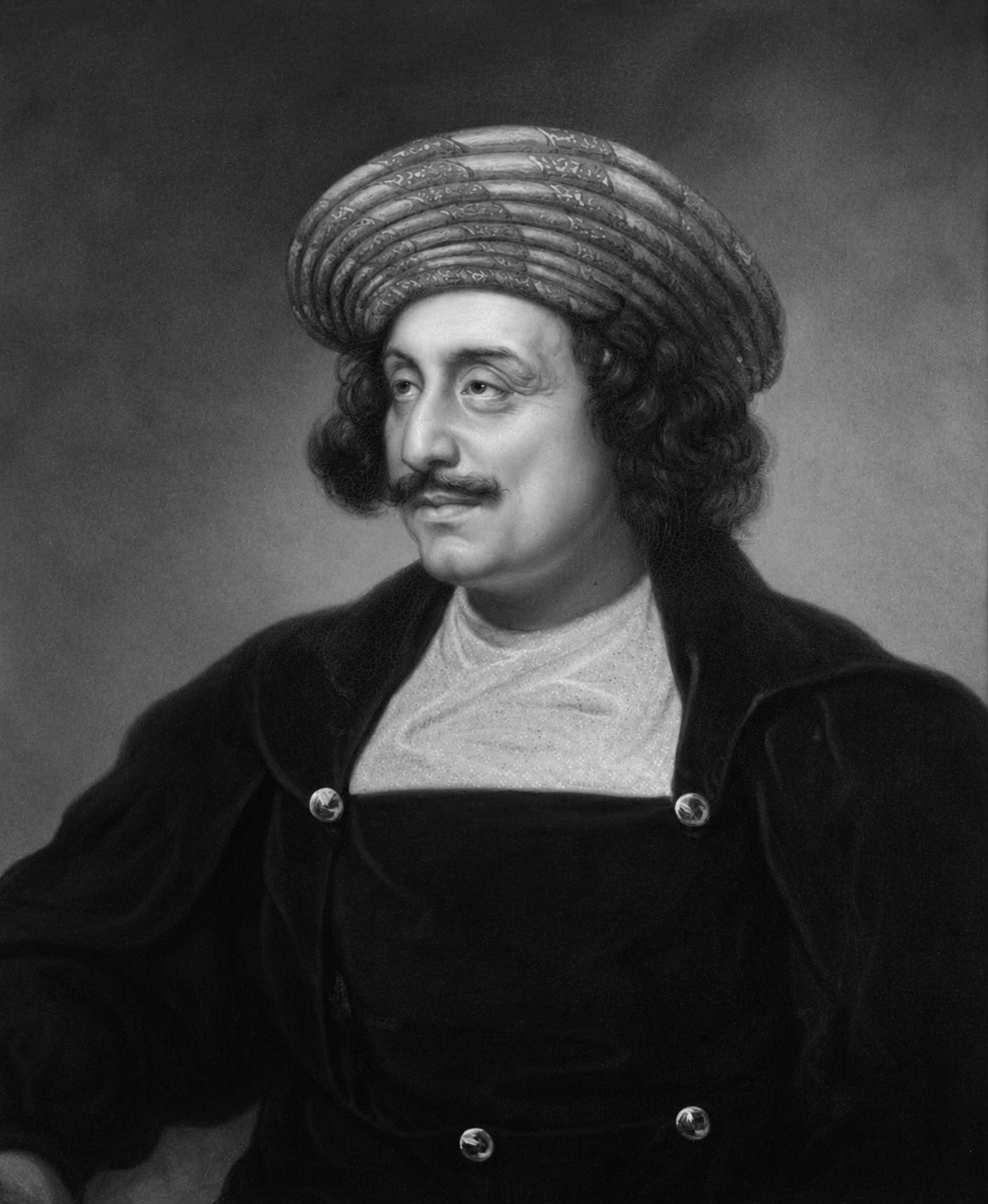
social reformer
Raja Ram Mohan Roy
Ram Mohan Roy
1772–1833
Also known as: Rammohan Roy, Ram Mohun Roy
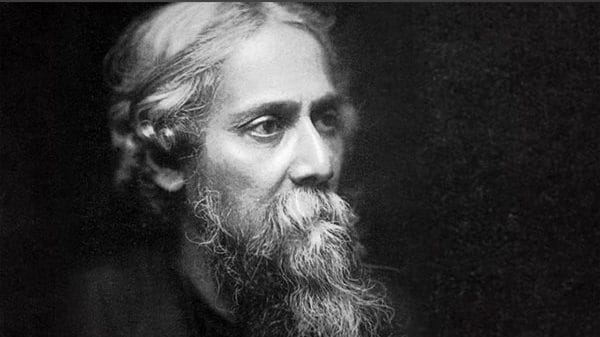
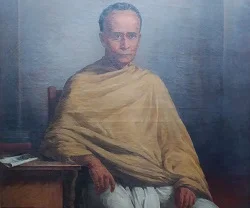
Raja Ram Mohan Roy (1772, 1833) was a Bengal reformer, scholar, and the intellectual progenitor of the Indian liberal tradition. He founded the Brahmo Samaj in 1828, a monotheistic, anti-caste, pro women’s-education reform movement that became the originating institution of the Indian liberal reformist tradition.
A Sanskrit and Persian scholar fluent also in Arabic, English, Greek, Hebrew, and Latin, Roy campaigned against sati (widow immolation), for women’s right to property and education, and for the introduction of English-language modern education in India. His 1818 essay “A Conference between an Advocate for, and an Opponent of, the Practice of Burning Widows Alive” was a foundational argument against sati; the practice was banned by Lord William Bentinck in 1829, in significant part due to Roy’s advocacy.
Roy was also one of India’s earliest defenders of press freedom. His 1823 “Memorial Against Press Regulations”, submitted to the Governor-General after a licensing ordinance was imposed on Indian-language newspapers, is one of the earliest sustained arguments in any Indian language for the principle that “the unrestrained Liberty of Publication is the only effectual means” of holding government accountable.
In 1830 the Mughal emperor Akbar II bestowed on him the title “Raja” and sent him to England as an envoy to argue against reductions in the imperial allowance. He died in Bristol in 1833.
How Raja Ram Mohan Roy is discussed in this archive
Referenced in 9 other works , including Ramtanu Lahiri O Tatkalin Bangosamaj , Rani Rashmoni Das: Reform in 19th Century Bengal , and The Liberalism of Ishwar Chandra Vidyasagar .
In Ramtanu Lahiri O Tatkalin Bangosamaj : Sastri identifies Rammohan Roy as the catalytic figure of the 1825–1833 watershed — campaigner against suttee, founder of the Brahmo Samaj (1828), and the lobbyist in England whose advocacy secured Section 87 of the 1833 Charter Act opening Company posts to Indians.
In B.R. Ambedkar on Justice Ranade, Social Reform and Failure of Indian Liberalism : Raja Rammohan Roy is named as a Bengal liberal reformer who, like Ranade in the west, faced opposition from conservative institutions in his own region.
In Harish Chandra Mukherjee - A less known liberal : Raja Rammohan Roy is mentioned as defending indigo planters as a class of entrepreneurs, providing a counterpoint to Mukherjee's critique of planter exploitation.
In Rani Rashmoni Das: Reform in 19th Century Bengal : Raja Ram Mohan Roy is named as a reformer in whose circle Rani Rashmoni Das moved, with his anti-Sati efforts cited as part of the reformist context for her own activism.
In Rukhmabai - An Unrelenting Force Against Patriarchal Norms : Raja Ram Mohan Roy is mentioned as the paradigmatic male socio-religious reformer whose prominence contrasts with the neglected contributions of female reformers like Rukhmabai.
Excerpts (1)
Short passages from the archive associated with Raja Ram Mohan Roy. An excerpt may be a quoted passage, a summary, or an editorial description, so these are kept separate from the works Raja Ram Mohan Roy authored.
Mentioned in (24)
Primary works (14)
Show all 14
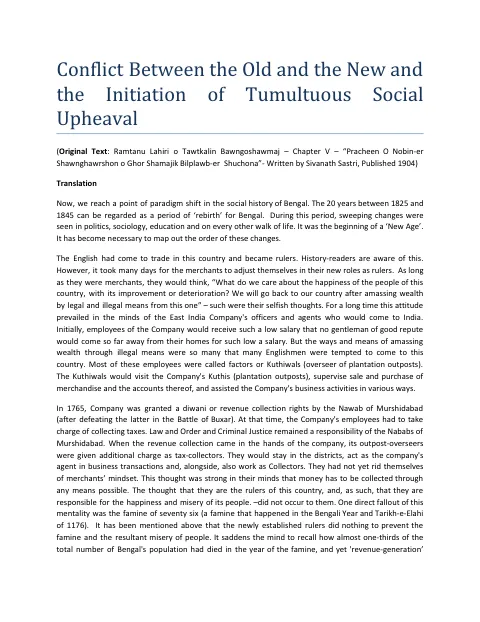
- Ramtanu Lahiri O Tatkalin Bangosamaj · 1904
- "Ram Mohan Roy's campaign against suttee and his founding of the Brahmo Samaj (1828)" · first of three reform currents Sastri tracks — Roy's twin campaign against suttee and for Brahmo monotheism
- "Raja Ram Mohan Roy is presented as the catalytic figure who first turned Bengali educated minds westward while selectively retaining Hinduism's best, founding the Brahmo Samaj in 1828 and spearheading the anti-suttee movement." · key-points framing — Roy as the prime mover of Bengal's intellectual westward turn
Opinion pieces (5)
- B.R. Ambedkar on Justice Ranade, Social Reform and Failure of Indian Liberalism
- "In Bengal province, things were no different for liberal-minded reformers like Raja Rammohan Roy, Ishwar Chandra Vidyasagar, and Henry Derozio" · cross-regional comparison of liberal reformers resisting conservative opposition
- Harish Chandra Mukherjee - A less known liberal
- "there were some intellectuals such as Rammohan Roy and Dwarkanath who defended indigo planters as a class of entrepreneurs who wanted to raise the productivity of land" · Rammohan Roy's contrasting pro-planter stance illustrating the complexity of liberal opinion on indigo cultivation
- Rani Rashmoni Das: Reform in 19th Century Bengal
- "Das, a widow who belonged to a lower caste community, established a revered position for herself among upper caste reformers like Raja Ram Mohan Roy and Ishwar Chandra Vidyasagar." · places Roy as one of the reform milieu figures with whom Das interacted
- "Raja Ram Mohan Roy's efforts had led to the abolishment of Sati." · credits Roy with the reform that set the social context for Das's activism
- Rukhmabai - An Unrelenting Force Against Patriarchal Norms
- "While most of us are aware of the works of the prominent male socio-religious reformers like Raja Rammohan Roy, the contributions of the female reformers, at a time when Indian society was still at odds with the concept of women's rights and liberty, need to be highlighted." · Roy is invoked as the well-known benchmark against which Rukhmabai's neglected contributions are measured
- The Liberalism of Ishwar Chandra Vidyasagar
- "While it may be tempting to compare Vidyasagar with the great Bengali reformer and Father of Modern India, Raja Ram Mohan Roy, author Subrata Dasgupta underlines an important distinction between the two." · Roy invoked as the obvious comparison point to Vidyasagar's intellectual stature
- "The Raja's worldview was always theocentric, rooted in his propagation of Vedanta and close study of Christian monotheism." · identifies the key philosophical difference between Roy and Vidyasagar
Excerpts (3)
- Minoo Masani: Old Liberalism & New Liberalism
- "Its leaders were Dadabhai Naoroji, Ranade, Gokhale, Ram Mohan Roy, Surendra Nath Bannerjee" · places Ram Mohan Roy in the founding lineage of Indian liberal thought
- Sharad Joshi on Liberalism in India
- "In their writings, they trace the beginnings of liberalism to J.S. Mill and Adam Smith and of Indian liberalism to Dadabhai Naoroji, Gokhale, Raja Rammohan Roy, Narmad, Phule, Agarkar, et al." · named as a precursor of Indian liberalism in the 1860-1920 generation
- Tagore's Humanistic Approach To Indian Nationalism
- "The transition from medieval to modern India, which resulted in that great cultural awakening known as the 'Indian Renaissance', was effected by Raja Ram Mohan Roy." · Roy identified as the founding figure of the Indian Renaissance that Tagore built upon
- "The various forces which have contributed to the shaping of modern India originated in the mind of Raja Ram Mohan Roy." · author credits Roy with generating all the transformative ideas of modern India