non liberal
P. C. Mahalanobis
Prasanta Chandra Mahalanobis
1893–1972
Also known as: PC Mahalanobis, P C Mahalanobis, Prof. Mahalanobis, Mahalanobis
How P. C. Mahalanobis is discussed in this archive
Referenced in 6 other works , including Are There Monopolies and Concentration of Economic Power in India? , Draft Sixth Plan , and MUTUAL FUNDS AND OFFSHORE FUNDS IN INDIA .
In MUTUAL FUNDS AND OFFSHORE FUNDS IN INDIA : The Mahalanobis model is named alongside Marx and Soviet planning as part of the 1950s economics-curriculum orthodoxy that shaped Dave before his conversion to free-enterprise thinking.
In Draft Sixth Plan : Vakil blames the rejection of his 1956 Wage-Goods Model on the Panel of Economists being mesmerised by Mahalanobis's Plan Frame, making Mahalanobis's planning orthodoxy the foil against which Vakil's thirty-year vindication is staged.
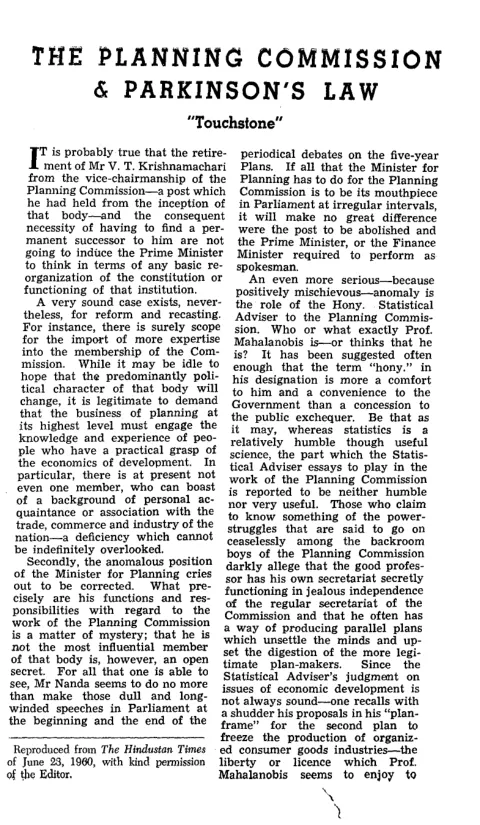
In A Job-Oriented Fifth Five-Year Plan : Mahalanobis's productivity-per-rupee figures are cited to show that agriculture creates far more employment per crore of investment than heavy industry, and the Planning Commission is criticised for ignoring these ratios from its own chief statistician.
In Concentration of Economic Power : The Mahalanobis study, commissioned by Nehru, is the foundational document of India's anti-concentration framework; Pendse traces the entire institutional history of the CEP debate to this study.
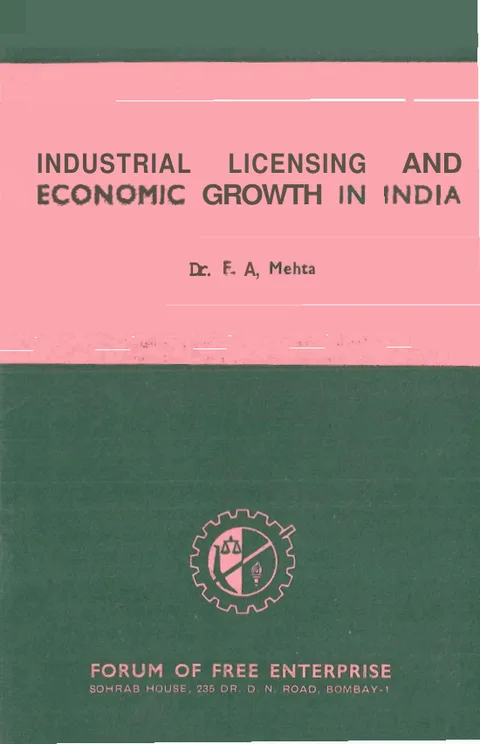
In Industrial Licensing and Economic Growth in India : Mahalanobis is named in Mehta's political-economy lineage as the architect of the Second Plan formulation and one of the foundational figures behind the licensing regime he indicts.
Mentioned in (23)
Primary works (22)
- MUTUAL FUNDS AND OFFSHORE FUNDS IN INDIA · 1991
- "Dave was raised on Marx, Soviet planning and the Mahalanobis model" · Mahalanobis named as one of the formative planning-era influences in Dave's intellectual autobiography
- Draft Sixth Plan · 1978
- "the Panel, mesmerised by Russian advisers and by P. C. Mahalanobis's Plan Frame, set the suggestion aside" · Mahalanobis's Plan Frame is the intellectual authority that overrode Vakil's Wage-Goods alternative in 1956
- "the Panel, under the sway of Russian advisers and Mahalanobis's Plan Frame, set it aside — and Vakil now claims thirty years of stagnation as vindication" · Mahalanobis's dominance in 1956 planning is presented as the source of three decades of rural neglect
Show all 22
- A Job-Oriented Fifth Five-Year Plan · 1972
- "Lobo Prabhu marshals productivity-per-rupee figures from Prof. Mahalanobis to show that agriculture and roads create far more employment per crore of investment than heavy industry, and criticises the Planning Commission for ignoring these ratios" · Mahalanobis's own data is deployed against the Mahalanobis strategy's heavy-industry bias
- Concentration of Economic Power · 1972
- "Nehru's 1959 decision to commission what became the Mahalanobis study, through the Monopolies Inquiry Commission (1965), the Hazari Committee (1967) and the Dutt Committee (1969)" · Mahalanobis's study is the originating moment of the CEP policy lineage Pendse critiques
- Industrial Licensing and Economic Growth in India · 1969
- "Mehta names the political-economy lineage on both sides: M. R. Masani's 1947 booklet's influence on Nehru, G. D. Birla's 1949 assent to a 'primary part' for government, P. C. Mahalanobis's Second Plan formulation, and the contrary cautions of Eugene Black and J. R. D. Tata." · Mahalanobis is placed in the lineage of figures responsible for the planning architecture Mehta attacks
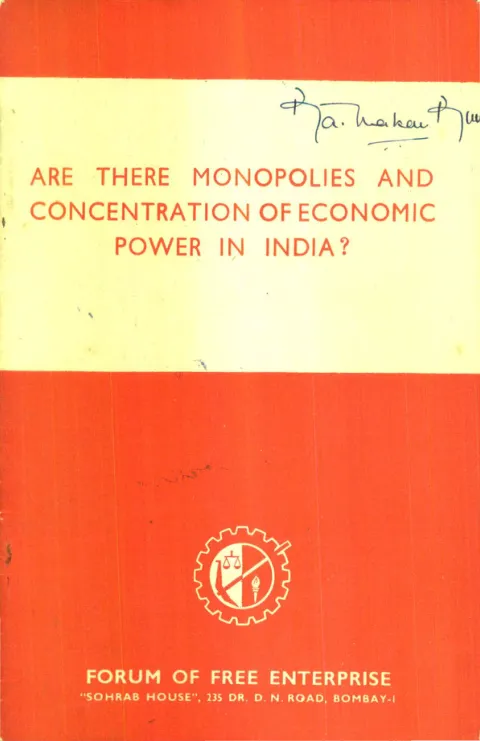
- Are There Monopolies and Concentration of Economic Power in India? · 1964
- "The argumentative centre is a sceptical reading of the Mahalanobis Committee on Distribution of Income and Levels of Living" · the Mahalanobis Committee is the central object of critique in the lead essay
- "Venkatasubbiah's article — reproduced from The Hindu of 9 May 1964 — is a close, sceptical reading of the Mahalanobis Committee's third term of reference" · Venkatasubbiah works through the Committee's third term of reference clause by clause