speech
Skill Ecosystem - Journey to Vocationalization of Education
A lecture in memory of the late Mr. Nani A. Palkhivala
Edited by Sunil S. Bhandare
Forum of Free Enterprise · Bombay · 2018
28 pages
Skill Ecosystem - Journey to Vocationalization of Education
By S. Ramadorai
Summary
S. Ramadorai’s lecture in memory of Nani A. Palkhivala, delivered at IIT Bombay on 25 September 2018 and published by the Forum of Free Enterprise, makes the case that India’s neglect of vocational education has become an existential problem. He sets out the gap with hard numbers — only about 2.3% of India’s workforce has received formal skills training, against 96% in South Korea, 80% in Japan, 75% in Germany, 68% in the UK and 40% in China — and argues that the country celebrated the power of the mind and denigrated the artistry of the hands, building the IIT’s but starving the ITI’s. The result is a workforce unready for the structural shifts now underway: a transition from agriculture to services, modernisation, globalisation, and a knowledge economy that absorbs millions of young entrants every year.
The lecture opens with an editorial introduction by Sunil S. Bhandare and a personal tribute to Palkhivala — the public intellectual whose Union Budget lectures Ramadorai recalls as the largest public meetings ever held on an economic subject — and then unfolds across linked themes: inequity (“this inequity does not come from capability issues, it comes from lack of opportunity”); the neglect of vocational training (the oldest IIT was set up in 1951, the ITIs only in 1969); Industry 4.0 and automation (Amazon’s 100,000 robots, the auto sector’s 58 robots per 10,000 workers, the projected Rs. 1 lakh crore Indian big-data market by 2025); and educational reform that broadbases curricula, embeds vocational training early, recognises the dignity of skilled artisans, and uses approaches like “Rangoli to teach geometry” to bring design thinking and the arts into school.
Ramadorai then narrates how skill development became a national agenda after CK Prahalad’s warning around 2007–8 that a frustrated, jobless youth population was the other face of India’s demographic dividend. He describes his own role since 2011 chairing the National Skill Development Agency and the National Skill Development Corporation, and the institutional architecture now in place: a Skill Ministry, NSDC-spurred private training providers, Sector Skill Councils that draft National Occupation Standards, the National Skills Qualification Framework enabling equivalence between mainstream and vocational education, and the NSDA’s quality oversight. Convergence with Skill India, Digital India, Start-up India and Make in India is expected to compound the impact over three to five years.
The rendered pages close on concrete pilots and a comparative gesture. The Haryana schools pilot launched in 2012 across 40 schools and 4,000 students has now grown into a national model across 27 states and union territories, 8,398 schools and 7.5 lakh students drawing on 73 NSQC-cleared job roles across 21 sectors; Brazil’s three-tiered Continued Formation / Technical / Technological system is presented as a parallel. At the university level, the National University Student’s Skill Development Programme (NUSSD) at TISS reaches 20,000 students across five states, with TISS-SVE supporting 7,162 active students and over 27,000 graduates, while Tata STRIVE — set up in 2014 — has touched 2.5 lakh youth. The chunk ends as Ramadorai turns to MOOCs (Coursera, Edx, Khan Academy) as instruments of opportunity equity; the remainder of the booklet is past the rendered pages.
Key points
-
Only about 2.3% of India’s workforce has formal skills training versus South Korea 96%, Japan 80%, Germany 75%, UK 68% and China 40% — the central diagnostic figure of the lecture.
-
India built the IIT’s (Kharagpur, 1951) but neglected the ITI’s (first founded only in 1969); Ramadorai’s pithy formulation is that we celebrated the power of the mind and denigrated the artistry of the hands.
-
Inequity in India is framed as a problem of opportunity, not capability — illustrated with Oxfam’s finding that the richest 1% hold 73% of the wealth generated in 2017.
-
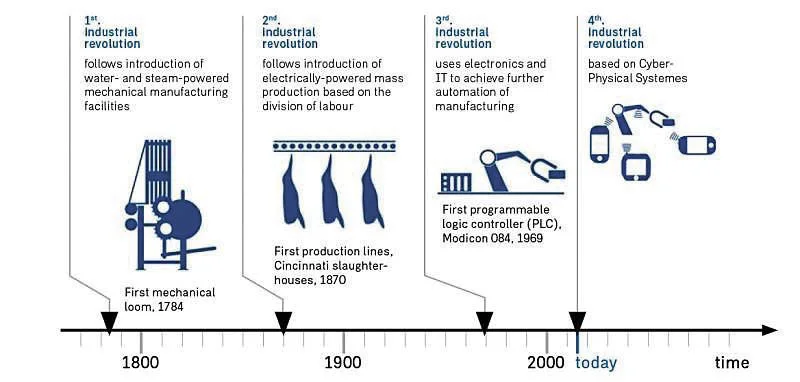
Industry 4.0 and automation make the vocational gap existential: 58 robots per 10,000 workers in the auto industry, an estimated Rs. 1 lakh crore big-data market in India by 2025, and Amazon already running 100,000 robots — roughly one in five of its employees.
-
The author’s prescription is to embed vocational training early, broadbase curricula (e.g. Rangoli to teach geometry), and have universities launch non-traditional degrees like BA in Retail, BSc in Environment, BCom in Logistics.
-
Skill development is now institutionally anchored: a Skill Ministry, NSDC, Sector Skill Councils with National Occupation Standards, the National Skills Qualification Framework, and the NSDA — converging with Skill India, Digital India, Start-up India and Make in India.
-
Concrete pilots show traction: the NSDC–MHRD–Haryana school model now covers 8,398 schools and 7.5 lakh students across 27 states/UTs; NUSSD at TISS reaches 20,000 students; Tata STRIVE has impacted 2.5 lakh youth.
-
The lecture is framed as a tribute to Nani A. Palkhivala, whose view that education’s role is to enlighten understanding and enrich character is invoked as the moral horizon of the skill agenda.
Generated by the v1.5 extraction pipeline. Awaiting editorial review.
Metadata and summary are AI-extracted from the source PDF and reviewed for editorial accuracy. The original work is available via the Read PDF tab above (where present); paragraph-level citation inside the PDF is deferred to a future engagement.