interview
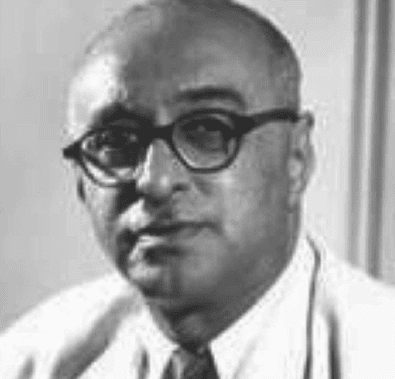
Jagdish Bhagwati discussing his book - India: Planning for Industrialization
2018
Summary
Jagdish Bhagwati describes the origins and reception of his landmark study of India's planning and industrial-licensing system, undertaken for the OECD Development Centre under Ian Little alongside Padma Desai. He explains how five-year-plan forecasts degenerated first into rigid targets and then into industrial licensing, producing a system with no coherent rationale. Unlike theorising economists, he and his co-author did empirical fieldwork, even visiting bazaars to document the black-market premiums on so-called "actual user" licences, which they renamed "apparent user" licences because they were freely traded despite bans on transfer. He shows how the rules perversely rewarded firms for building excess capacity to win more licences.
Bhagwati recalls the hostile Indian reception: the Communist Party of India branded him and Desai CIA agents, and colleagues like K.N. Raj and Amartya Sen failed to defend the work even as it succeeded worldwide. He closes with Manmohan Singh, his fellow student under Ian Little, publicly acknowledging at a New York gathering that the reforms of 1991 were doing what their book had urged some twenty-five years earlier.
Key points
- India's five-year-plan forecasts degenerated into targets and then into a rationale-free industrial licensing system.
- Bhagwati and Padma Desai conducted the India study for the OECD Development Centre under Professor Ian Little.
- Their empirical fieldwork, including bazaar visits, documented illegal market premiums on non-transferable 'actual user' licences.
- They renamed them 'apparent user' licences because a market in them existed despite the transfer ban.
- Licensing rules perversely incentivised firms to add excess capacity, since more capacity meant more valuable licences.
- The Communist Party of India attacked the authors as CIA agents, and Indian colleagues failed to defend the work.
- Manmohan Singh, a fellow student of Ian Little, later credited the book with prescribing the reforms India belatedly adopted in 1991.
Transcript
Jagdish Bhagwati discussing his book - India: Planning for Industrialization
Source: https://www.youtube.com/watch?v=X9kOaBxFlxM Duration: 520.0s
Speaker 1 (00:00): In light of experiences, I said, you know, we saw what Yohan Abhavan was doing and we were horrified. I mean that anybody could be planning that way. And then we saw also, you know, many forecasts were made about what would happen, the third plan, fourth plan, fifth. And these were just forecasting exercises about what might…
Speaker 2 (00:29): Then they degenerated into becoming targets and then they became ways in which you would say only so much should be allowed, only that much should be.
Speaker 1 (00:39): So what were actually supposed to be giving you ideas about how the economy might develop and you might take some key decisions on that basis, they became targets. and then become part of industrial licensing. So the whole system got completely out of hand. It had no rationale. And so that is what, you know, Bhagavati Desai book was about also.
Speaker 2 (01:01): So we were the first, because economists in those days didn’t dirty their hands with anything. We were actually, I mean, there was a, the OECD had a development center
Speaker 1 (01:16): and Professor Ian Little, was in charge of a project with two other distinguished economists on looking at the trade and development policies of several semi-industrialized countries. So India was one of them. So he’d been my professor, also that of Professor Manmohansi, Prime Minister. We were both students of Professor Little in Oxford, not in England, but both Manmohansi and I were trained actually in Cambridge for undergraduate degrees by Mrs. Joan Robinson whom I mentioned earlier and others. And so Professor Little was in charge so he asked us to do the India study which that’s how we got into it you see. And then there were a few other countries and so on. And we did such a thorough job, actually, that our book was the most famous of the lot, as it turned out. Because unlike just, you know, theorizing about things and so on, we actually went and did the homework. So like, there were things called actual user licenses. So licenses were given for raw materials to people who had capacity, excess capacity.
Speaker 2 (02:38): So if you had more excess capacity, then you got more. So these were called actual user licenses.
Speaker 1 (02:45): So, of course, and they were not supposed to be transferred, which is actually silly. Because if you needed more than I do, then I should be allowed to. But then you have to be the actual user. So we wound up calling them apparent user license, because there was naturally a market in them. So once I went to a guy here, I actually did that sort of work.
Speaker 2 (03:07): I went to the bazaar here and here was this guy who was supposed to be selling. So I was interested in how much premium he got for some calculation as well. So I said, you know, what is the premium you charge for selling these licenses? So he says in Gujarati, we don’t do such work.
Speaker 1 (03:31): And then his phone rang. He was quoting the premiums. He didn’t realize I was also Gujarati. I knew what was going on. So I got my answers. So we used to call them, they were called AU license actually.
Speaker 2 (03:48): We said, hey, you meant apparent user. So we really looked at the system as it was working, but not working, actually.
Speaker 1 (03:59): Because everything was contrary to what it was supposed to be. And nobody, I mean, said that it was chaotic allocations.
Speaker 2 (04:07): And, you know, elementary things like having transfer of things, license was not allowed.
Speaker 1 (04:14): And you see, and also some of the consequences were, if I have to have more excess capacity to get more of these nice licenses which carry, you know, juicy premium. So if I have, that gives me an incentive to add to excess capacity because if I double my excess capacity, I’ll get double the AU licenses. I’ll make double the profit, you see. So it creates an incentive to add to excess capacity rather than to reduce it.
Speaker 2 (04:45): So we documented so many things with data also, data in the interviews and all sorts of things. Then we made calculations.
Speaker 1 (04:55): So it was rather unique for its time because the economists didn’t go into the market at that time. They just made some calculations. If this is a premium, this is what the, you know, incentives would be. So I think it was rather dramatic in that sense and it really took a holistic view of the system. People were upset actually, but I think they, like Bibic Debroi who was a very smart fellow and more on my side, you know, and so on. So he says that Professor Bhagavati was hounded out with Delhi School of Economics, but anybody who knows us knows nothing can hound us out. They can bark as much as they want to, but we’ll cross our legs and stay put. So what really happened was that when we did this, Of course a lot of people said these guys have got bananas or something. But the Communist Party of India came out saying we were CIA agents. And they said also that Bhagwati used to be, he’s a marginal economist.
Speaker 2 (06:10): So I was joking that in economics margin determines everything so you’re actually paying us a compliment. And they were mad at me for that.
Speaker 1 (06:22): But the point is when all this happened, our colleagues like Professor Raj and Professor Sen and so on, they should have come out and said, look, this is part of the debate we ought to have, right?
Speaker 2 (06:36): And here is a rival point of view and so on. Instead they just let us drown in this invective by the communists and all kinds of people.
Speaker 1 (06:46): So we make that part is wrong. Nothing could hound us out. But there was a failure to support you, right, on the part of your colleagues saying, this
Speaker 2 (06:57): is perfectly reasonable point of view, there’s a lot of work. And worldwide it was a big success, the book. It was only here that people, you know, were big.
Speaker 1 (07:08): And then after, what, 20, that was 1966, late 60s.
Speaker 2 (07:15): So then later on when Prime Minister Manmohan came to New York, when he’d become, when he
Speaker 1 (07:23): was actually finance minister, not prime minister, prime minister, in 91 reforms were Prime Minister Rao and him as a finance minister. So he had, you know, assembled all the big guys, you know, big investors and so on, McConnell Douglas and McKinsey and Boeing and you name it and they were there. And so when my wife and I came in, we were the only non-important people invited, you know, just professors. And so when we came in, he’s…
Speaker 2 (08:00): Manmohan Singh said that, you know, these two people wrote a book almost 25 years ago,
Speaker 1 (08:06): pointing out everything we need to do, which we are doing now. And if we had done it when they wrote the book,
Speaker 2 (08:17): this meeting would not be taking place, because we would be successful, and all of you would have already invested in India. We wouldn’t have needed to have this lunch. That was very graceful of him.
Speaker 1 (08:31): But the point is, that was a dramatic change after 20 years. you know, a daily 25 years, because the time had come.
Metadata and summary are AI-extracted from the source PDF and reviewed for editorial accuracy. The original work is available via the Read PDF tab above (where present); paragraph-level citation inside the PDF is deferred to a future engagement.