speech
Has Private Enterprise Failed?
By A. D. Shroff
FORUM OF FREE ENTERPRISE, 235, DR. DADABHAI NAOROJI ROAD, BOMBAY-1 · Bombay · 1956
11 pages
Has Private Enterprise Failed?
By A. D. Shroff
Summary
A. D. Shroff’s October 1956 address to the Commerce Graduates’ Association in Bombay is a point-by-point rebuttal of two then-current charges against Indian private enterprise: Union Commerce and Industry Minister T. T. Krishnamachari’s quip at Madurai that ‘Private Enterprise has failed me’, and the Prime Minister’s contention in Calcutta that private enterprise and democracy are incompatible. Shroff acknowledges the constraints of the post-Independence regulatory environment — ‘discriminating protection’, the Industries (Development and Regulation) Act of 1951, and the nationalisation of the Imperial Bank, life insurance and Indian Airlines — and argues that private industry has nonetheless carried the bulk of the country’s industrial growth.
He marshals official data to make the case: the Planning Commission’s own publication concedes that public-sector investment under the First Plan was running far below the estimate of Rs. 94 crores; the industrial production index, taking 1946 as base 100, climbed to 161.5 by 1955; cotton textiles, jute, steel, cement, paper, matches, sugar, machine tools, diesel engines, bicycles, sewing machines, soda ash, caustic soda and super-phosphates all show steep expansion under private operation. Pioneering ventures such as J. N. Tata’s steel mill, Bombay’s hydro-electric power, and the shipping firms of Walchand Hirachand and Narottam Morarji are offered as evidence that the private sector built the country’s industrial spine in the modern sense.
Shroff then turns to the charge that private enterprise concentrates economic power, citing an April Tata Quarterly article to argue that demand has so consistently outrun supply across Indian industry that genuine monopolies have not formed. He reads at length from World Bank President Eugene Black’s letter to Krishnamachari urging India to give private enterprise an unqualified opportunity under the Second Five Year Plan, and closes by rejecting the Calcutta thesis outright — insisting that the democratic way of life assured by the constitution will suffer if free enterprise is not allowed to be practised.
Key points
-
Frames the pamphlet as a direct response to T. T. Krishnamachari’s 4 August Madurai speech (‘Private Enterprise has failed me’) and to the Prime Minister’s Calcutta claim that private enterprise and democracy are incompatible.
-
Argues that despite ‘discriminating protection’, the 1951 Industries (Development and Regulation) Act, and the nationalisation of the Imperial Bank, life insurance and Indian Airlines, private enterprise has carried India’s industrialisation.
-
Uses the Planning Commission’s own figures — only about Rs. 57 crore of an expected Rs. 94 crore First Plan public-sector investment was realised — to show that the bulk of production gains came from private firms.
-
Cites an industrial production index that rose from 100 in 1946 to 161.5 in 1955 across textiles, steel, cement, machine tools, diesel engines and other lines.
-
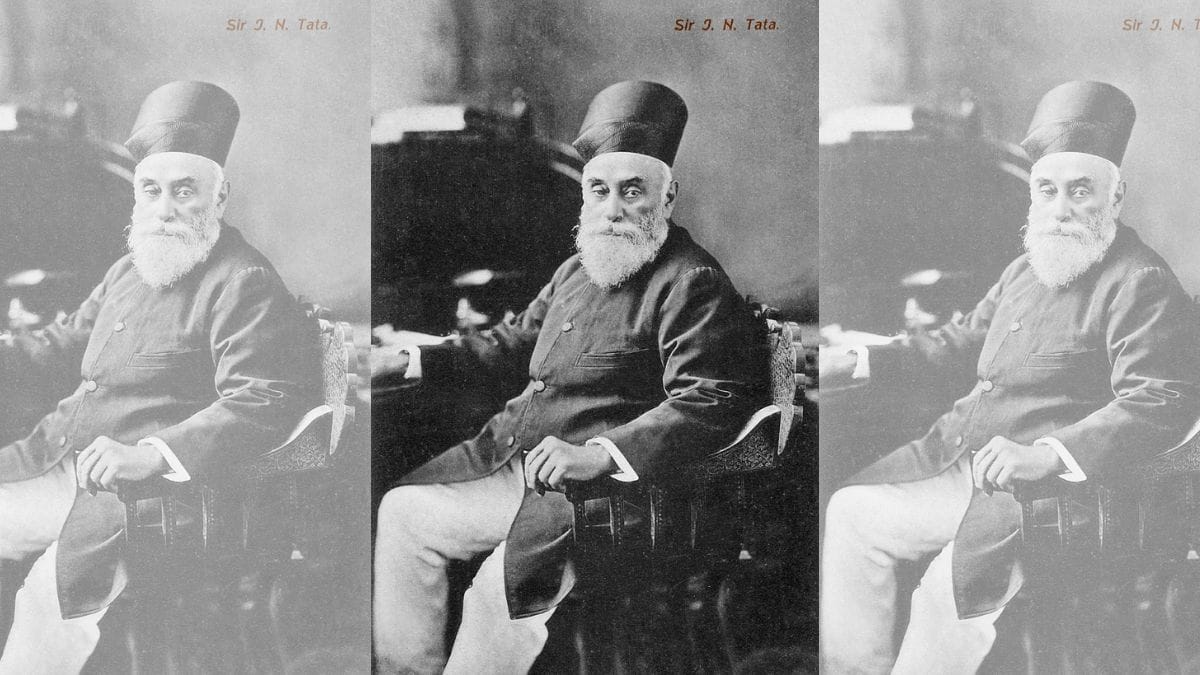
Names J. N. Tata’s steel works, Bombay hydro-electric power, the Tata Iron and Steel Company, and the shipping ventures of Walchand Hirachand and Narottam Morarji as private-sector pioneering feats that built modern Indian industry.
-
Disputes the concentration-of-economic-power thesis by reference to an April Tata Quarterly article showing that Indian demand has consistently outrun supply in every major industry.
-
Reproduces the substance of World Bank President Eugene Black’s letter to Krishnamachari, which urged India to give private enterprise an unqualified opportunity under the Second Five Year Plan.
-
Concludes that the constitutional commitment to democracy is endangered if free enterprise is not allowed to be practised in India.
Generated by the v1.5 extraction pipeline. Awaiting editorial review.
Metadata and summary are AI-extracted from the source PDF and reviewed for editorial accuracy. The original work is available via the Read PDF tab above (where present); paragraph-level citation inside the PDF is deferred to a future engagement.