
speech
Banks' Relationship with Customers - Evolving Perspectives
Published by S S Bhandare for the Forum of Free Enterprise, Peninsula House, 2nd Floor, 235, Dr D N Road, Mumbai 400001, and Printed by S V Limaye at India Printing Works, India Printing House, 42 G D Ambekar Marg, Wadala, Mumbai 400 031 · Mumbai · 2008
19 pages
Summary
Delivered as the 4th M. R. Pai Memorial Award lecture on 8 April 2008 in Mumbai, Shyamala Gopinath — then Deputy Governor of the Reserve Bank of India — uses her platform to map how the banker-customer relationship has been remade by India’s post-1991 liberalisation. She opens by paying tribute to M. R. Pai’s consumer-activism legacy and argues, with a Sanskrit aside that ‘the world has always been the same,’ that customer protection in financial services has only grown more urgent as deregulation, private-sector entry and technology have multiplied product choices and the surface area for grievance.
The bulk of the booklet is a regulator’s tour of the customer-protection architecture the RBI has built around the reformed banking system. Gopinath walks through the Banking Codes and Standards Board of India (BCSBI) as an autonomous self-regulatory body, the revised Banking Ombudsman Scheme that now covers credit-card complaints and unilateral service-charge hikes, and detailed RBI directions on deposit accounts, deceased-depositor settlements, KYC simplification for low-income customers, fair lending and credit-card practices, and curbs on excessive interest and charges. She then turns to foreign exchange — where RBI has shifted from regulator to facilitator and resident individuals can now remit up to USD 200,000 per year — and to payment systems, flagging the Cheque Truncation System launched in the National Capital Region on 1 February 2008.
The concluding sections frame currency management, financial education and financial inclusion as the next frontier: ‘no-frills’ accounts, simplified KYC, General Purpose Credit Cards, business-correspondent models, an Andhra Pradesh pension-and-employment payments pilot, and the proposed Financial Literacy and Counselling Centres. She closes by quoting Governor Y. V. Reddy’s defence of banking as a ‘trust-based relationship’ and lists a six-point RBI approach — sensitising bank Boards, transparency and reasonable pricing, self-imposed codes, BCSBI compliance monitoring, stronger dispute resolution, lean regulation, and rationalising the RBI’s own procedures — through which, she argues, a customer-oriented banking culture and ‘democratization of the financial sector’ can be built.
Key points
-
Frames the lecture as a tribute to M. R. Pai’s consumer-activism legacy and argues that liberalisation has made customer-protection issues more, not less, urgent.
-
Catalogues the regulatory infrastructure built since the early 1990s — BCSBI, revised Banking Ombudsman Scheme, fair-practices codes — as the answer to gaps thrown up by deregulation, private-sector entry and tech-driven service delivery.
-
Lays out detailed RBI prescriptions on deposit accounts (minimum-balance disclosure, NRO joint accounts, cheque-collection timelines) and on settlements involving deceased depositors, aimed at minimum-friction service.
-
Reviews lending-side guidance: Fair Practices Code for Lenders, reasons-in-writing for loan rejections, Comprehensive Credit Card Guidelines of November 2005, and a ceiling on usurious interest and charges on small personal loans.
-
Describes the foreign-exchange regime as a paradigm shift from regulator to facilitator — AD Category-II licensing, franchisee arrangements for money changers, and resident remittances up to USD 200,000 per financial year.
-
Highlights operational milestones: Cheque Truncation System launched in NCR on 1 February 2008, electronic-payments target of 50% of volume by March 2009, and the currency-chest and note-sorting infrastructure.
-
Treats financial inclusion as a ‘missionary’ RBI priority — ‘no-frills’ accounts, simplified KYC for low-income customers, General Purpose Credit Cards, business-correspondent and SHG-linked models, and a multilingual banking website in 13 Indian languages launched on 18 June 2007.
-
Closes with Governor Y. V. Reddy’s framing of banking as a trust-based relationship and a six-point RBI approach centred on transparency, reasonableness, codes, BCSBI compliance, dispute resolution and lean regulation.
Metadata and summary are AI-extracted from the source PDF and reviewed for editorial accuracy. The original work is available via the Read PDF tab above (where present); paragraph-level citation inside the PDF is deferred to a future engagement.
People in this work
Related across the archive
 Primary workBanks' Relationship with Customers - Evolving Perspectives
 Primary workMOVING TOWARDS AN EMPOWERED CUSTOMER
 Primary workCUSTOMER
 ExcerptEconomic Reforms In India: Where Are We And Where Do We Go?
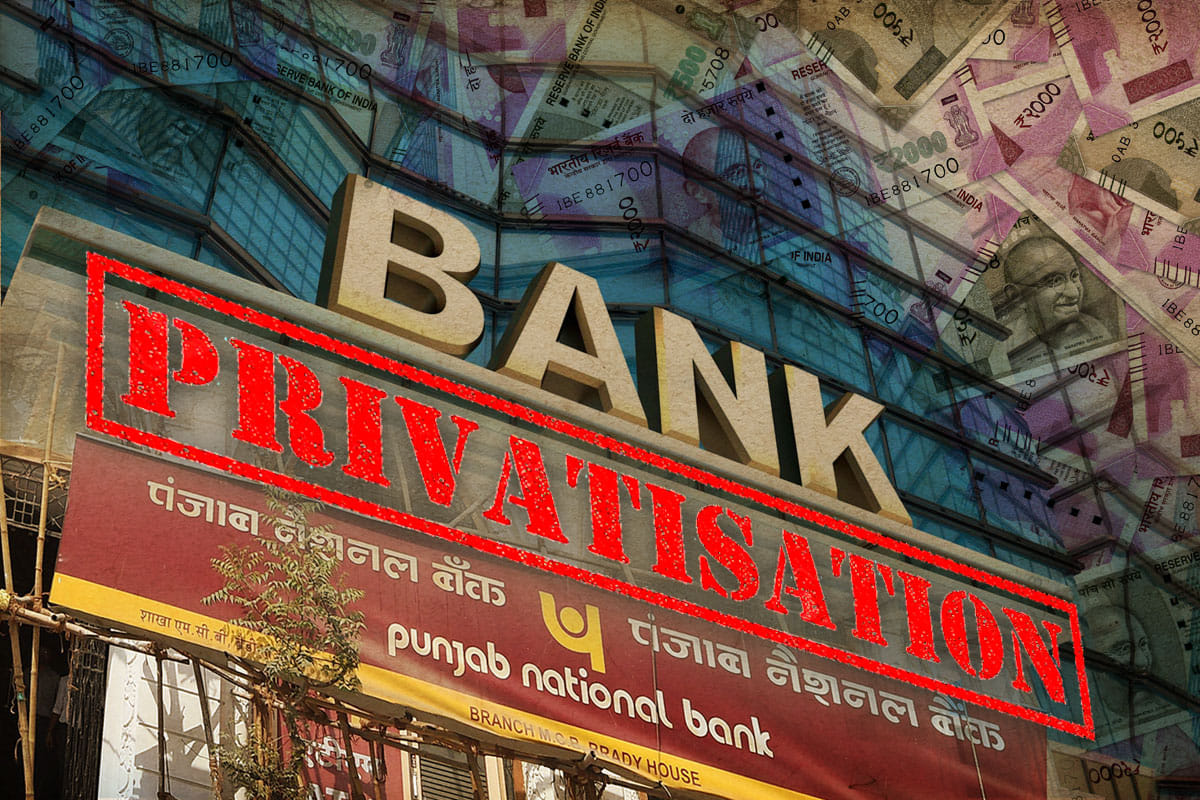 ThePrintBank nationalisation will be a blow to India’s mixed economy, lead to totalitarianism: Phiroze Shroff