classical liberal
Wilhelm Röpke
1899–1966
Also known as: Wilhelm Ropke, Roepke
How Wilhelm Röpke is discussed in this archive
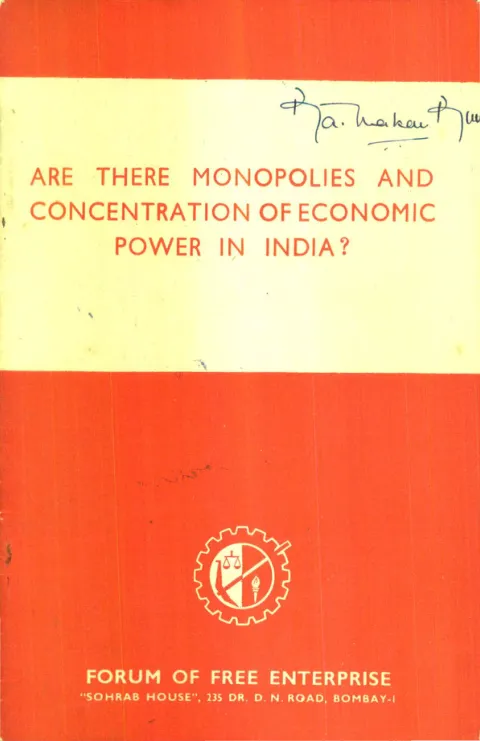
Referenced in 2 other works , including Are There Monopolies and Concentration of Economic Power in India? , and Free Enterprise in India: A Call for Leadership - A.D. Shroff, 1961 .
In Are There Monopolies and Concentration of Economic Power in India? : Roepke's Economics of the Free Society supplies the booklet's Appendix of selected quotations, providing the classical-liberal theoretical scaffolding behind Venkatasubbiah and Lalbhai's specifically Indian critiques.
In Free Enterprise in India: A Call for Leadership - A.D. Shroff, 1961 : Shroff invokes Röpke's authority as the architect of West Germany's economic miracle to support his critique of Indian planning's disregard for the time-value of economic commitment, grounding the speech in European ordoliberal thought.
Mentioned in (2)
Primary works (1)
- Are There Monopolies and Concentration of Economic Power in India? · 1964
- "an Appendix of selected quotations from Wilhelm Roepke's Economics of the Free Society." · Roepke's Economics of the Free Society is reproduced as the theoretical appendix that grounds the Indian critique in classical-liberal economics
- "The Roepke appendix and the closing A. D. Shroff and Eugene Black aphorisms tie the booklet's particular Indian arguments into the Forum's broader classical-liberal frame" · Roepke's selections are explicitly the bridge between the booklet's Indian arguments and the Forum's broader free-enterprise worldview
Excerpts (1)
- Free Enterprise in India: A Call for Leadership - A.D. Shroff, 1961
- "Vilhelm Roepke, eminent economist who was in no small measure responsible for the Economic Miracle in West Germany" · Röpke's credentials anchor Shroff's use of his warning about underdeveloped countries transplanting Western industrial forms without their underlying conditions