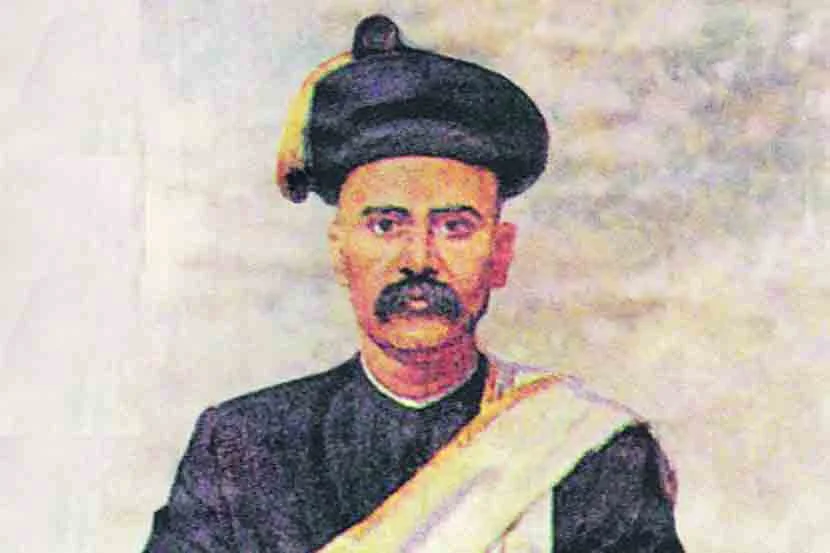
book
Sir M. Visvesvaraya — A Biography
Published by Mr. M. R. Pai, Trustee, The A. D. Shroff Memorial Trust, 'Piramal Mansion', 235 Dr. D. N. Road, Bombay 400 001. · Bombay · 1984
80 pages
Part of Builders of Indian Economy
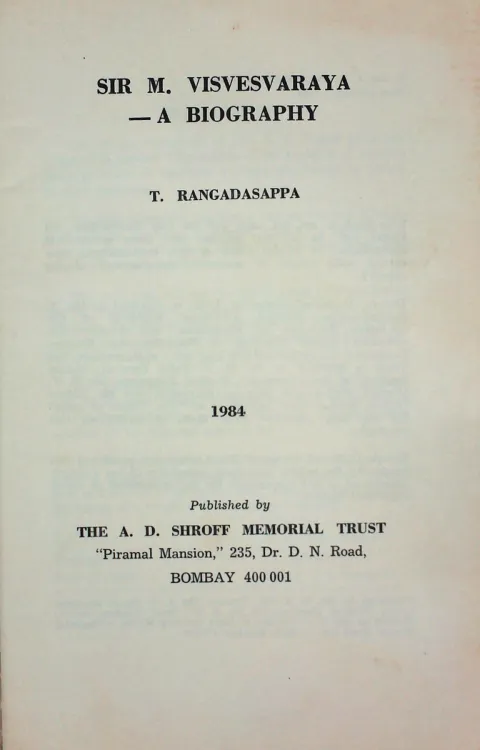
Sir M. Visvesvaraya — A Biography
By T. RANGADASAPPA
Summary
In the rendered pages, T. Rangadasappa opens a short A. D. Shroff Memorial Trust biography of Sir M. Visvesvaraya — published in 1984 to mark the engineer-statesman’s 125th birth anniversary in 1985 — with front matter that frames the project in A. D. Shroff’s conviction that ‘a well-informed citizenry is the foundation of an enduring democracy.’ N. A. Palkhivala’s introduction places the volume in the Trust’s series on ‘the builders of modern India’ and offers Visvesvaraya as an exemplar of ‘absolute integrity, systematic hard work, and a total, selfless dedication to the public cause.’
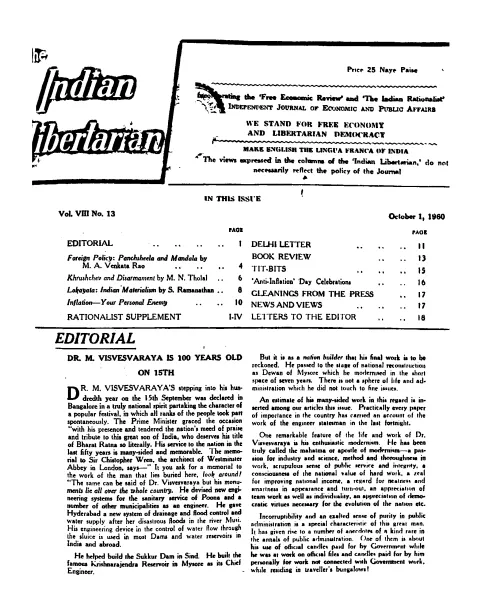
Chapter I, ‘A Many-Splendoured Life,’ sketches Visvesvaraya in the rendered pages as Bharatha Ratna engineer-statesman whose principal objective was India’s economic development through planned industrialisation: the Krishnarajasagar dam on the Cauvery, the block system of irrigation, the automatic sluice gates at Lake Fife, drainage and water schemes for Poona, Hyderabad, Mysore, Sukkur, Nagpur, Bijapur and Aden, and as Dewan of Mysore the founding of the University of Mysore, the Bank of Mysore, the Chamber of Commerce, the College of Engineering and the Mysore Iron and Steel Works at Bhadravathi. The author repeatedly frames him as ‘the father of economic planning in India,’ citing his books ‘Planned Economy for India’ and ‘Rural Reconstruction in India,’ and reproduces in full his 1942 letter to the Viceroy’s Private Secretary protesting the Government’s refusal to license an Indian automobile industry — a position he held since 1934-35 — as ‘unusual and against the interests of India.’
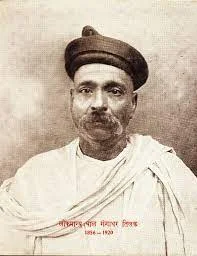
Chapter II, ‘Early Life and Education,’ traces in the rendered pages his birth in Muddenahalli on 15 September 1861, primary education at Chickballapur under Nadhamuni Naidu, B.A. at Central College Bangalore in 1880 under Principal Charles Waters, and engineering studies at the Science College Poona (1881-83) on a scholarship granted by Rangacharlu, Dewan of Mysore. Chapter III, ‘Service as Engineer,’ covers his early postings in the Bombay PWD — pipe-syphon work on the Panjra River, the Sukkur water supply (1895), and the Poona irrigation rationing scheme that was opposed by Lokamanya Bal Gangadhar Tilak’s paper ‘Kesari’ until cultivators accepted government management. It then describes the Block System of Irrigation endorsed by the Scott-Moncrieff Indian Irrigation Commission (1901), the patenting and installation of the automatic sluice gates at Khadakvasla in 1901-03, his election to the Institute of Civil Engineers London (1904), his 1906 deputation to Aden at Lord Morley’s request, and his 1908 retirement after superseding eighteen senior engineers — the political climate then precluding the appointment of an Indian as Chief Engineer.
Chapter IV, ‘Service in Hyderabad,’ begins in the rendered pages with his post-retirement European tour and the Nizam’s 29 October 1908 invitation to design flood-protection works for the Musi and Easi rivers and a modern drainage system for Hyderabad city. The chunk ends after his 1922 and 1930 follow-up visits to Hyderabad; the rest of the work — covering the Mysore Dewanship in detail, the All-India Manufacturers’ Organisation, his foreign travels, planning advocacy and later years — lies past page 15 in the rendered pages.
Key points
-
Commissioned and distributed free by the A. D. Shroff Memorial Trust (Bombay), the biography appeared in 1984 ahead of Sir M. Visvesvaraya’s 125th birth anniversary in 1985 in the rendered pages.
-
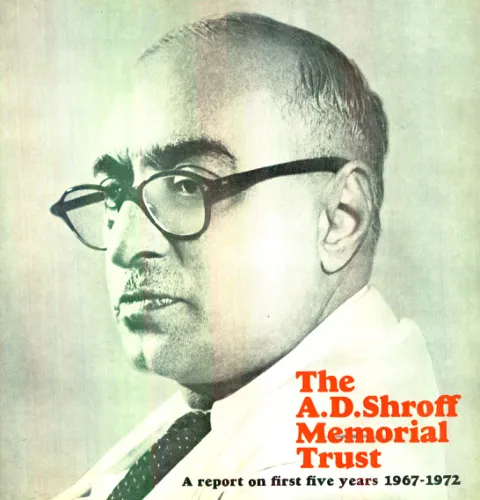
Front matter includes the Trust’s objectives, an introduction by Chairman N. A. Palkhivala, and a single-page tribute to A. D. Shroff (1899-1965), founder of the Forum of Free Enterprise.
-
Chapter I frames Visvesvaraya — addressed by the title Bharatha Ratna — as an engineer-statesman whose principal objective was ‘the economic development of India through industrialisation on a planned basis.’
-
Rangadasappa calls Visvesvaraya ‘the father of economic planning in India,’ citing his books ‘Planned Economy for India’ and ‘Rural Reconstruction in India.’
-
A 1942 letter to the Viceroy’s Private Secretary is reproduced in full, recording Visvesvaraya’s protest that Government refusal to license an Indian automobile industry was ‘unusual and against the interests of India.’
-
Chapter II covers his birth at Muddenahalli on 15 September 1861, schooling at Chickballapur and Bangalore’s Central College, and engineering training at Poona’s Science College (1881-83) on a Mysore Government scholarship.
-
Chapter III traces his Bombay PWD career: the Panjra River pipe-syphon, the Sukkur Water Works (1895), the Poona irrigation rationing scheme opposed by Tilak’s ‘Kesari,’ the Block System of Irrigation endorsed by the Scott-Moncrieff Commission (1901), and the Khadakvasla automatic sluice gates patented and installed in 1901-03.
-
Chapter IV opens with the Nizam’s 29 October 1908 invitation to design flood-protection schemes for the Musi and Easi rivers and a modern sewerage system for Hyderabad city, with follow-up visits in 1922 and 1930.
Generated by the v1.5 extraction pipeline. Awaiting editorial review.
Metadata and summary are AI-extracted from the source PDF and reviewed for editorial accuracy. The original work is available via the Read PDF tab above (where present); paragraph-level citation inside the PDF is deferred to a future engagement.