speech · memorial lecture
Reforms for a Better Tax Governance in India
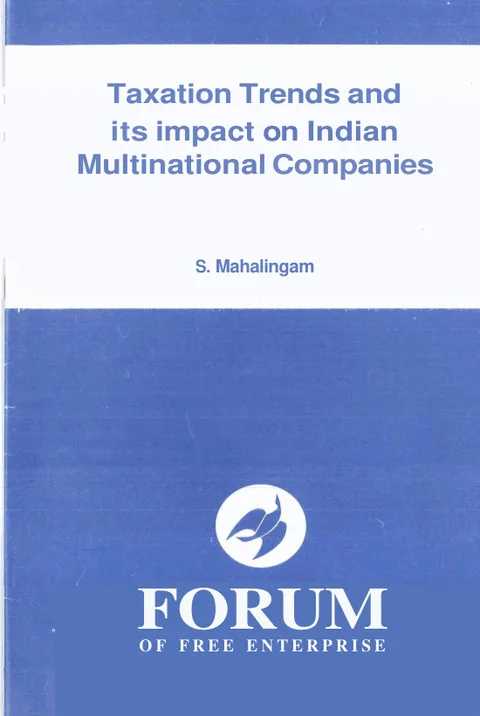
Forum of Free Enterprise · Bombay · 2016
42 pages
Reforms for a Better Tax Governance in India
By S. Mahalingam
Summary
This Forum of Free Enterprise booklet reproduces the lecture S. Mahalingam — former Chief Financial Officer and Executive Director of Tata Consultancy Services — delivered in Bangalore on 13 January 2016 under the auspices of the Nani A. Palkhivala Memorial Trust. The first part of the talk is a personal tribute to Palkhivala the jurist, post-budget orator, ambassador and TCS founder-chairman, framed through Mahalingam’s own years of working alongside him. The second part pivots into a structural critique of the Indian tax governance system written from the unusual vantage point of a private-sector member of the Tax Administration Reform Commission (TARC) constituted in 2013 under Dr. Parthasarathi Shome.
Mahalingam argues that India suffers not merely from bad tax laws but from a broken governance culture: revenue officers chase targets set and monitored by the Finance Minister himself, raise notional and “protective” demands they themselves consider far-fetched, refuse to accept any adverse appellate verdict on principle, and lack any service focus toward honest taxpayers. He labels the cumulative effect “tax terrorism” and traces it through the Vodafone-era retrospective amendments, the moral-hazard ecosystem inside the Revenue Department, and the antiquated accounting incentive to withhold refunds.
In the rendered pages he then turns to remedies drawn from TARC’s four reports (over 1,370 pages). On the disputes side he documents the massive pendency before Commissioner (Appeals), CESTAT, Appellate Tribunal, High Courts and the Supreme Court for both direct and indirect taxes, and surveys existing alternative-dispute mechanisms — the Authority for Advance Rulings, the Settlement Commission, Advance Pricing Agreements, and the 2009 Dispute Resolution Panel — concluding that the Department “had no will” to use them to either prevent or speed up resolution. He then introduces a trust-based compliance framework that classifies taxpayers into four behavioural segments — Compliant, Triers, Fence Sitters and Offenders — each meriting a different mix of self-compliance, guidance, monitoring and prosecution. The chunk ends mid-way through a section on Dispute Management that examines the under-use of Boards’ clarification powers under Section 119 of the Income Tax Act, Section 37B of the Central Excise Act and Section 151A of the Customs Act, with a worked example of CBEC’s flip-flop on Karnataka Soaps and Detergents.
Key points
-
The booklet is the text of Mahalingam’s 13 January 2016 Bangalore lecture for the Nani A. Palkhivala Memorial Trust, published by the Forum of Free Enterprise and sponsored by the Shailesh Kapadia Memorial Trust, with an introduction by editor Sunil S. Bhandare.
-
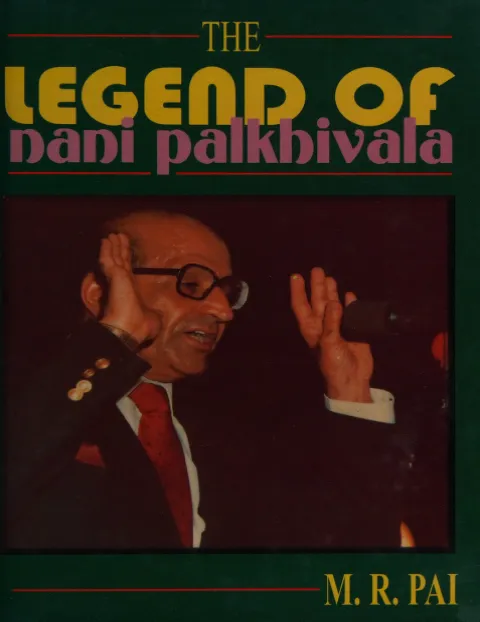
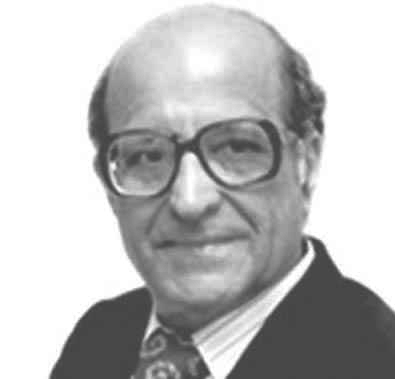
The opening section is a personal-memoir tribute to Nani Palkhivala — his discovery by A. D. Shroff and M. R. Pai at a 1957 Forum event, his post-budget speeches that filled Brabourne Stadium until 1994, his Kesavananda Bharati argument over 31 days, his ambassadorship to the United States after the Emergency, and his role founding Tata Consultancy Services in 1968 alongside F. C. Kohli.
-
Mahalingam’s framing thesis: India’s problem is not tax rates but a tax governance system that produces “tax terrorism” through target-driven assessments, retrospective demands of the Vodafone type, “protective demands” cascaded across companies, and an officer culture that never accepts an adverse verdict short of the Supreme Court.
-
The Revenue Department is charged with having no service focus, treating taxpayers and even its own officers shabbily, and exploiting an antiquated accounting system to delay refunds in order to manage the fiscal deficit optically.
-
Mahalingam draws on his membership of the 2013 Tax Administration Reform Commission (TARC) chaired by Dr. Parthasarathi Shome, whose four reports across 18 months covered over 1,370 pages and whose private-sector members included Mr. Diwakar (formerly head of taxation at the Murugappa Group) and the author himself.
-
He marshals concrete pendency data from CBDT and CBEC for 2012-13 — including 199,390 cases before Commissioner (Appeals), 31,015 at the Appellate Tribunal, 31,230 at the High Courts and 5,808 at the Supreme Court on the direct-tax side — to show that existing alternative-dispute mechanisms (AAR, Settlement Commission, APA, the 2009 Dispute Resolution Panel) are under-used because the Department has no will to use them.
-
He proposes a trust-based compliance management framework segmenting taxpayers into Compliant, Triers, Fence Sitters and Offenders, with differentiated treatment — self-compliance for the first, help and guidance for triers, balanced persuasion-plus-enforcement for fence sitters, and the full penal armoury including prosecution reserved for habitual offenders.
-
The Dispute Management section, where the chunk cuts off, faults the two Boards for under-using their statutory clarification powers (Section 119 IT Act, Section 37B Central Excise, Section 151A Customs) and field officers for ignoring clarifications even when issued — illustrated by CBEC’s 1999 clarification on agarbatti odoriferous compounds that the Department itself reversed in November 2005 against Karnataka Soaps and Detergents.
Generated by the v1.5 extraction pipeline. Awaiting editorial review.
Metadata and summary are AI-extracted from the source PDF and reviewed for editorial accuracy. The original work is available via the Read PDF tab above (where present); paragraph-level citation inside the PDF is deferred to a future engagement.