
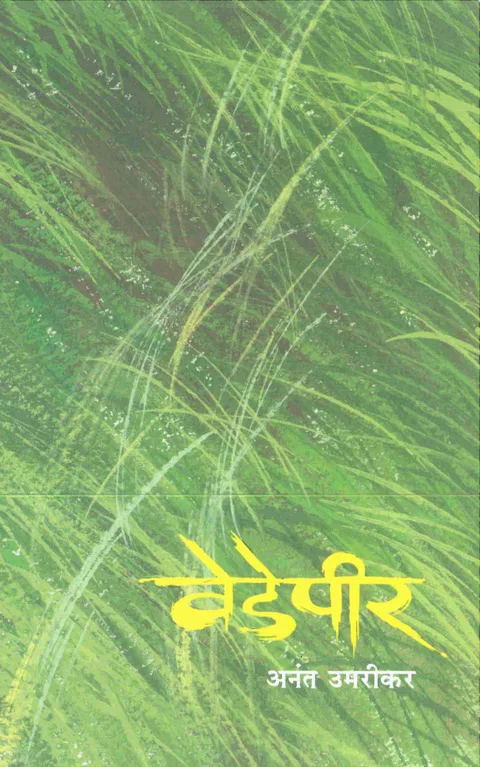
Summary
Vedepeer (वेडेपीर, loosely ‘mad saints’ or ‘holy fools’) is a Marathi-language book of biographical portraits by Anant Umrikar, an activist-writer associated with the Shetkari Sanghatana, the farmers’ movement founded and led by Sharad Joshi. First published in May 2003 by Janshakti Vachak Chalwal of Aurangabad/Parbhani, with a second edition in October 2009, the book collects roughly a dozen character sketches of ordinary cadres and organisers who gave their time, money and health to the Sanghatana over more than two decades. In his preface (Bhumika) Umrikar explains that he has worked in the farmers’ movement for over twenty years; most of these activists are people of modest economic means, yet they have travelled from places as far apart as a comfortable salaried job in Switzerland to remote villages like Ambethan and Lahot, drawn by Sharad Joshi’s call. The book, he says, is meant to introduce readers to such ‘vedepeer’ so that those who dismiss the Sanghatana as an organisation only of big farmers might reconsider.
Each chapter is named for a single activist — Hemant, Lahoti, Sarojtai, Vinay Hardikar, Sir, MLA Wamanrao, Bapu, Nana, Bhau, Vaijnathrao, Madhavrao More, Govindbhau, Shailatai, Baban Shelar — followed by an appendix of pen-portraits of Anant Umrikar himself by Indrajit Bhalerao. The opening chapter on Hemant Deshmukh recounts how a young man from a prosperous farming family near Dhanora (Nanded) abandoned modern mechanised farming after government policy made it unviable, was drawn to Sharad Joshi’s Parbhani convention, and became the Sanghatana’s contact-organiser in Aurangabad until his sudden death in April 2002. The Lahoti chapter portrays Purushottam Lahoti of Vasmat, a small-town Rajasthani-origin shopkeeper turned full-time agitator who led water-bill and land-revenue boycott marches across Parbhani–Hingoli–Jalna districts and ran the 1994 Jalna election campaign for the Sanghatana’s tribal woman candidate.
The portraits combine warm memoir, village reportage and political argument. Through them Umrikar communicates the Sanghatana’s core economic case — that Indian agriculture is impoverished by state price controls, monopoly procurement and obstructive bureaucracy — while honouring the irrational devotion (‘vedepeer’) of the foot-soldiers who carried Sharad Joshi’s freedom-of-the-farmer message into Marathwada’s villages. The book sits in the Marathi liberal-populist tradition of Sanghatana writing and was honoured with the N.C. Kelkar Prize of the Kesari-Maratha Sanstha in 2003.
Key points
- The book is a collection of roughly a dozen biographical portraits of Shetkari Sanghatana activists in Marathwada, written by long-time Sanghatana worker Anant Umrikar.
- First edition published 28 May 2003 by Janshakti Vachak Chalwal, Aurangabad; revised second edition issued 19 October 2009 on Deepavali Padwa.
- In the preface Umrikar explains the title — ‘vedepeer’ or holy madmen — as his term for activists who left comfortable lives (a salaried job in Switzerland, prosperous farms, professional practices) to work without pay or position in the farmers’ movement.
- The opening chapter on Hemant Deshmukh tracks his journey from mechanised farming near Dhanora to becoming Sharad Joshi’s Aurangabad contact-organiser, ending with his sudden death on 19 April 2002.
- The Lahoti chapter profiles Purushottam Lahoti of Vasmat, who led water-charge and land-revenue boycott campaigns in Parbhani, Hingoli and Jalna and ran the Sanghatana’s 1994 Jalna tribal-woman candidacy.
- Recurring through the sketches is the Sanghatana’s economic case against state-controlled agricultural pricing and procurement, summarised in the quoted Tukaram couplet contrasting raw produce sold at dust-prices with finished goods sold dear.
- The book won the N.C. Kelkar Prize from the Kesari-Maratha Sanstha (awarded 14 October 2003) and was selected for the Maharashtra Government’s recommended-books list (Sr. No. 289, 2003) and the Raja Ram Mohan Roy Foundation purchase scheme.
- An appendix carries pen-portraits of Umrikar himself by the Marathi writer Indrajit Bhalerao.
Metadata and summary are AI-extracted from the source PDF and reviewed for editorial accuracy. The original work is available via the Read PDF tab above (where present); paragraph-level citation inside the PDF is deferred to a future engagement.